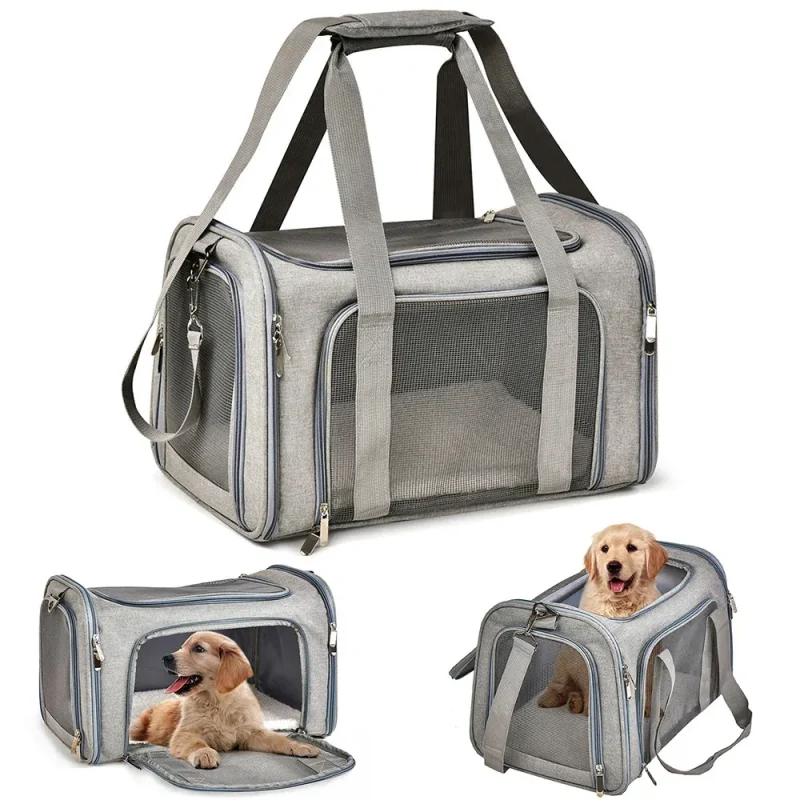
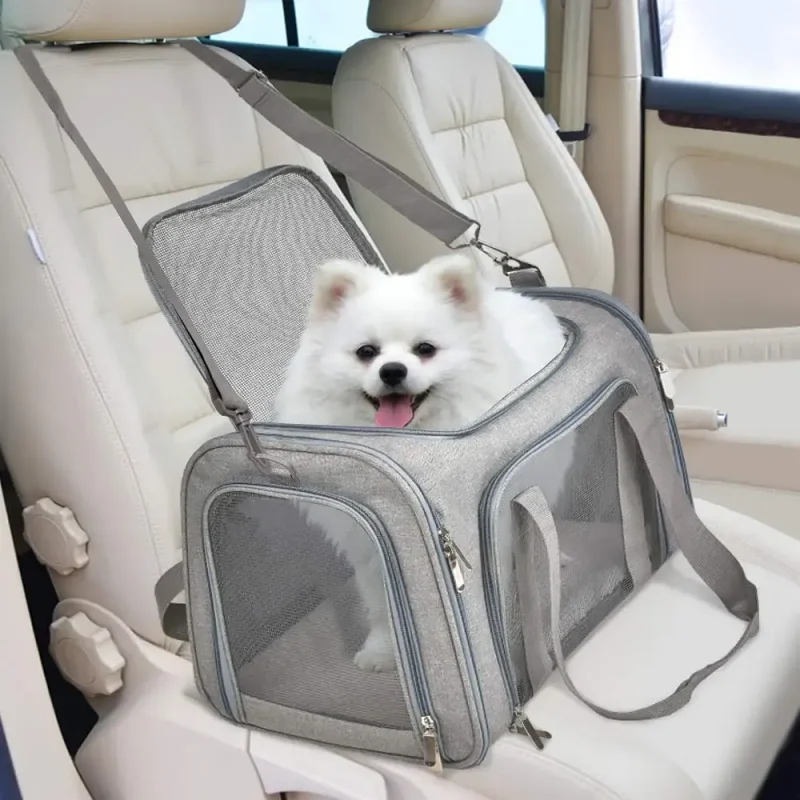
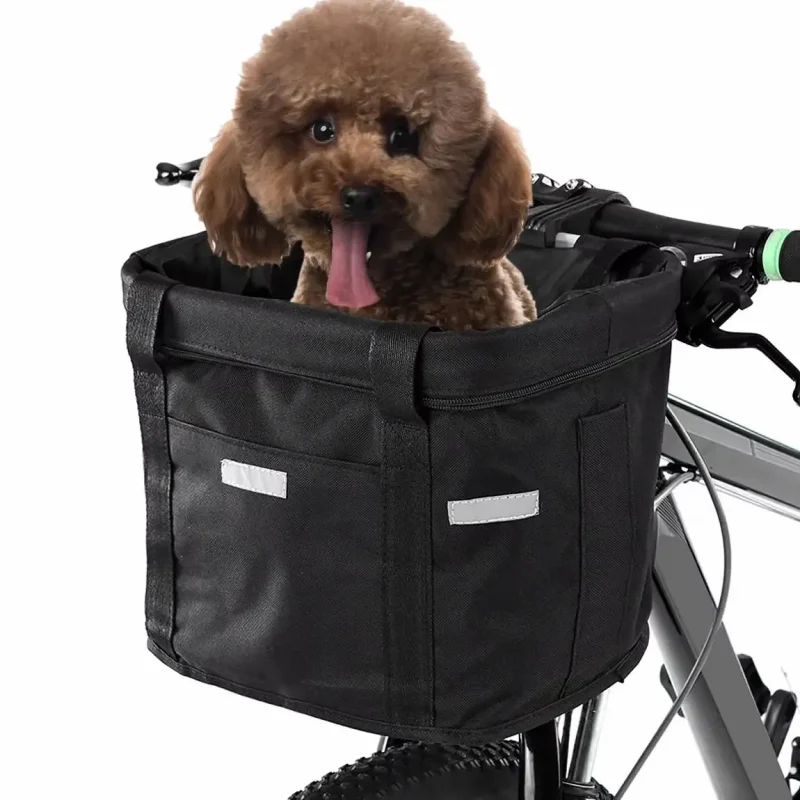
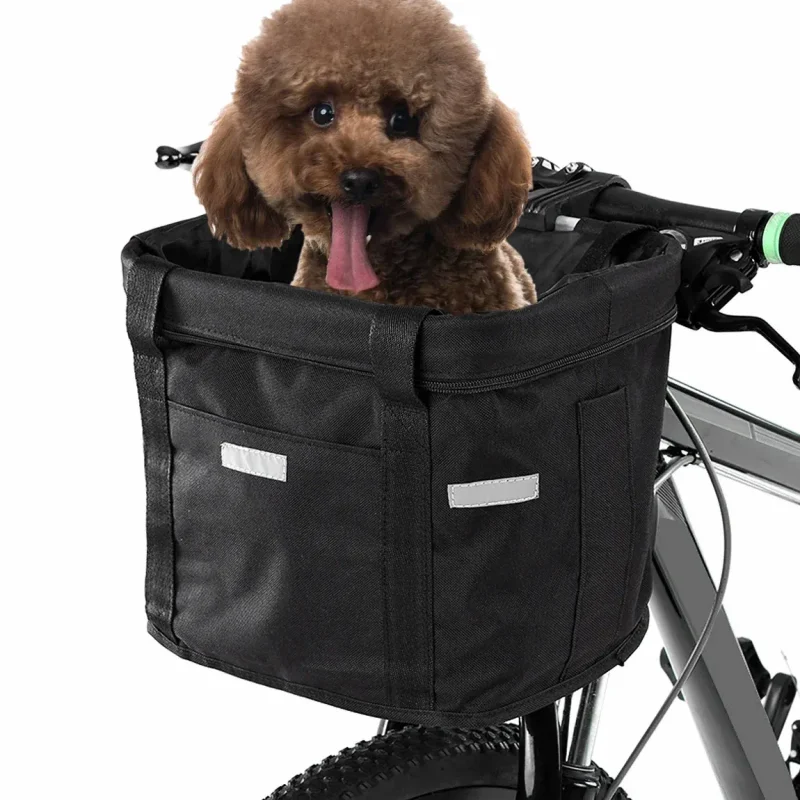
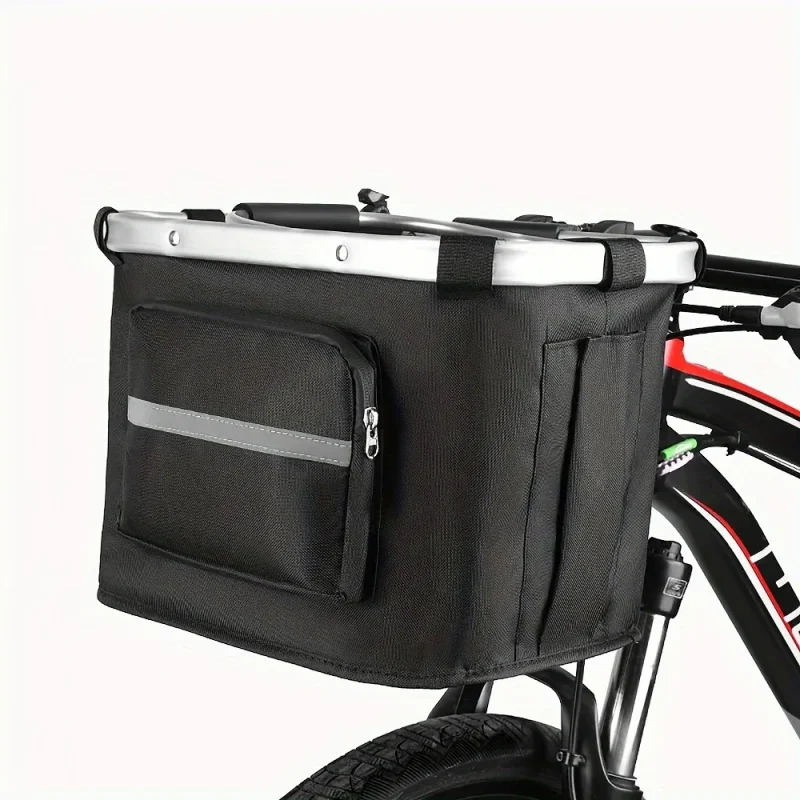
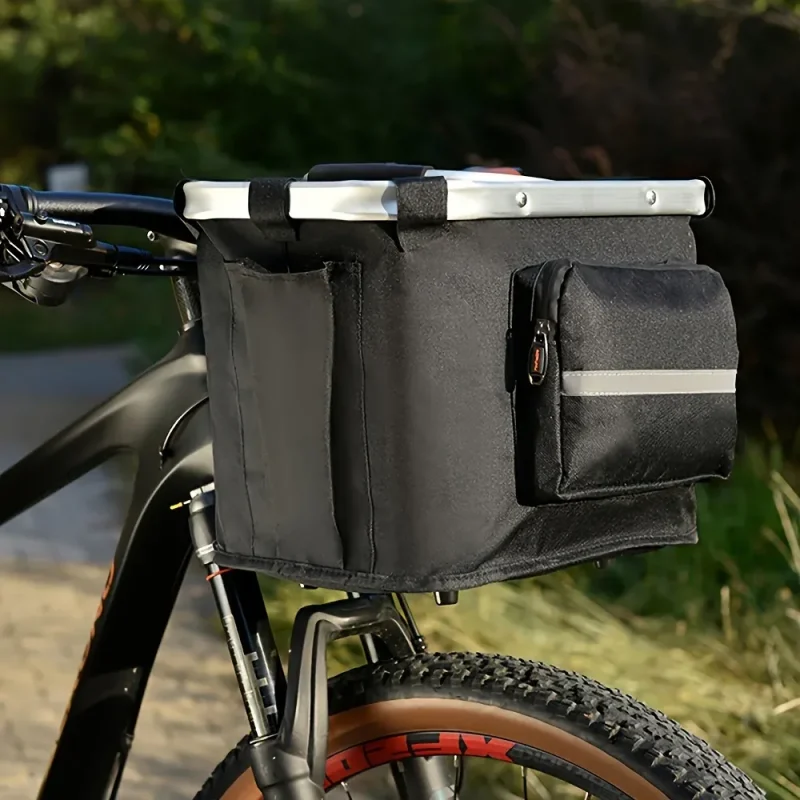
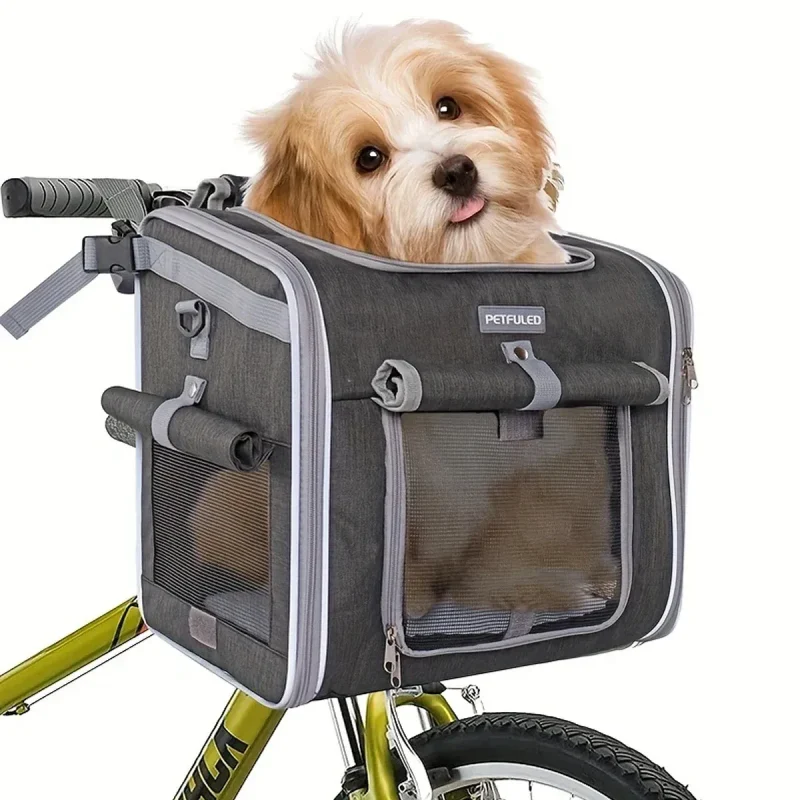
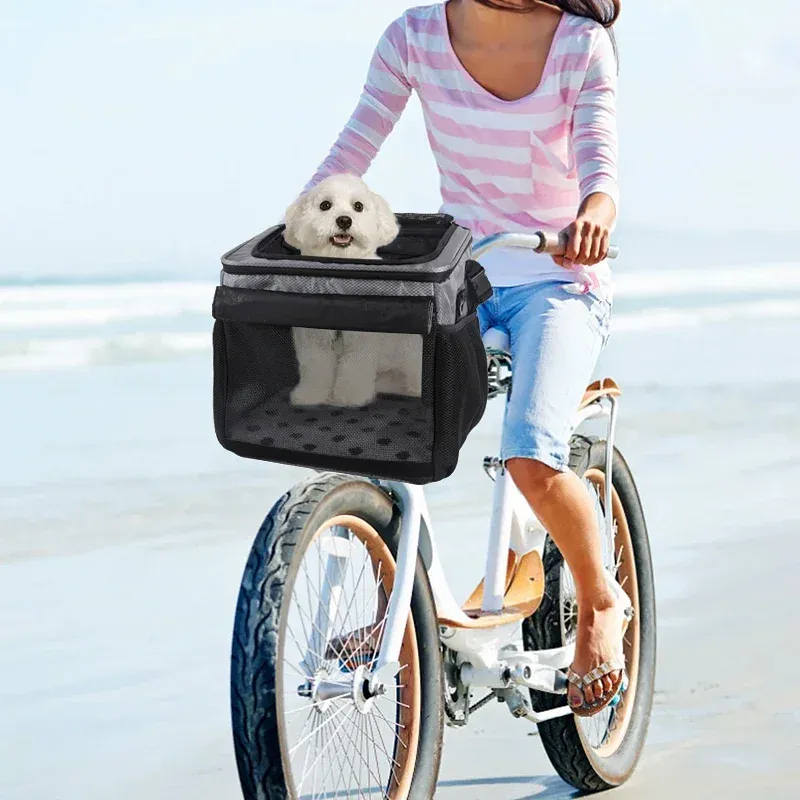
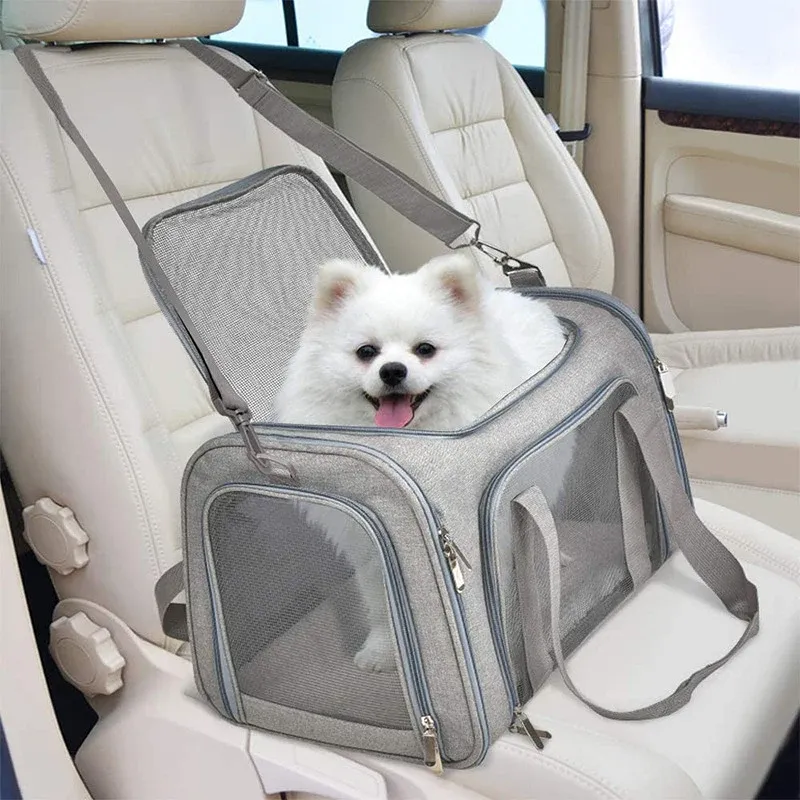
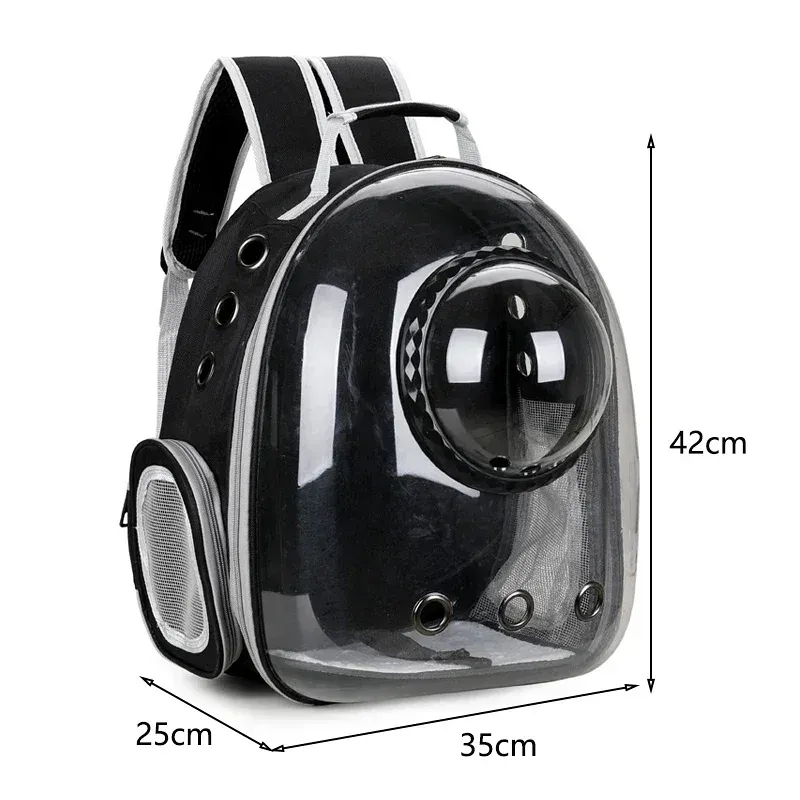
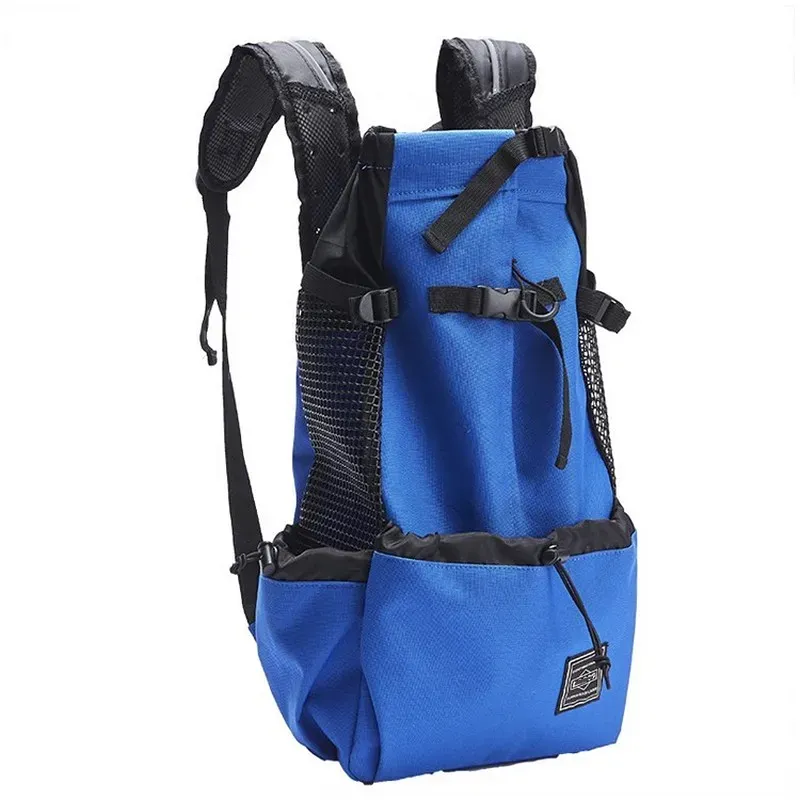
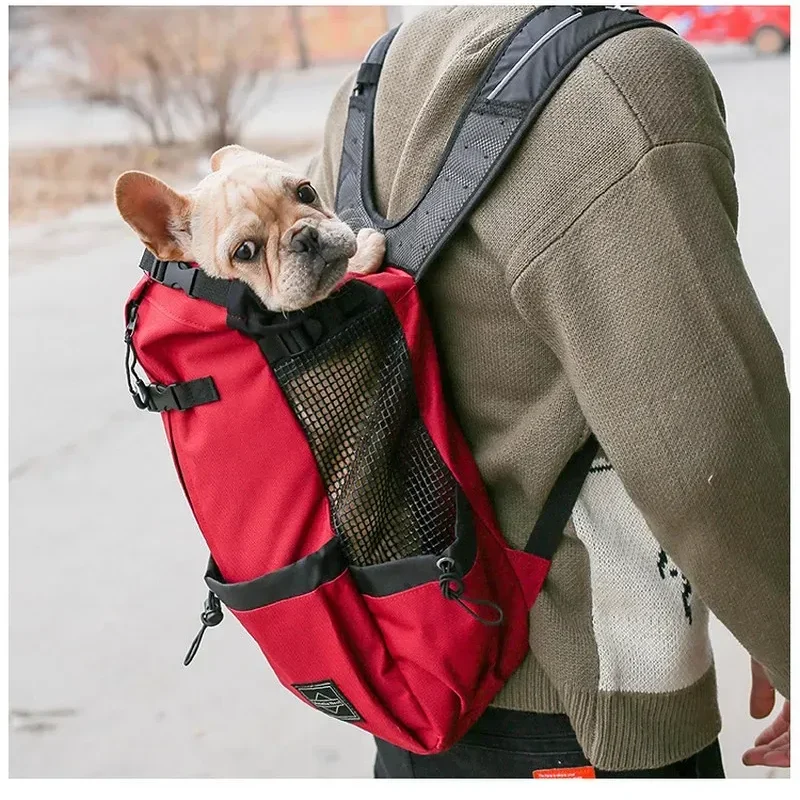
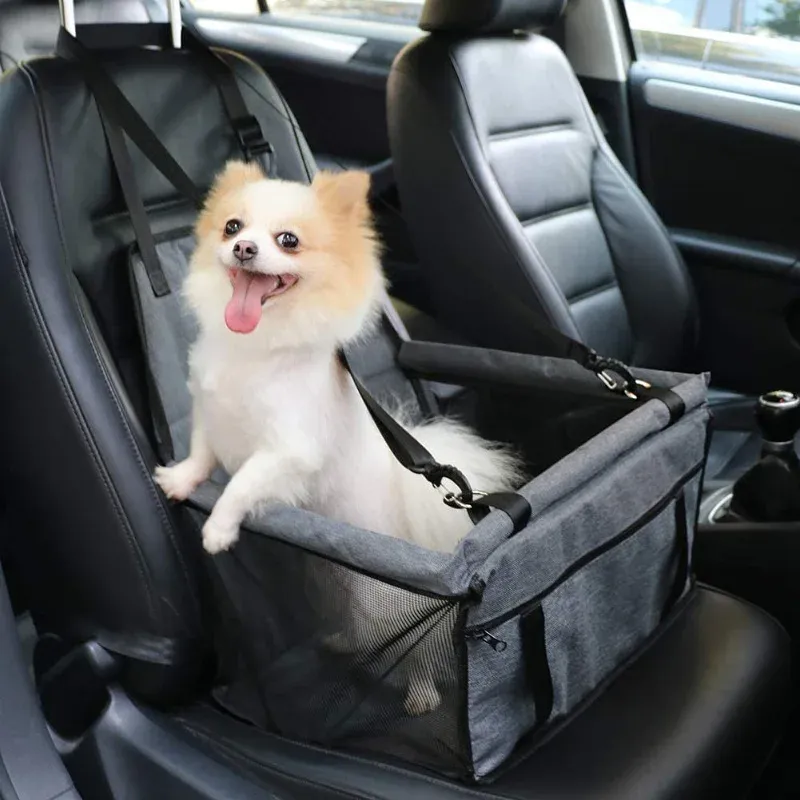
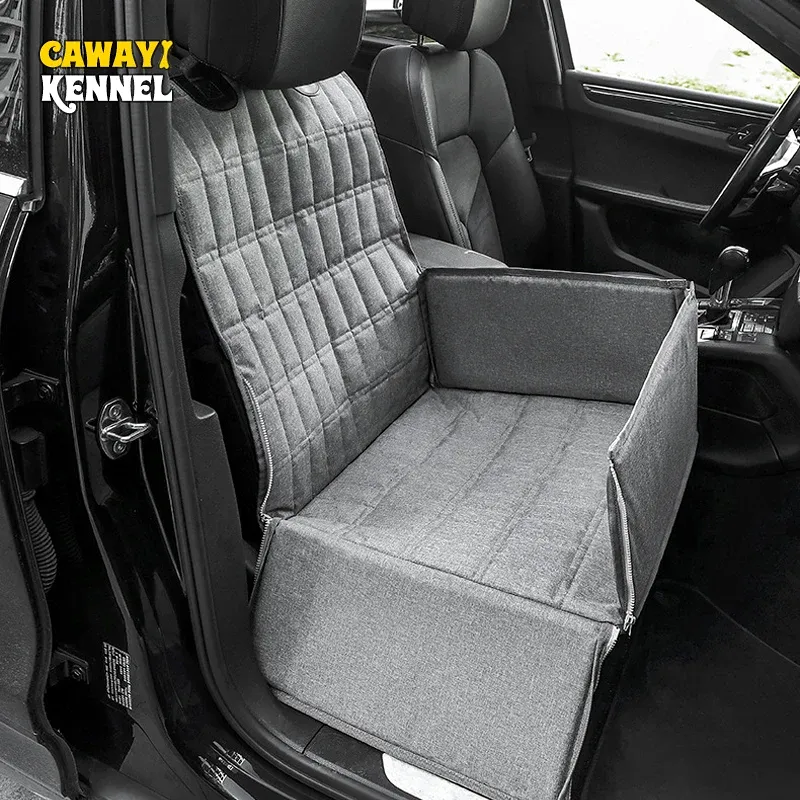
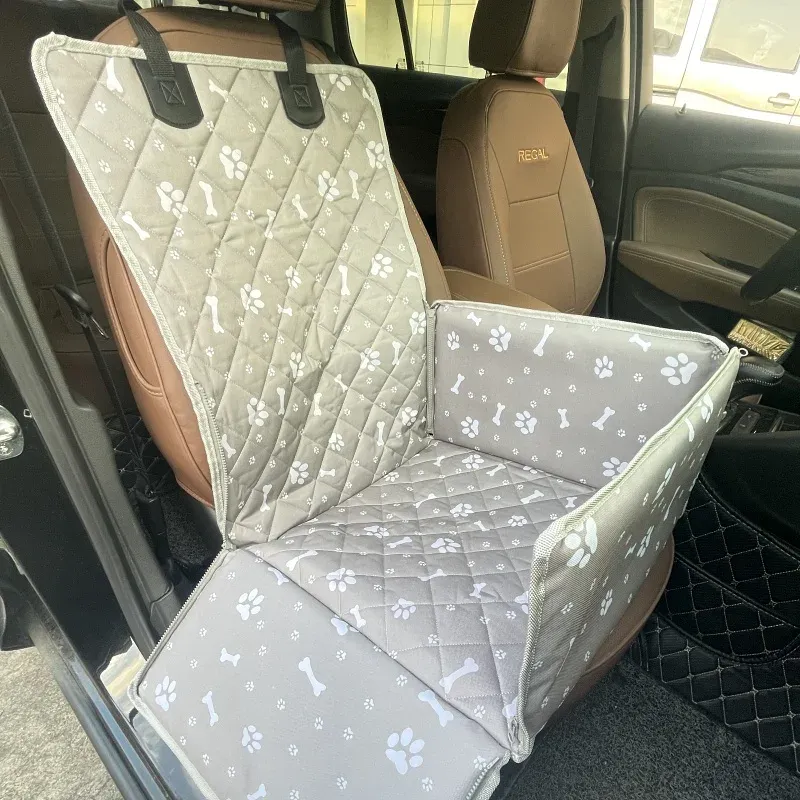
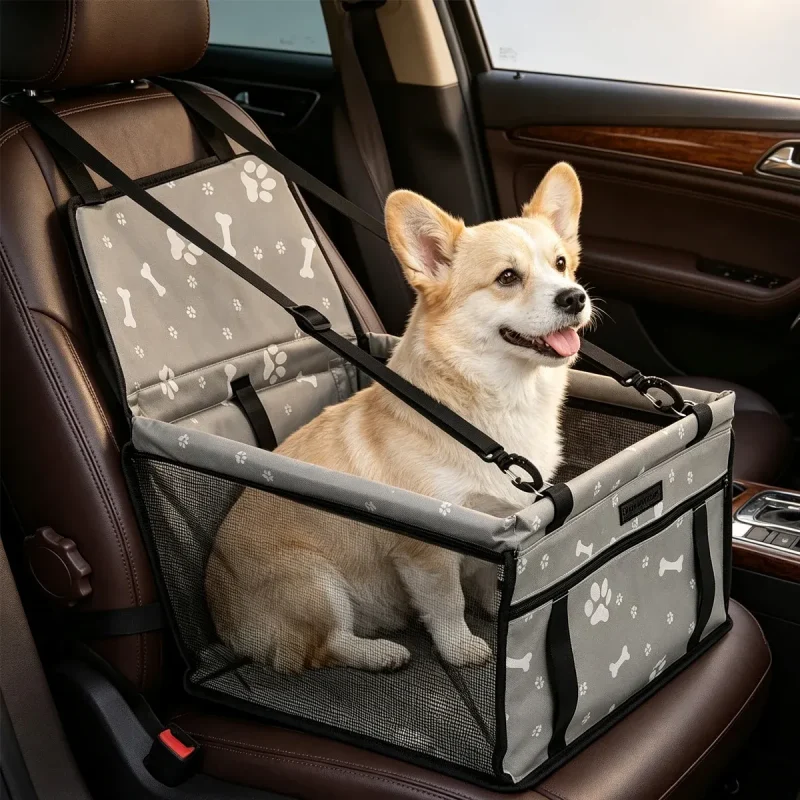
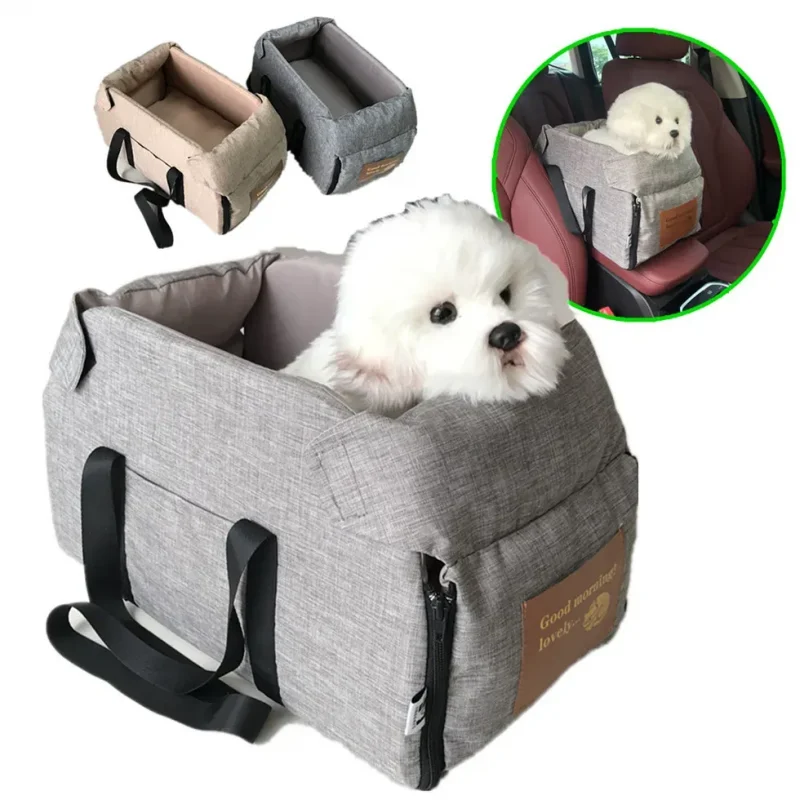
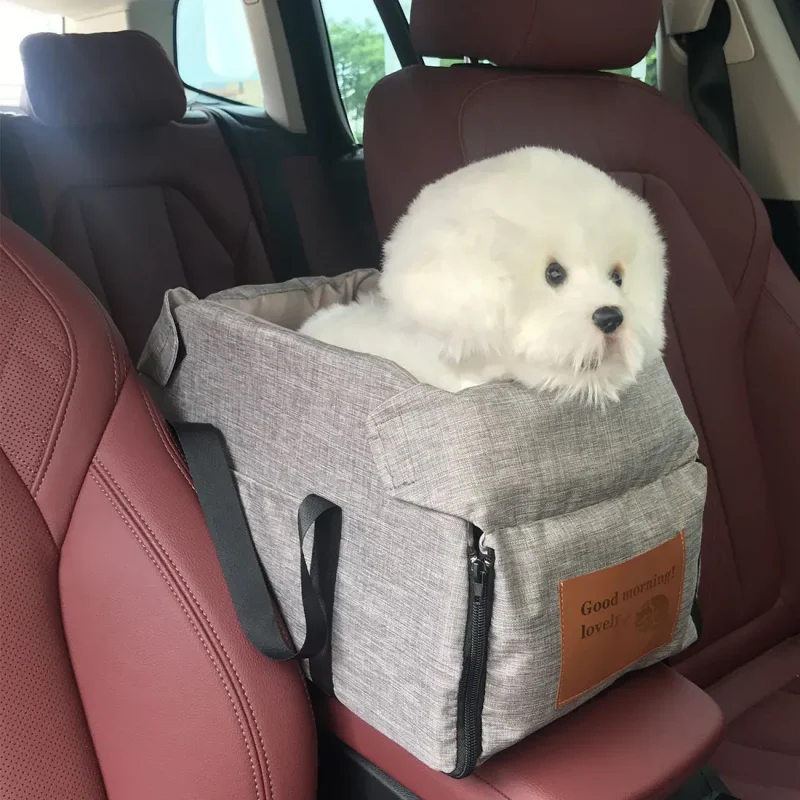
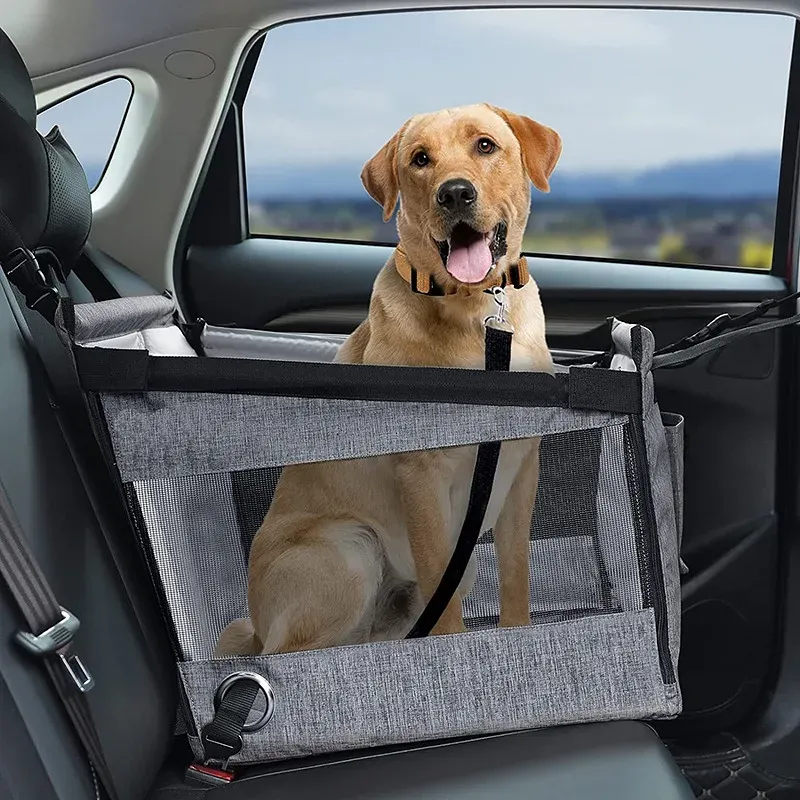
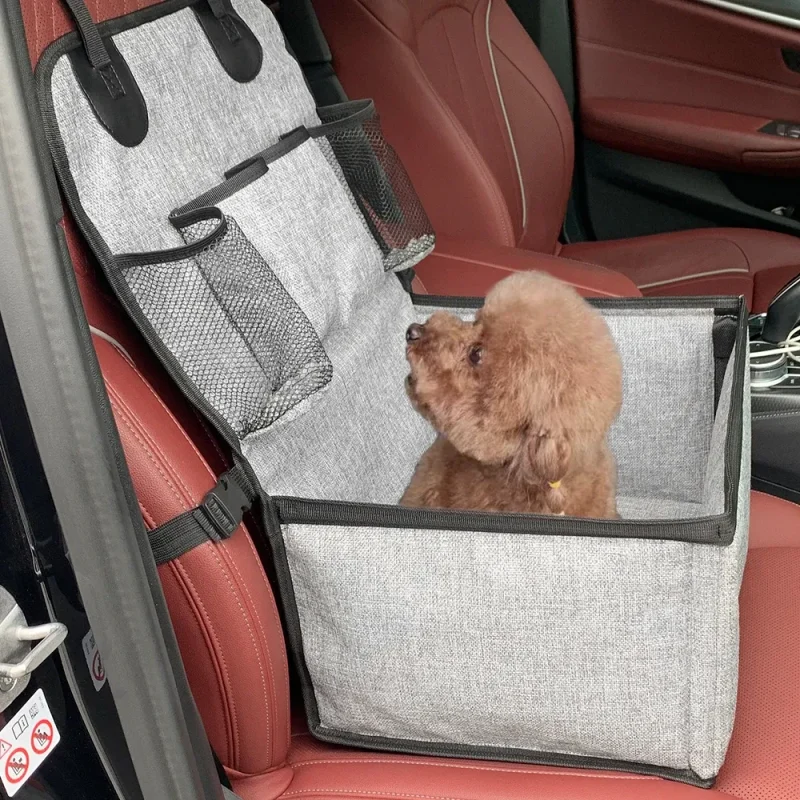
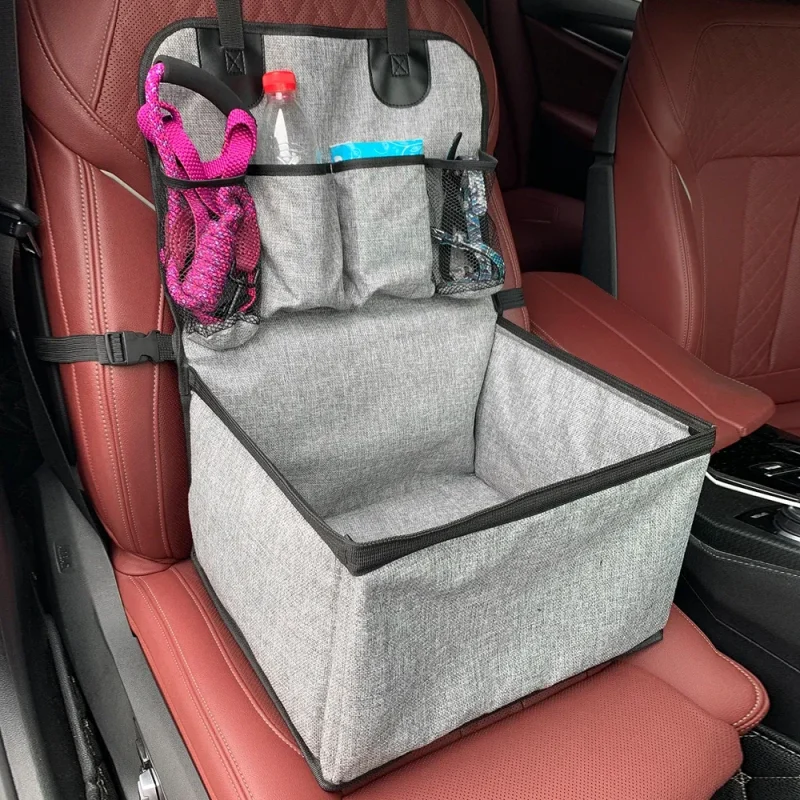
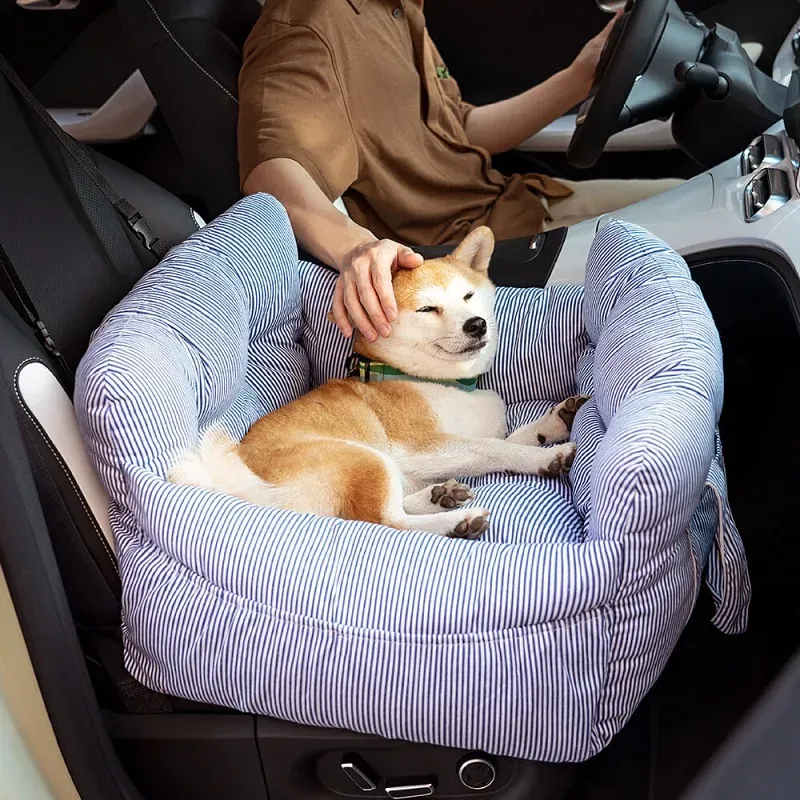
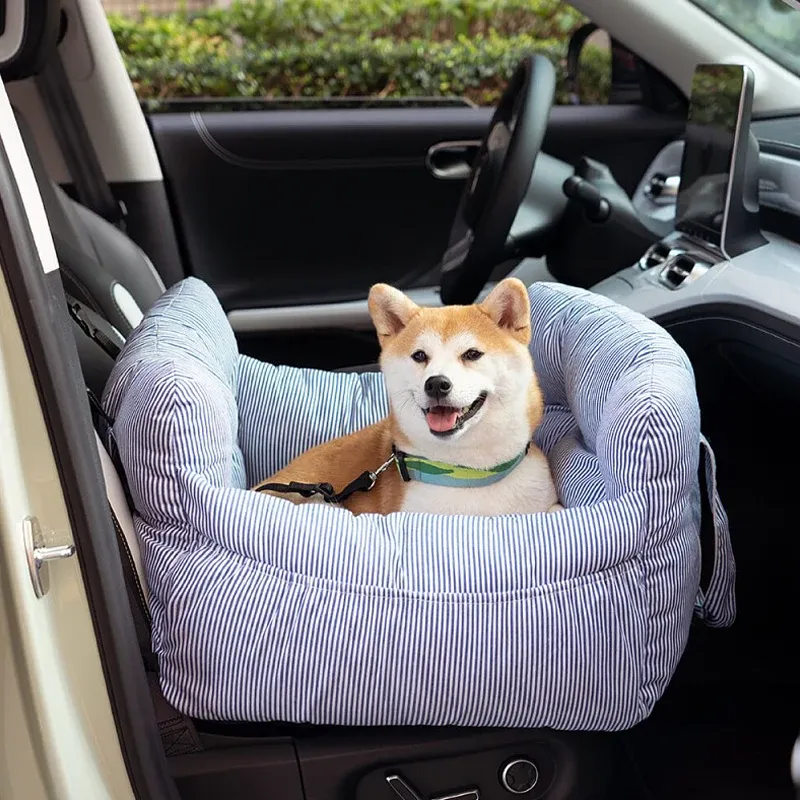
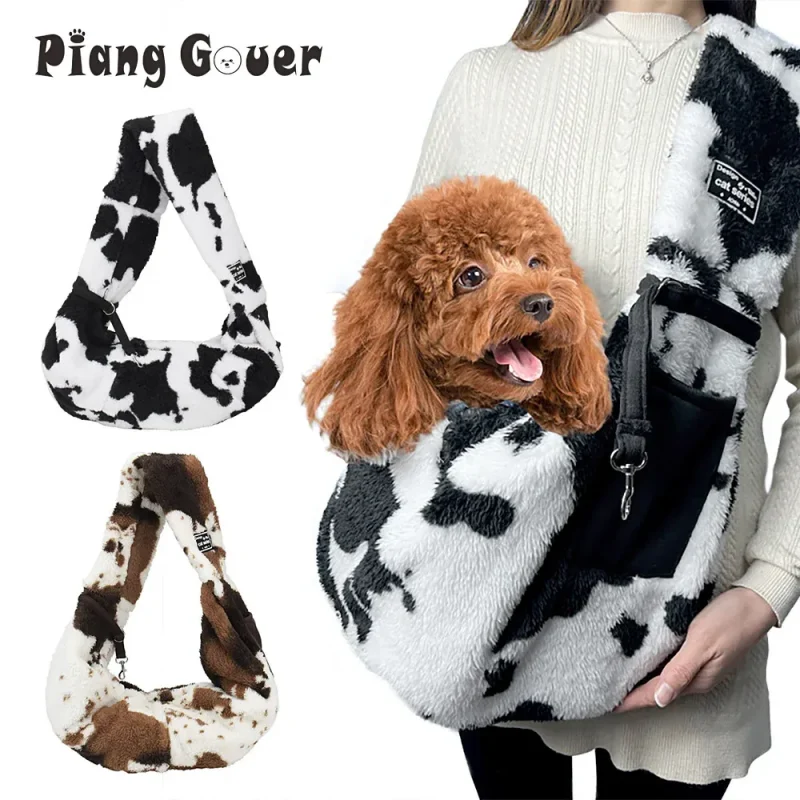
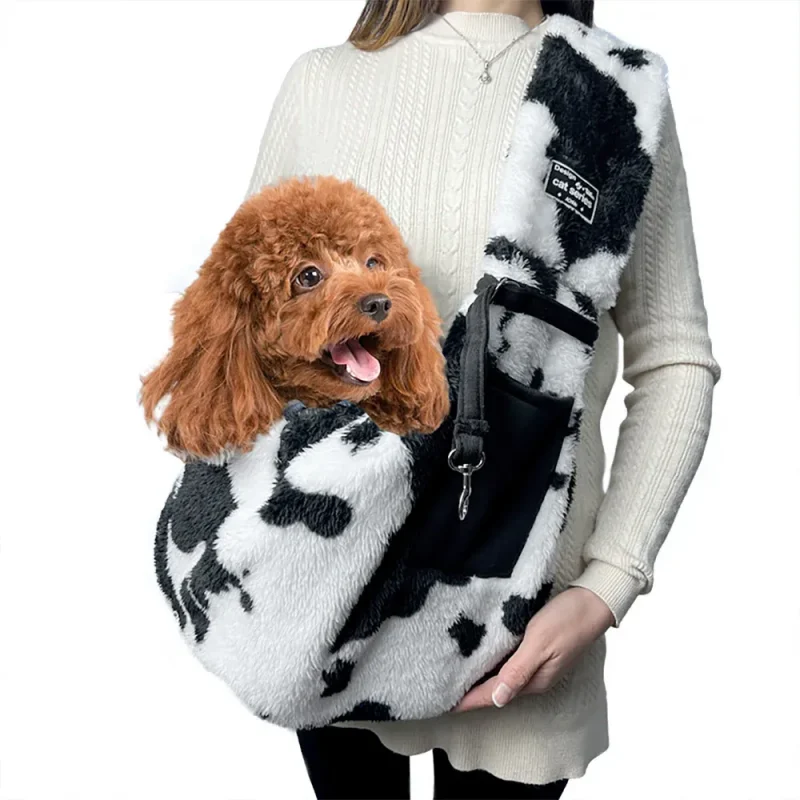
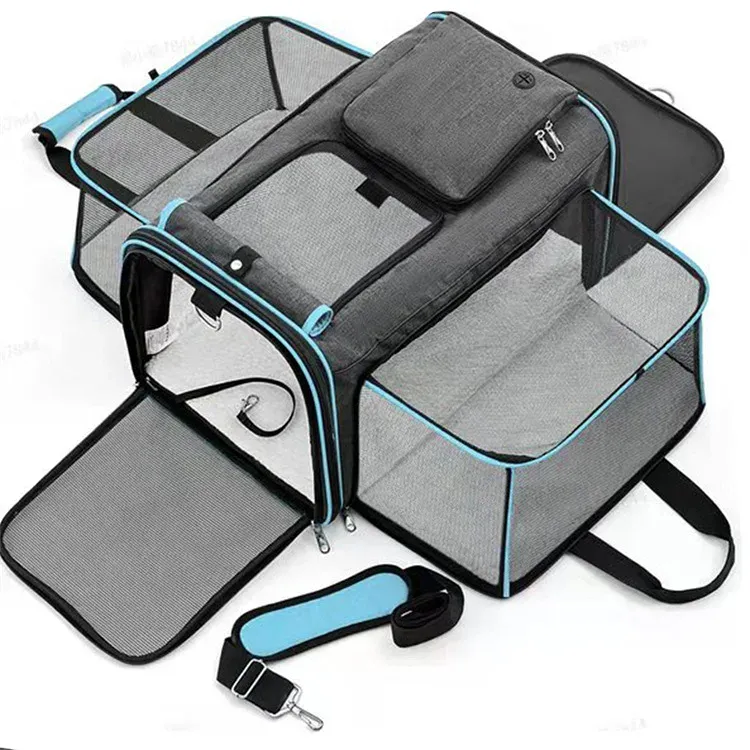
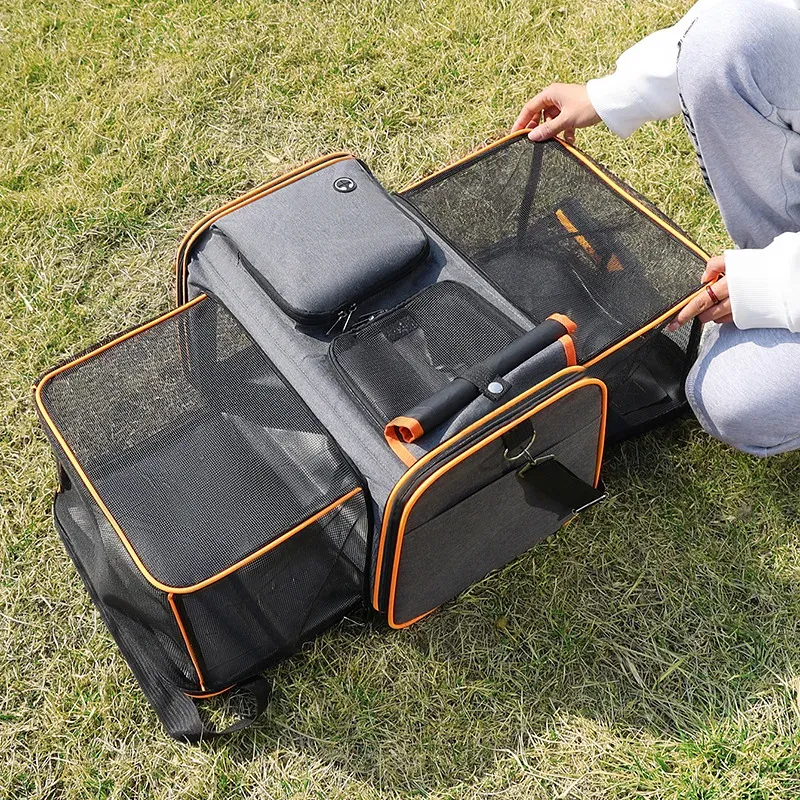
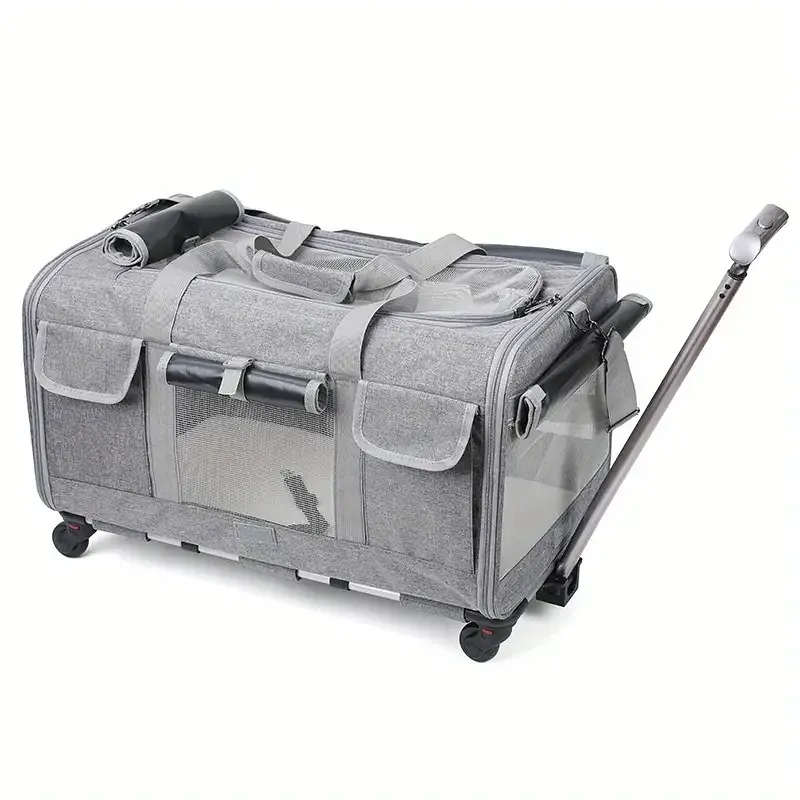
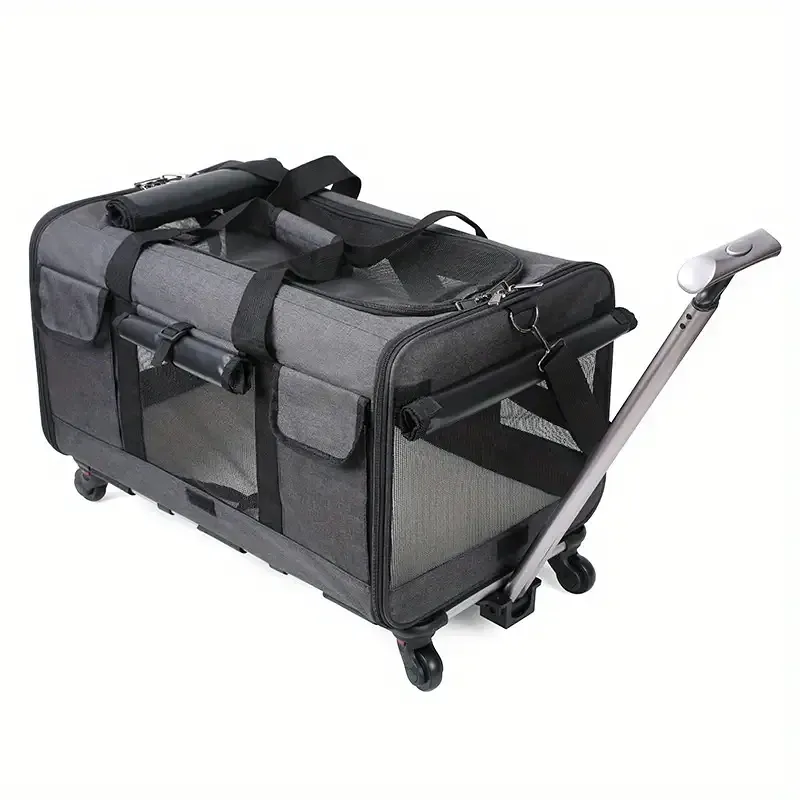
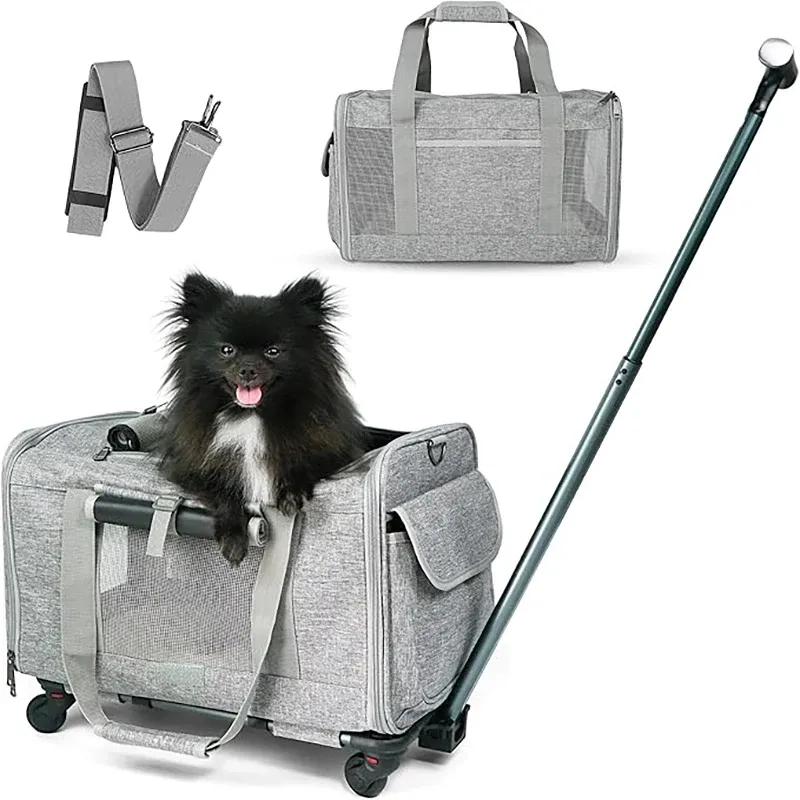
Taking a small dog on a plane, a train or a long-distance coach starts with one question: will the bag fit where it has to go? A cabin carrier has to sit under the seat in front of you, keep your dog calm and ventilated for hours, and stay within a weight limit that usually counts the dog and the bag together. The four carriers in this category are soft-sided bags for small dogs, from a slim shoulder bag for dogs up to 5 kg (11 lb) to a larger mesh carrier rated to 11.3 kg (25 lb). This guide explains how airline rules work, how to measure your dog, what the materials do, and how to get your dog used to a carrier before the trip. For the car and the rest of the journey, see our other dog travel accessories.
What “airline-approved” really means
No single carrier is approved by every airline. Each airline sets its own rules for dogs in the cabin, and they differ by route and even by aircraft. Three limits come up again and again:
- Weight. Many European airlines allow dogs in the cabin up to about 8 kg (17.6 lb) for the dog and carrier together. A few allow more, some allow less, and low-cost carriers often don’t take pets in the cabin at all.
- Carrier size. Maximum dimensions vary widely. Published limits range from about 40 × 30 × 24 cm (15.7 × 11.8 × 9.4 in) to 55 × 40 × 23 cm (21.7 × 15.7 × 9.1 in), and height is usually the tightest figure.
- Booking. Most airlines limit the number of pets per flight, so you need to book your dog’s place in advance, often by phone or a separate form.
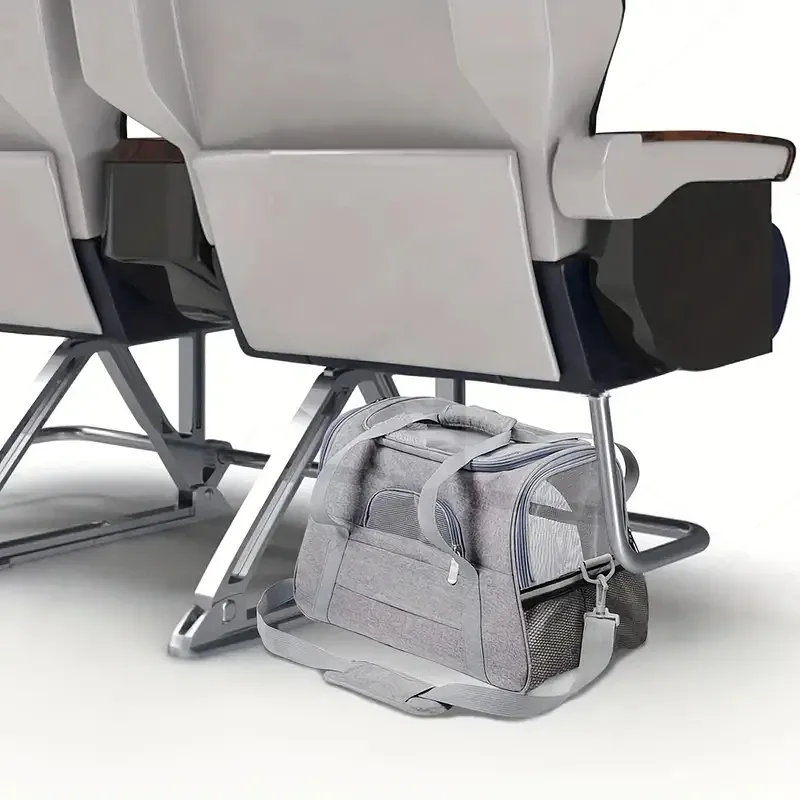
Before you buy, find your airline’s current page on pets in the cabin and write down three figures: maximum length, width and height, and the combined weight limit. Then compare them with the carriers below. Soft sides give a little under a seat, but staff can refuse a bag that is clearly over the height limit.
The carriers compared
| Carrier |
Size |
Stated dog weight |
Main material |
Notes |
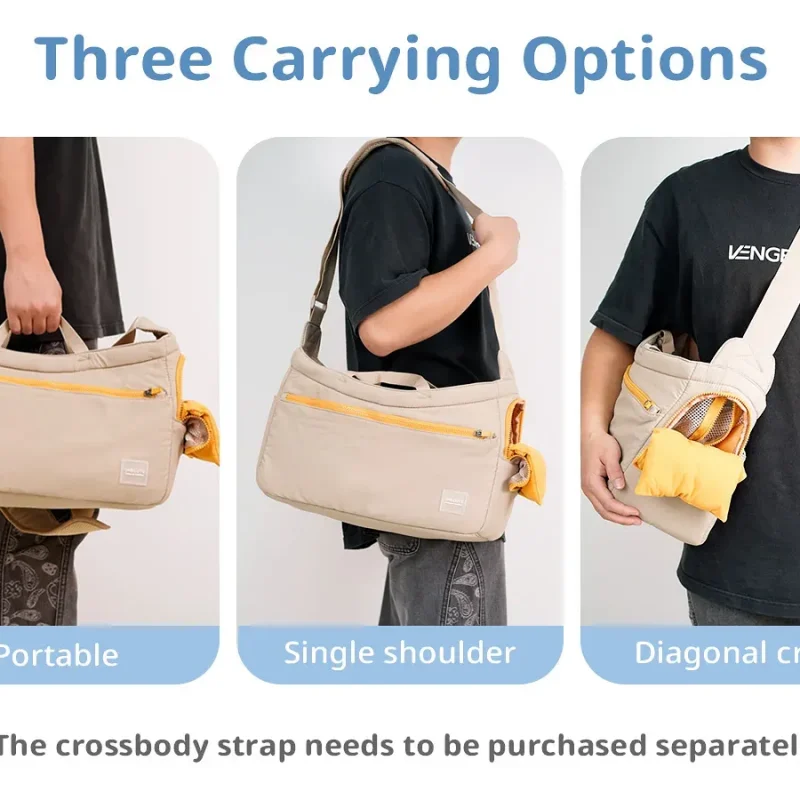
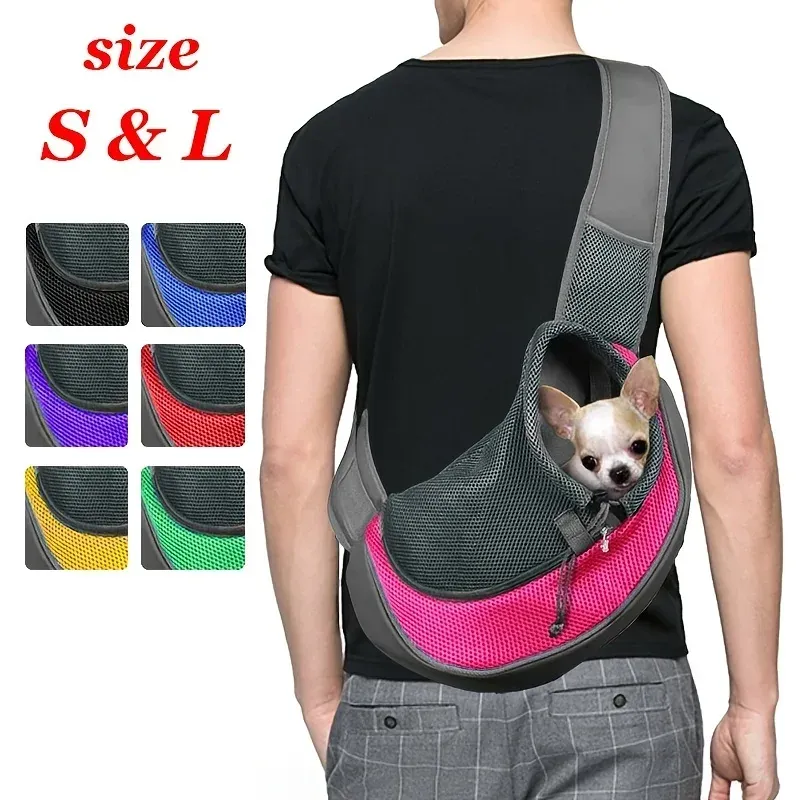
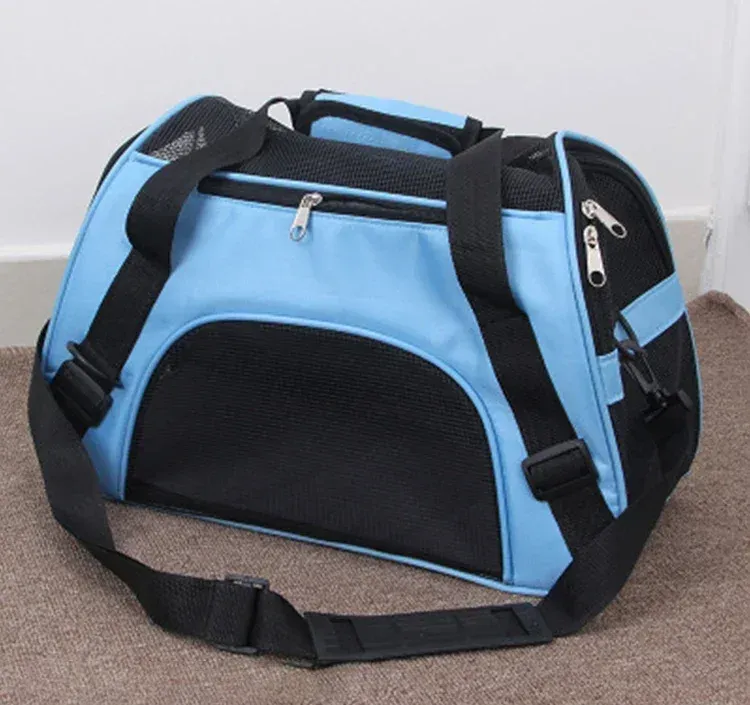
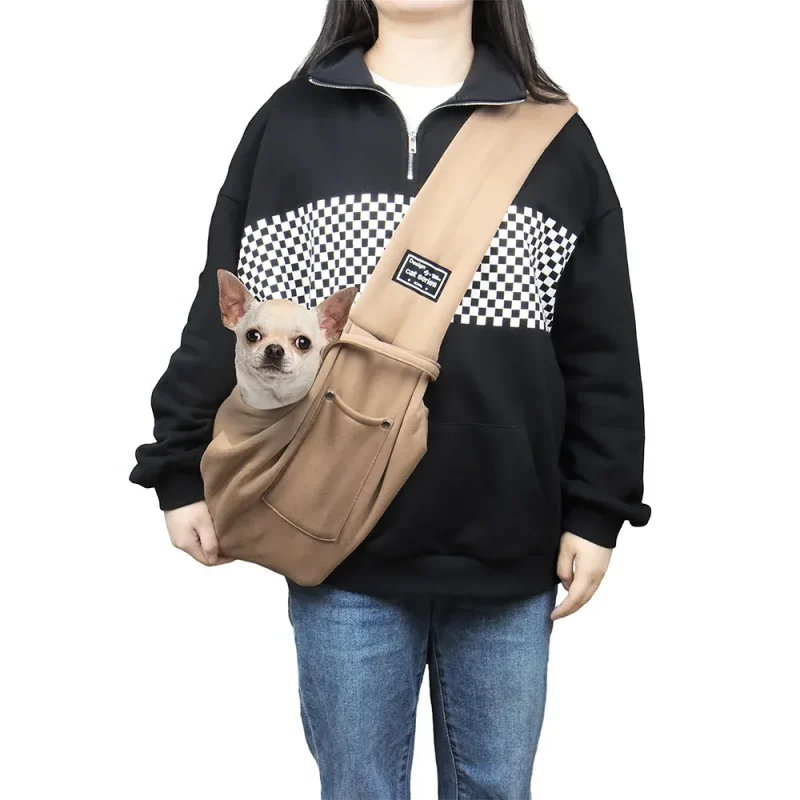
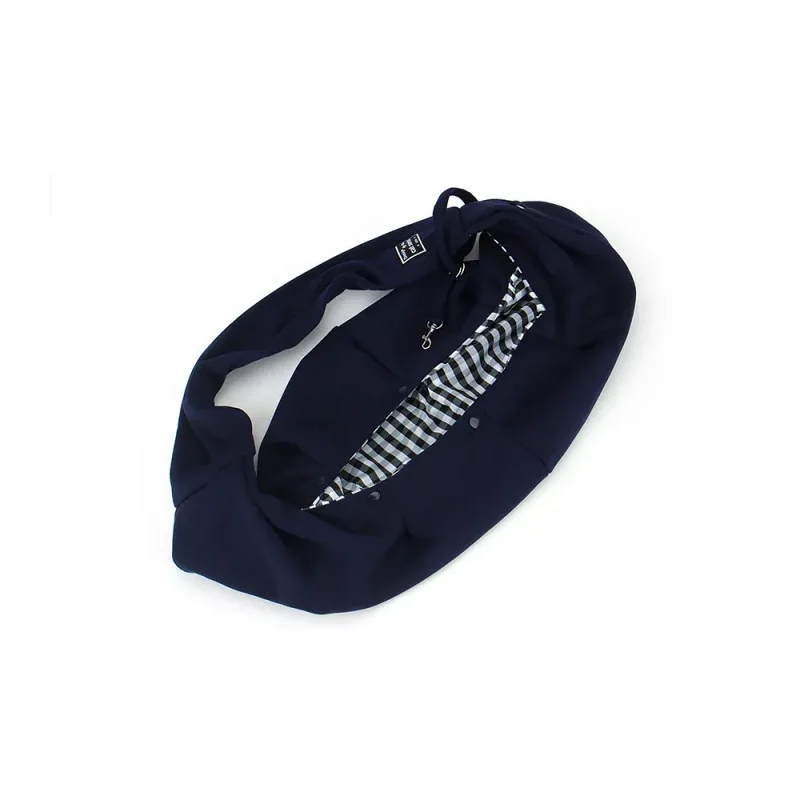
| Foldable shoulder bag with mesh top |
40 × 14 × 25 cm (15.7 × 5.5 × 9.8 in) |
Up to 5 kg (11 lb) |
Polyester, mesh top |
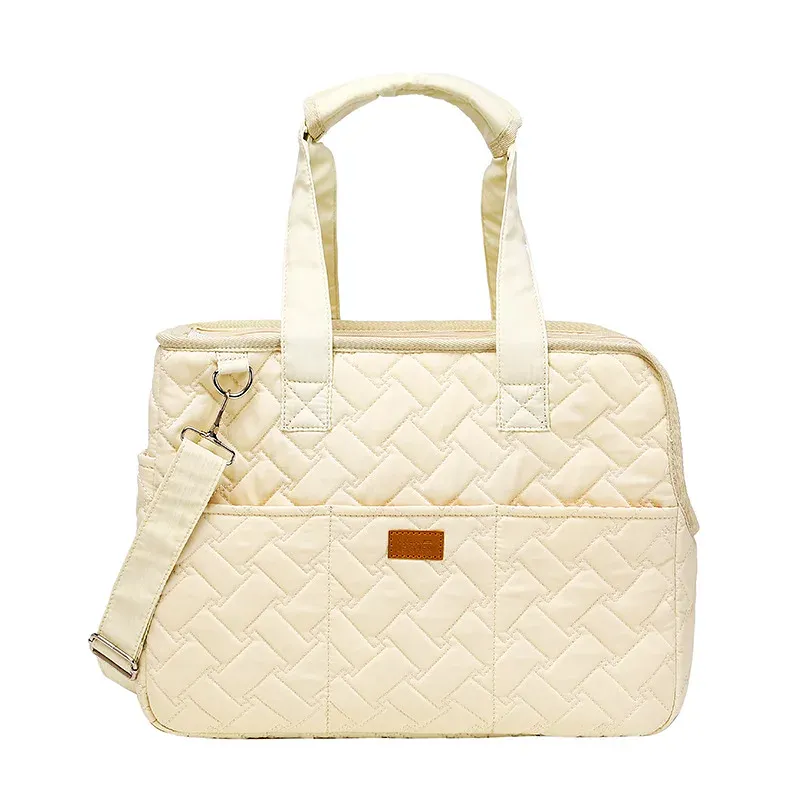
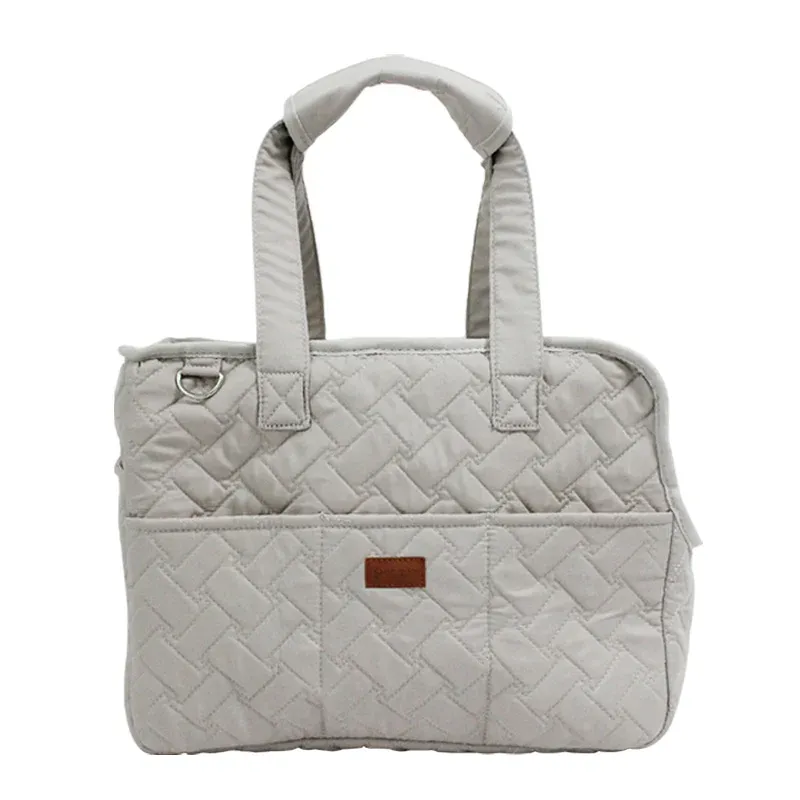
Slim profile, firm base board, six pockets |
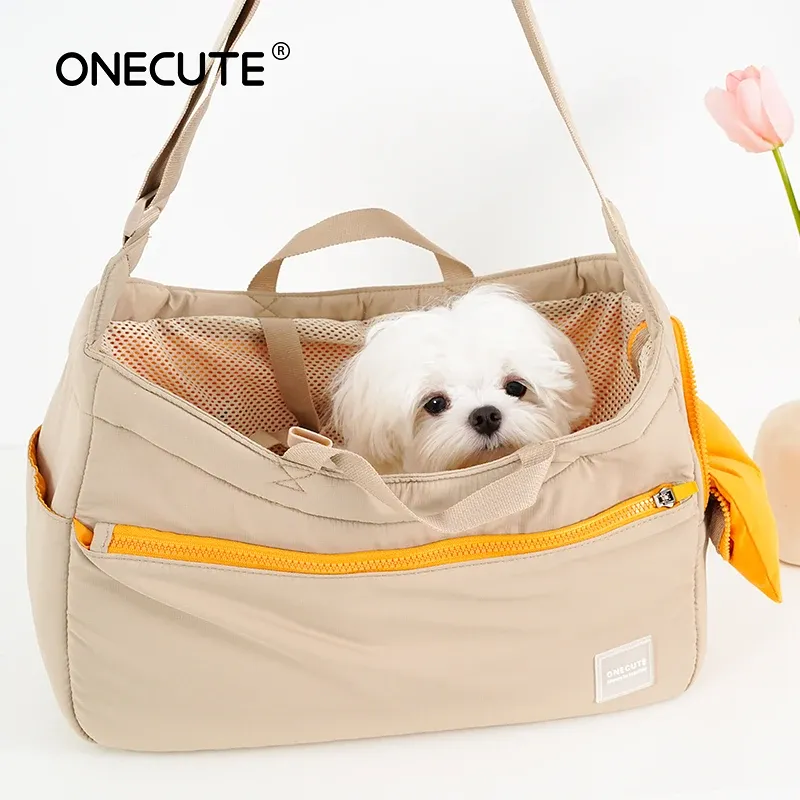
| Soft travel carrier, three sizes |
40 × 25 × 25 cm (15.7 × 9.8 × 9.8 in) to 50 × 34 × 34 cm (19.7 × 13.4 × 13.4 in) |
By size |
Nylon with anti-scratch mesh |
Size M at 25 cm (9.8 in) high is the most likely to fit under a seat |
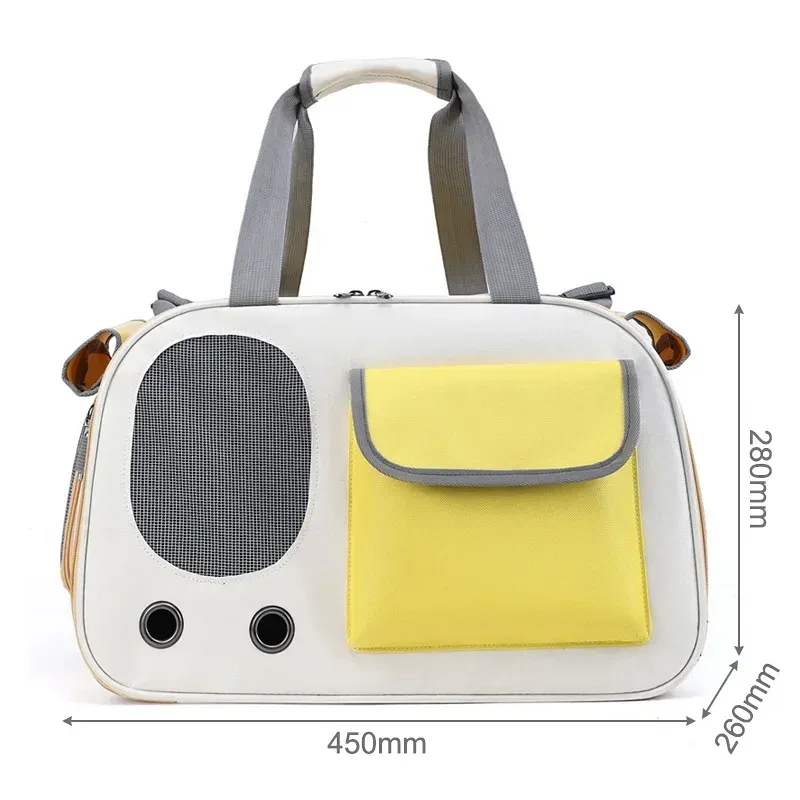
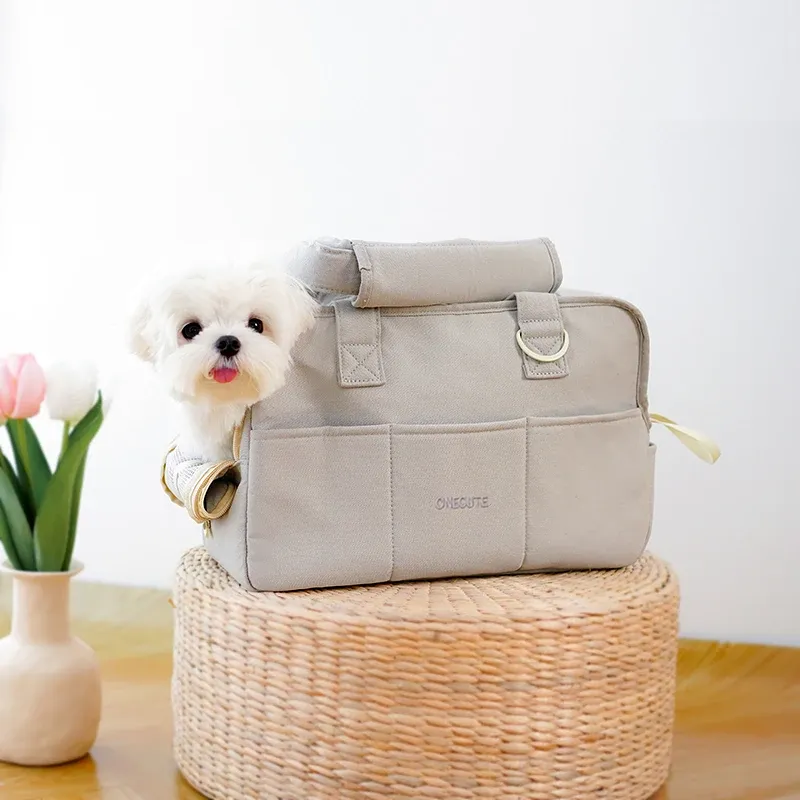
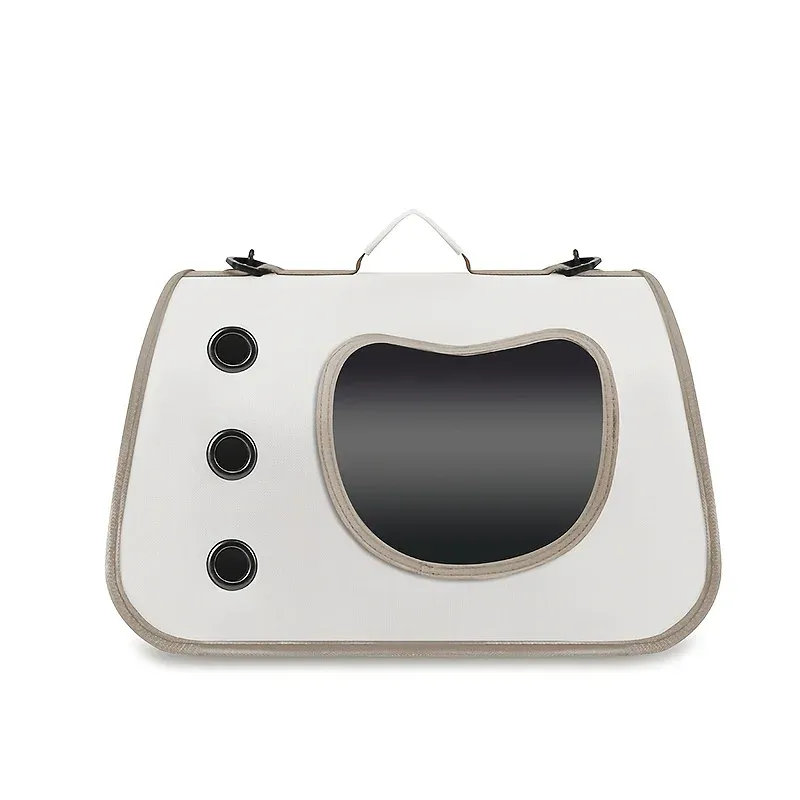
| Oxford tote on a wire frame |
45 × 26 × 28 cm (17.7 × 10.2 × 11.0 in) |
Up to 7.5 kg (17 lb) |
Oxford fabric on a steel-wire frame |
Stands up on its own; 28 cm (11.0 in) high is taller than some airlines allow |
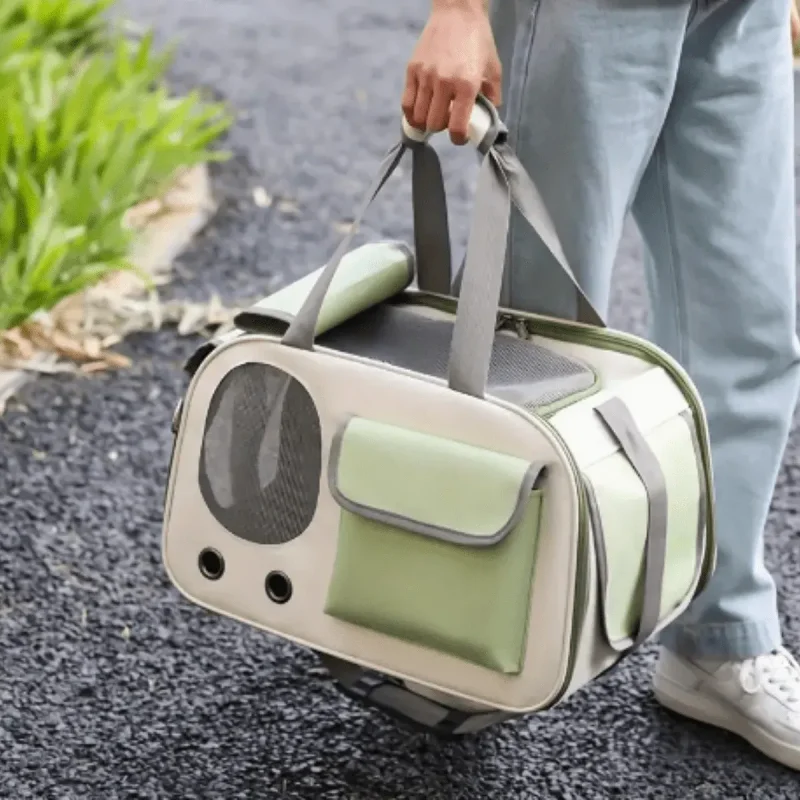
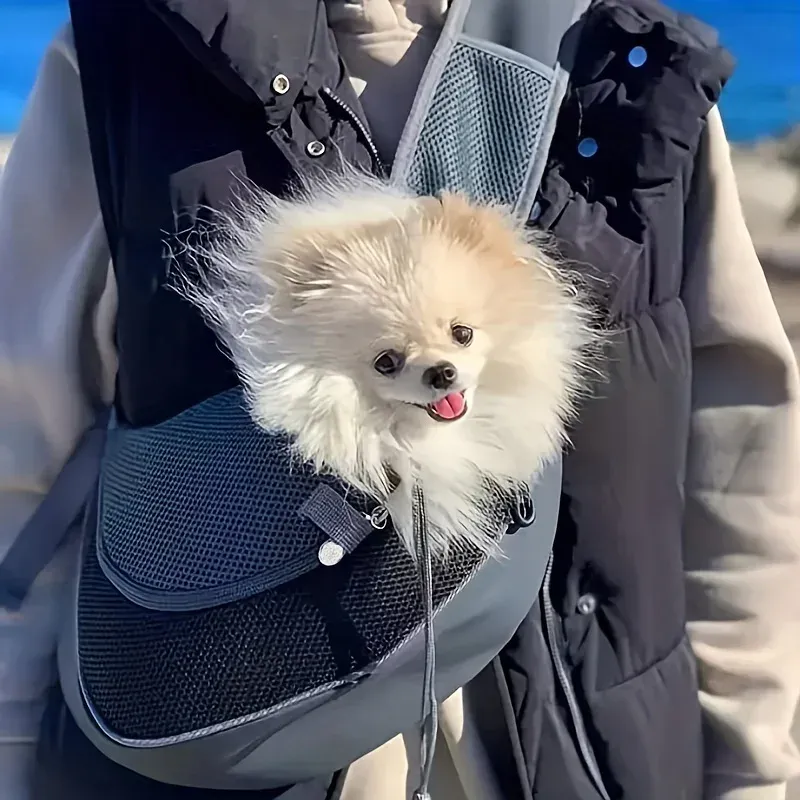
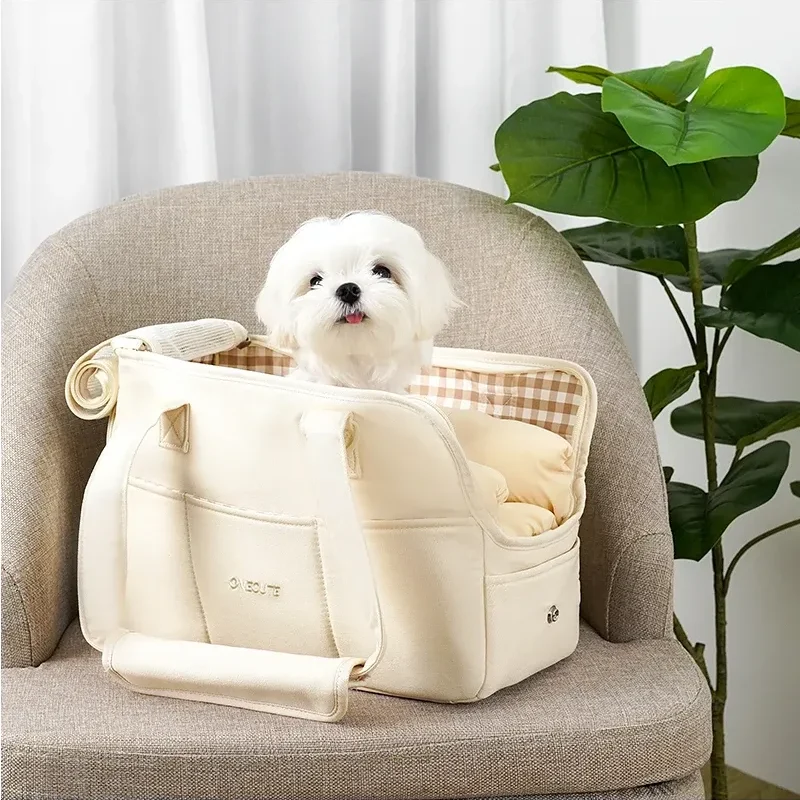
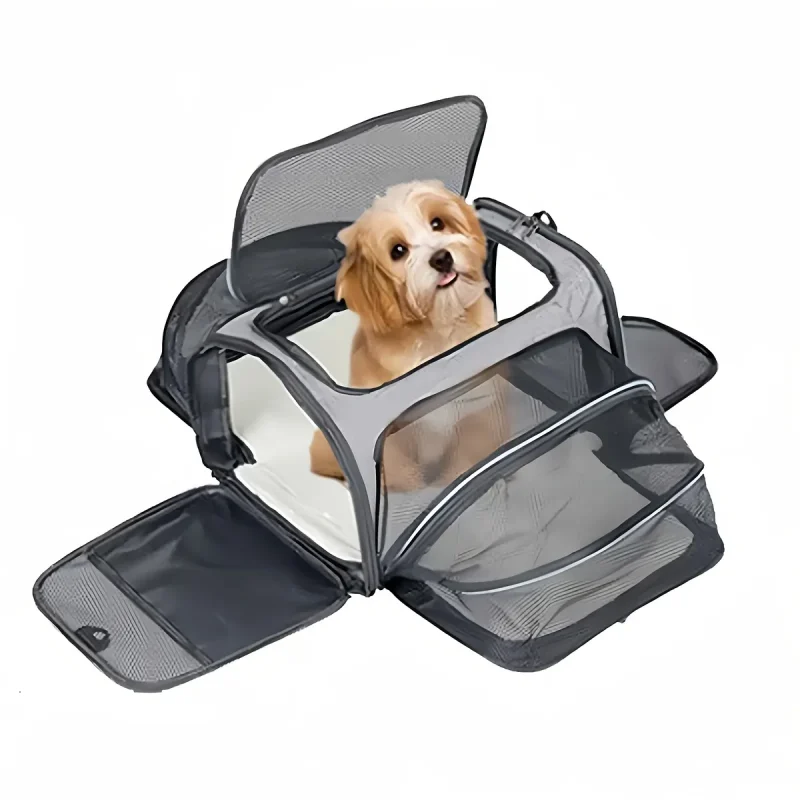
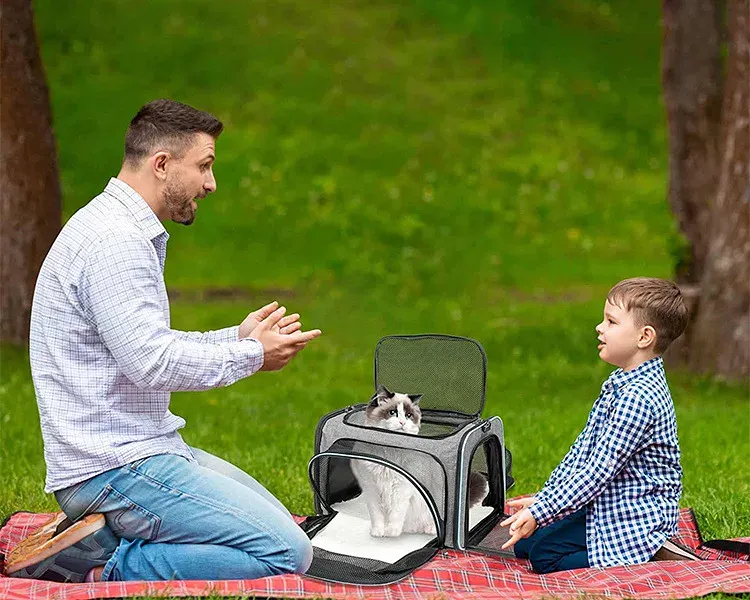
| Cabin-size carrier with mesh windows |
Sizes M and L; M is 28 cm (11.0 in) high |
M up to 6.8 kg (15 lb); L up to 11.3 kg (25 lb) |
Polyester that repels light rain |
Empty weight 0.95–1.3 kg (2–3 lb) |
Remember that the carrier counts towards a combined limit. Under an 8 kg rule, a carrier that weighs 1 kg (2.2 lb) empty leaves room for a dog of about 7 kg (15.4 lb). The larger carriers here, such as the size L mesh carrier, suit trains and cars better than a strict cabin limit.
How to measure your dog for a carrier
- Weigh your dog on a bathroom scale (weigh yourself holding them, then subtract your own weight). Add the carrier’s empty weight to check the airline’s combined limit.
- Measure length from the tip of the nose to the base of the tail, with your dog standing.
- Measure height from the floor to the top of the head while sitting, and while lying curled up.
- Compare with the inside of the carrier. Your dog should be able to turn round and lie down comfortably. Under a seat they will mostly lie down, so the lying height matters more than the standing height.
- If your dog is between sizes, take the larger one, unless the larger one breaks your airline’s height limit.
What the materials and features do
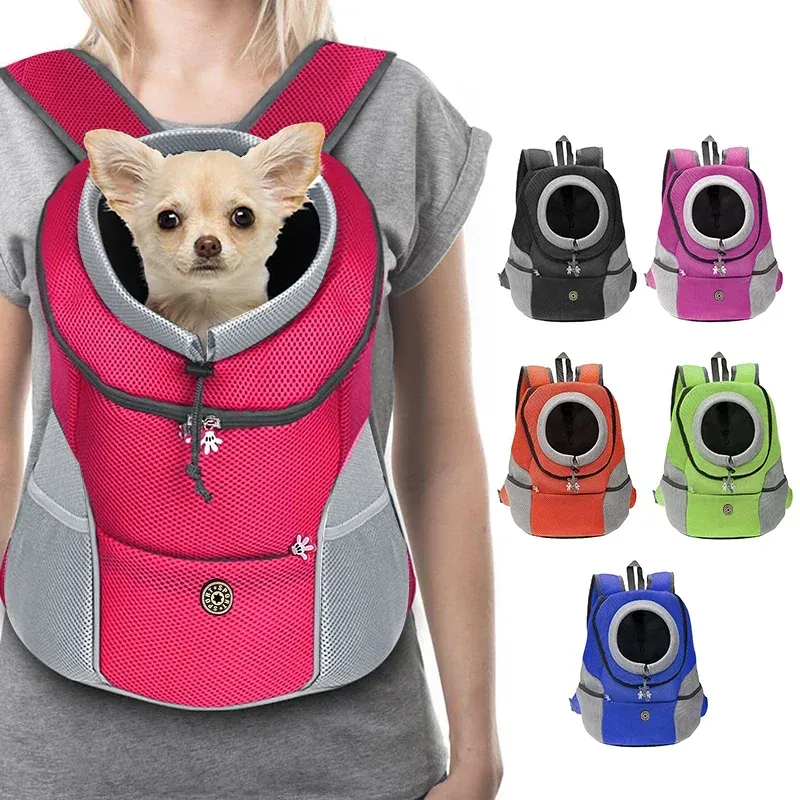
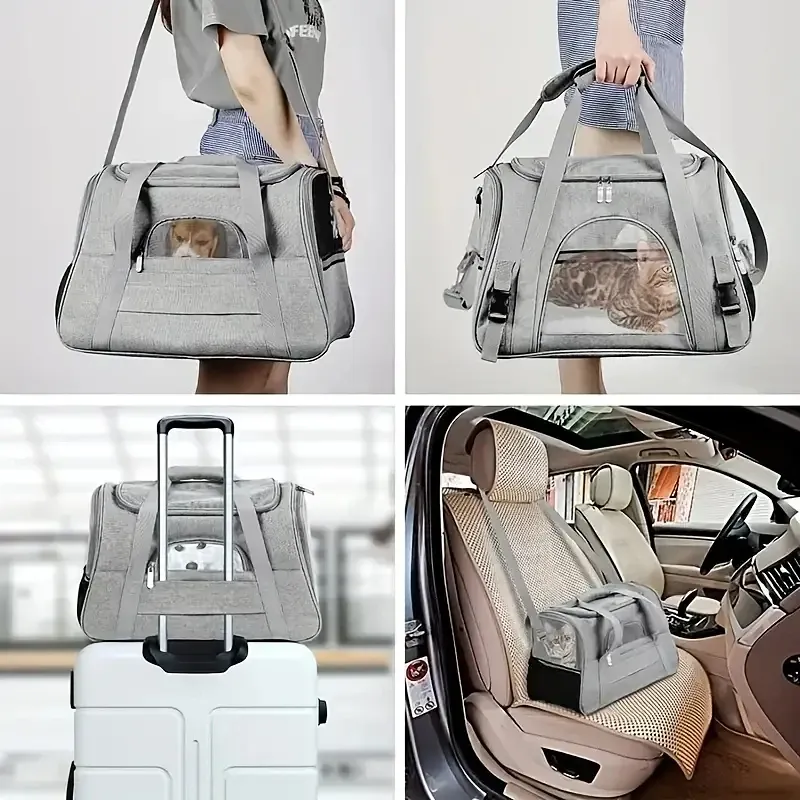
- Mesh panels let air move and let your dog see out. Anti-scratch mesh, as on the soft travel carrier and the cabin-size carrier, uses a tighter weave that resists claws. More mesh means better airflow in a warm cabin or station.
- Nylon and polyester are light, which matters under a combined weight limit, and wipe clean with a damp cloth. The cabin-size carrier’s polyester repels light rain on the walk to the terminal.
- Oxford fabric on a steel-wire frame holds its shape, so the tote stands up on its own and your dog has more headroom. The frame can bend in a washing machine, so wipe this one clean by hand.
- A firm base board stops the bottom sagging when you carry the bag, which keeps a small dog from sliding into a heap.
- Inside safety lead. A short clip inside the bag attaches to your dog’s harness, so they can’t jump out when you open the top at a security check. Clip it to a harness, never a collar.
- Removable fleece mat. The soft travel carrier and the cabin-size carrier have fleece mats that lift out for a cool, gentle machine wash.
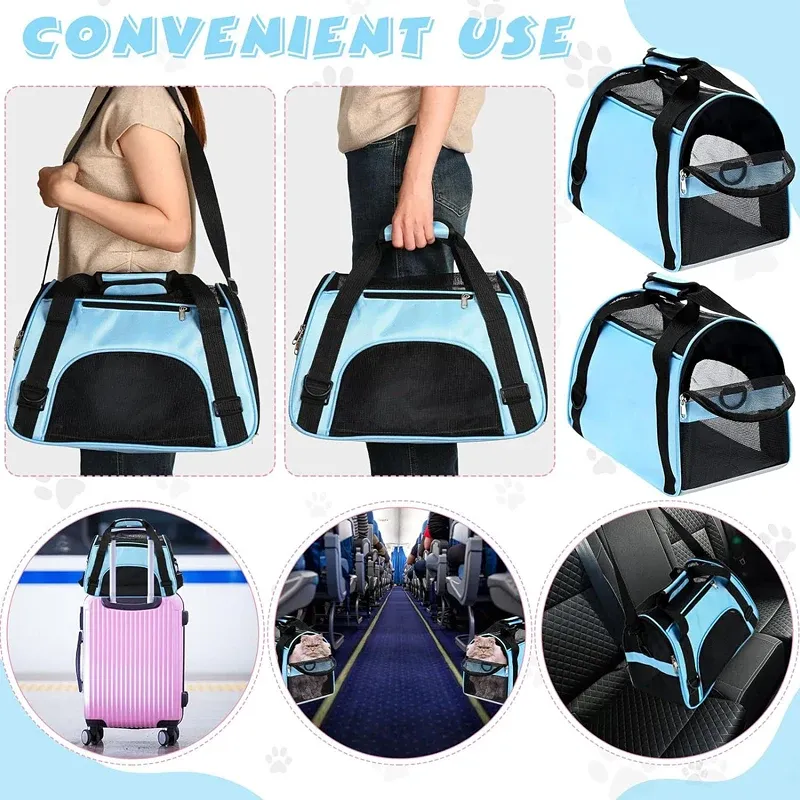
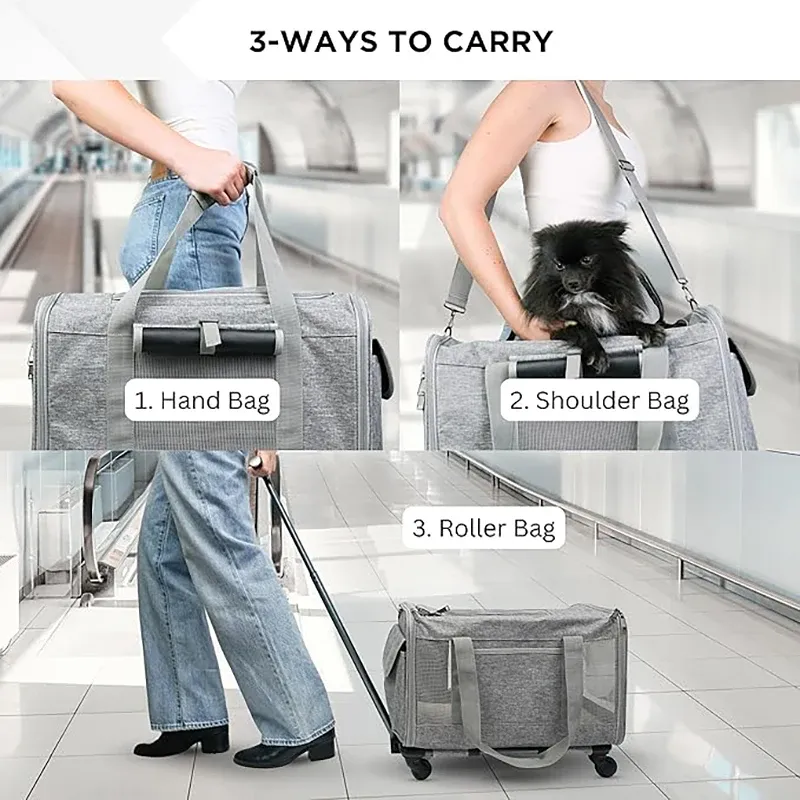
- Suitcase sleeve. A strap on the back slides over a wheeled case handle, so you aren’t carrying the weight through a long terminal.
- Top and end openings. A top opening lets you lift your dog in; an end door lets a nervous dog walk in by themselves.
Choosing for your dog
- Very small dogs under about 5 kg (11 lb), such as Chihuahuas, Yorkshire Terriers and Papillons, fit the slim shoulder bag and the smallest travel carrier.
- Dachshunds and other long dogs need length more than height. Check the inside length against your dog lying stretched out.
- Flat-faced breeds such as French Bulldogs and Pugs need plenty of mesh for airflow. Many airlines also have extra rules for these breeds, so check before you book.
- Nervous dogs often feel safer in a carrier with fewer windows. Drape a light cloth over one side if the view upsets them.
- Puppies must meet each airline’s minimum age, which is often several months, and the travel rules for crossing borders.
Getting your dog used to the carrier
A dog that meets the carrier for the first time at the airport will struggle. Start at least two weeks before you travel:
- Leave the carrier open in the living room with a familiar blanket inside. Drop treats in it and let your dog explore on their own.
- Feed a few meals inside it, with the door open.
- Close the door for a few minutes while you stay nearby, then open it before your dog gets restless. Build up to half an hour.
- Pick the carrier up and walk round the house, then take short trips by car or bus.
- On the day, take your dog for a good walk and a toilet stop before you leave, and feed them well ahead of time. The RSPCA advises feeding more than two hours before a journey.
On the day of travel
- Bring the airline’s booking confirmation for your dog and any travel documents for crossing borders. Rules on pet passports, health certificates and rabies vaccination change, so check the current official guidance for your route.
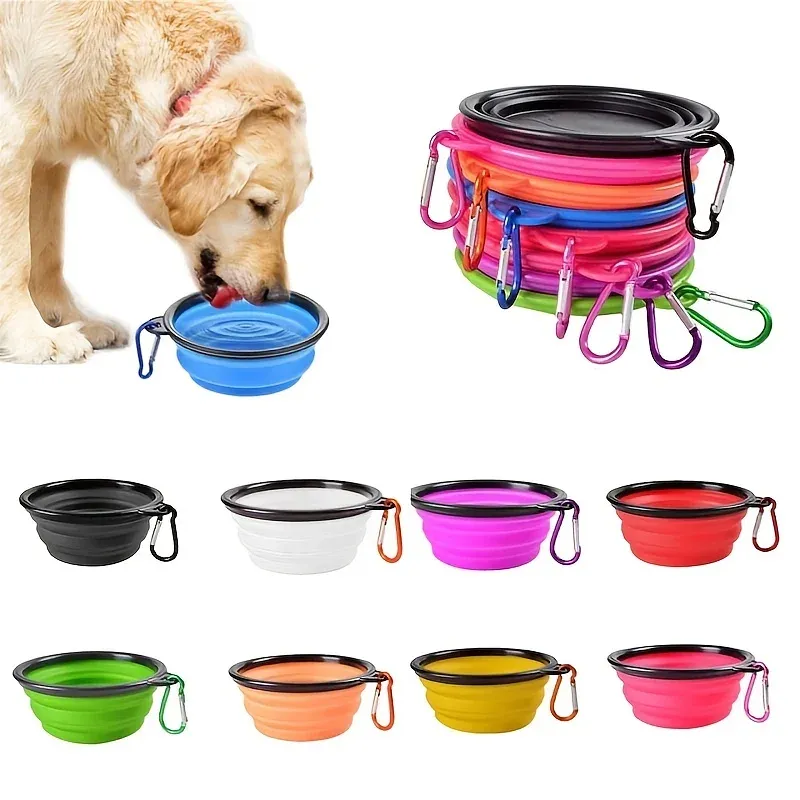
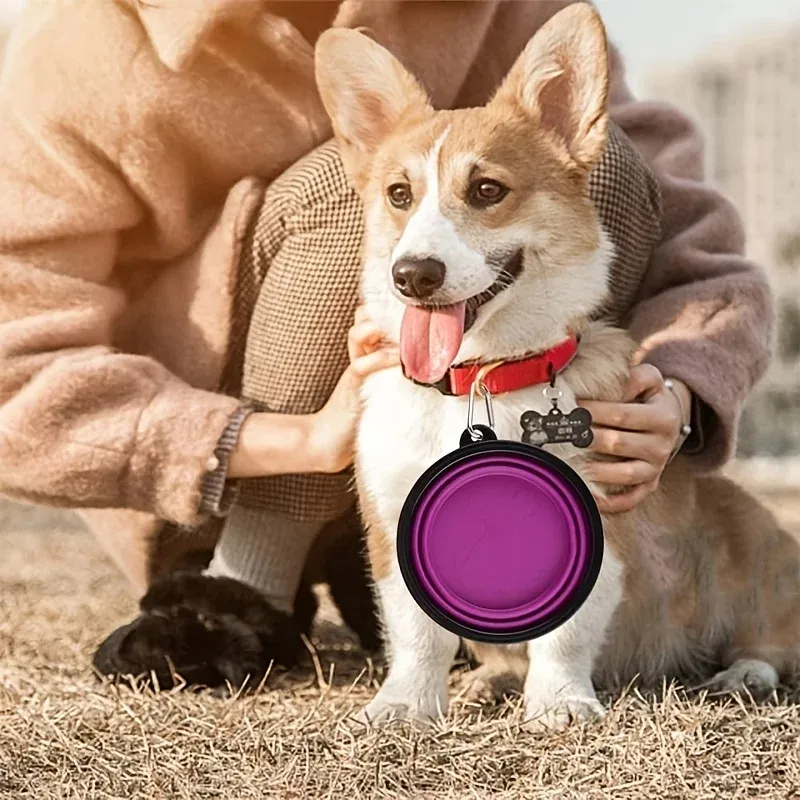
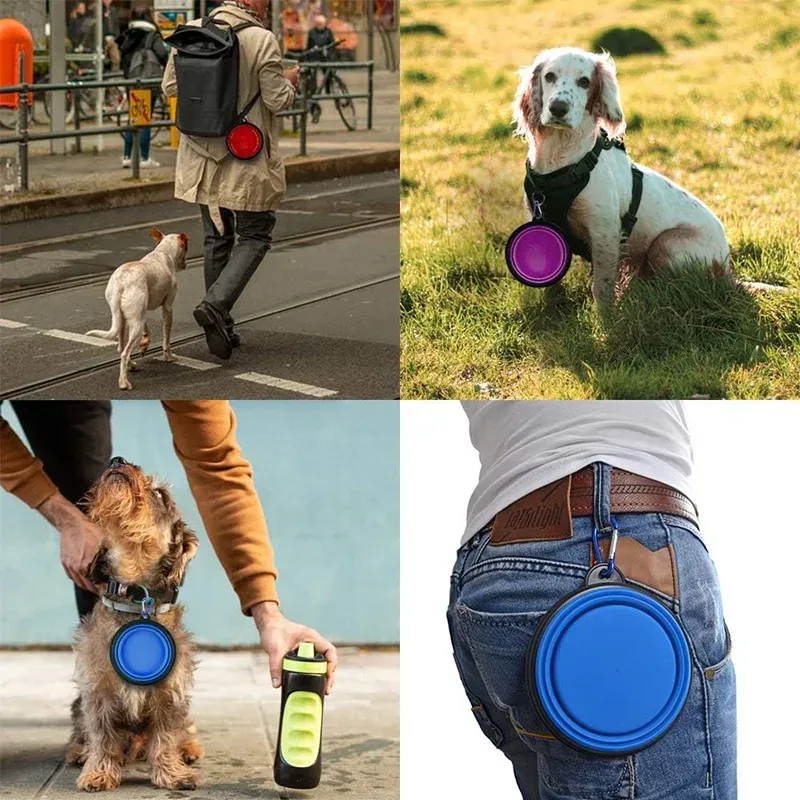
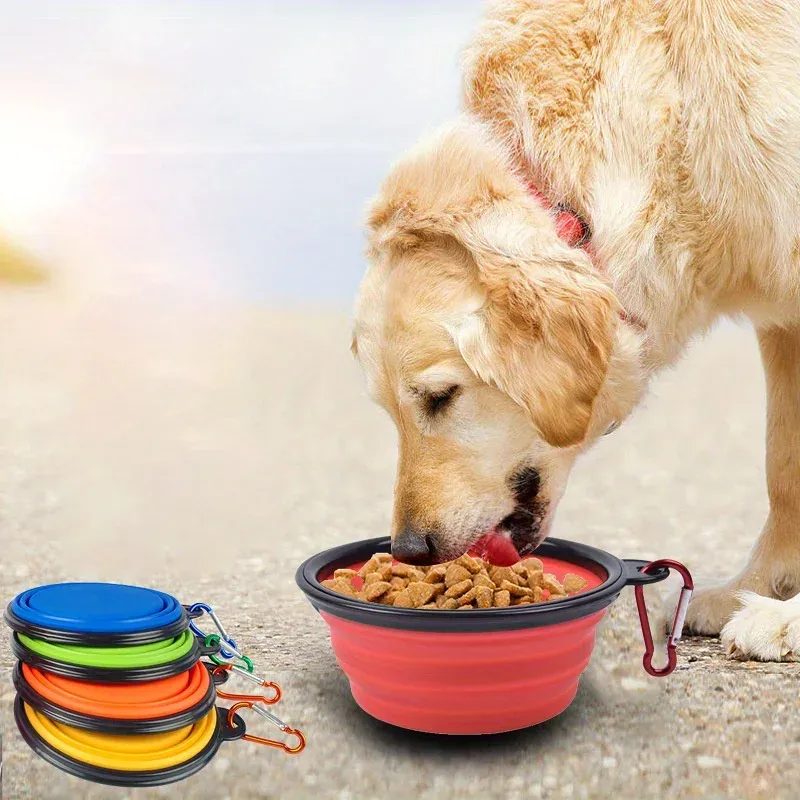
- Pack a puppy pad in the bottom of the carrier, a few poo bags, a collapsible dog bowl and a lead.
- At security you may be asked to take your dog out while the bag goes through the scanner. Keep them on a lead and harness.
- Keep the carrier closed under the seat during the flight, as most airlines require.
- Never put the carrier in direct sun or in a hot car, even briefly.
Common problems and fixes
- The bag won’t fit under the seat. Height is usually the problem. Choose the lowest carrier your dog can lie in, and remember that soft sides give a little but can’t be squashed flat with a dog inside.
- Your dog scratches at the mesh. They aren’t used to the carrier yet. Go back a few steps in the training and keep sessions short.
- Your dog pants heavily. They are too warm or stressed. Move the carrier out of the sun, give a small drink when you can, and speak to your vet before a long trip.
- The bottom sags. Use a carrier with a firm base board, or carry it with a hand under the base.
Cleaning and care
- Lift out fleece mats and machine-wash them on a cool, gentle cycle. Air-dry flat.
- Wipe nylon and polyester outers with a damp cloth.
- Don’t machine-wash the Oxford tote, because the wire frame can bend. Wipe it inside and out and let it dry open.
- Check zips, D-rings and the inside safety clip before every trip.
Questions owners ask
How heavy can my dog be to fly in the cabin?
It depends on the airline. A common limit in Europe is about 8 kg (17.6 lb) for dog and carrier together, but check your airline’s own page before you book.
Can I use the same carrier on trains and in the car?
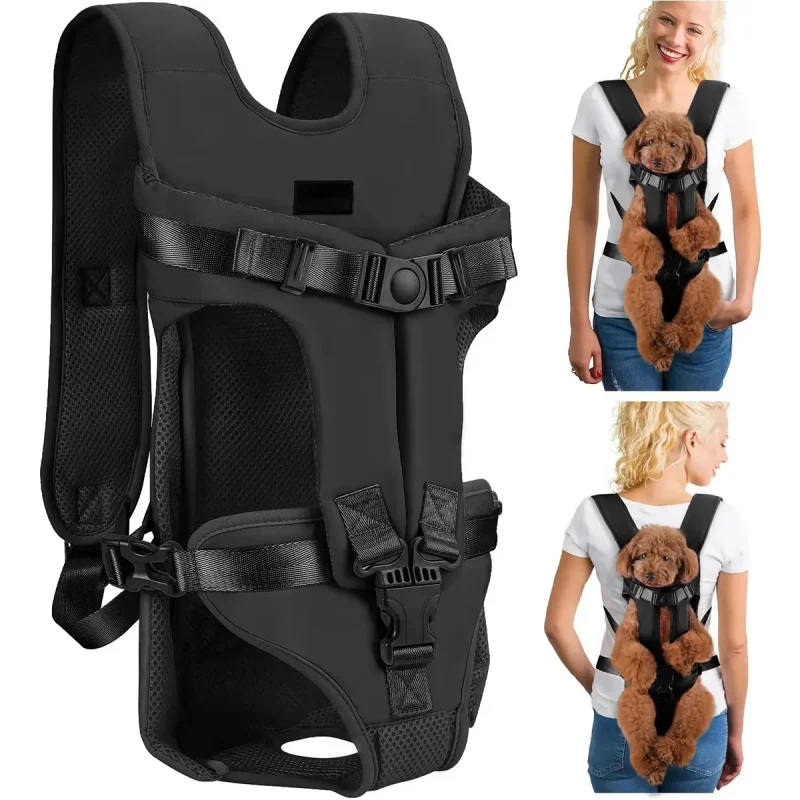
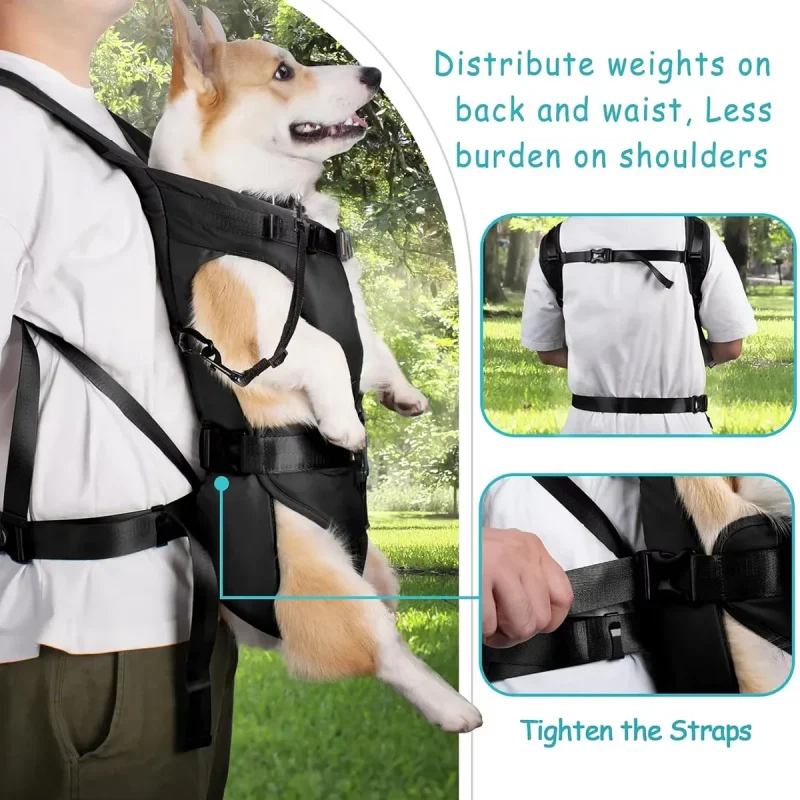
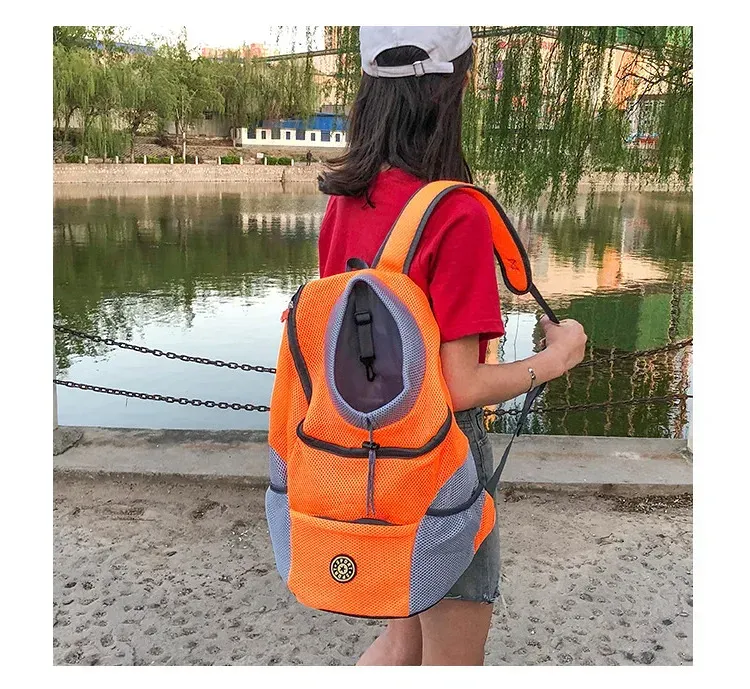
Yes. In the car, put the carrier on the floor behind a front seat or strap it in with the seat belt, so it can’t slide. On foot, a dog backpack carrier or a dog sling is easier on your shoulders for longer distances.
Do I need to take my dog out at airport security?
Often, yes. Staff usually scan the empty carrier while you carry your dog through. Have a harness and lead on them before you reach the queue.
Why buy your dog’s travel carrier from TAILOVO
Every carrier here lists its outside size in centimetres with inches in brackets, its empty weight where the maker gives one, and the dog weight it is rated for, so you can check it against your airline’s rules before you order. We sell gear for dogs only, and each carrier has to pass the same checks: real ventilation, a secure inside clip and a base that holds its shape. Orders over $79 ship free with tracking. Not sure which size suits your flight? Email [email protected] with your airline and your dog’s weight, and a real person will help.
Measure your dog, check your airline’s limits, and order the carrier that fits from TAILOVO today.