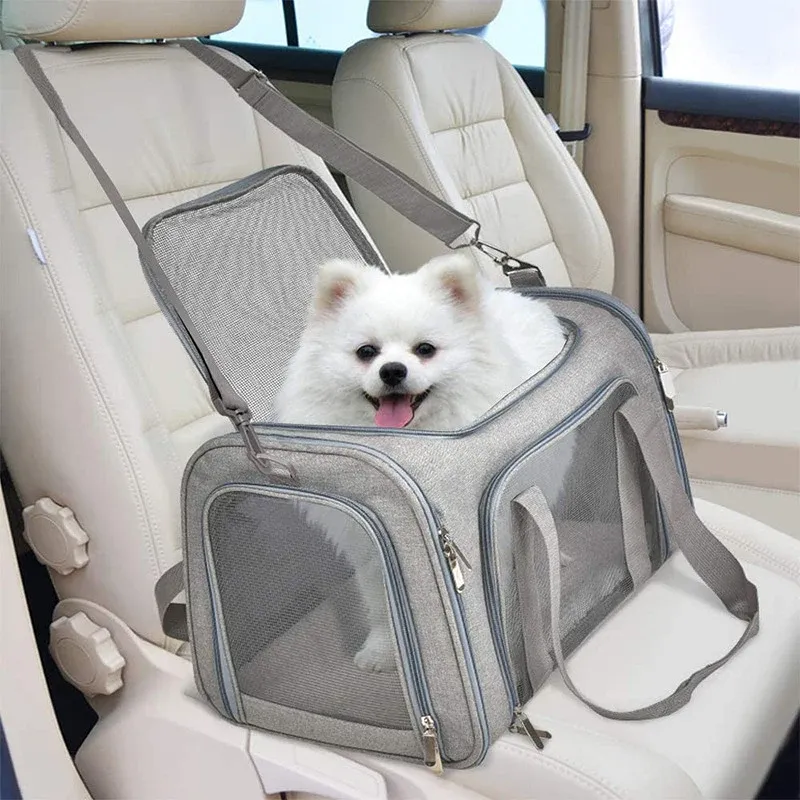
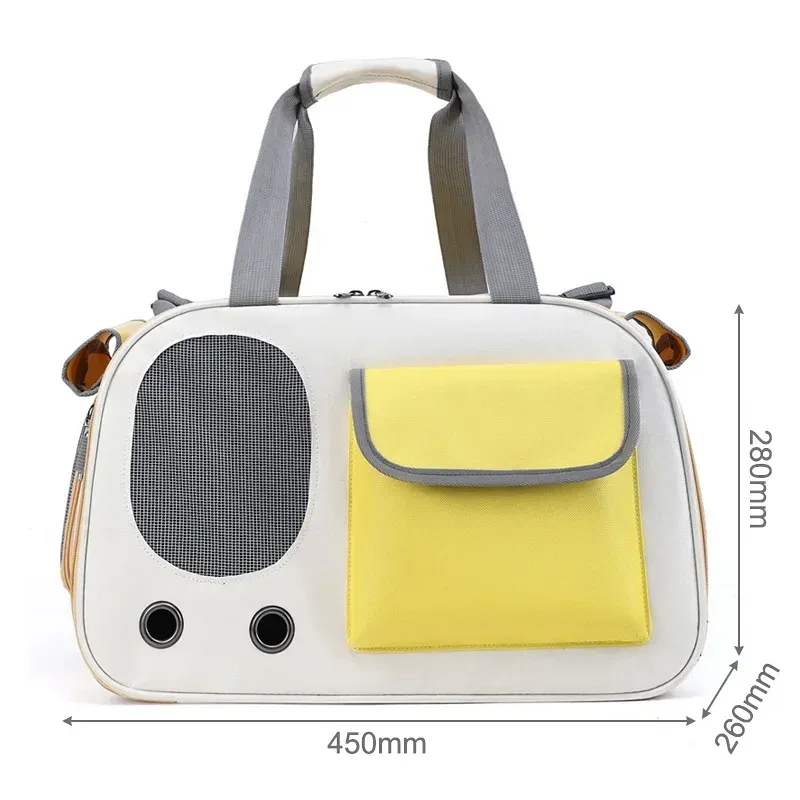
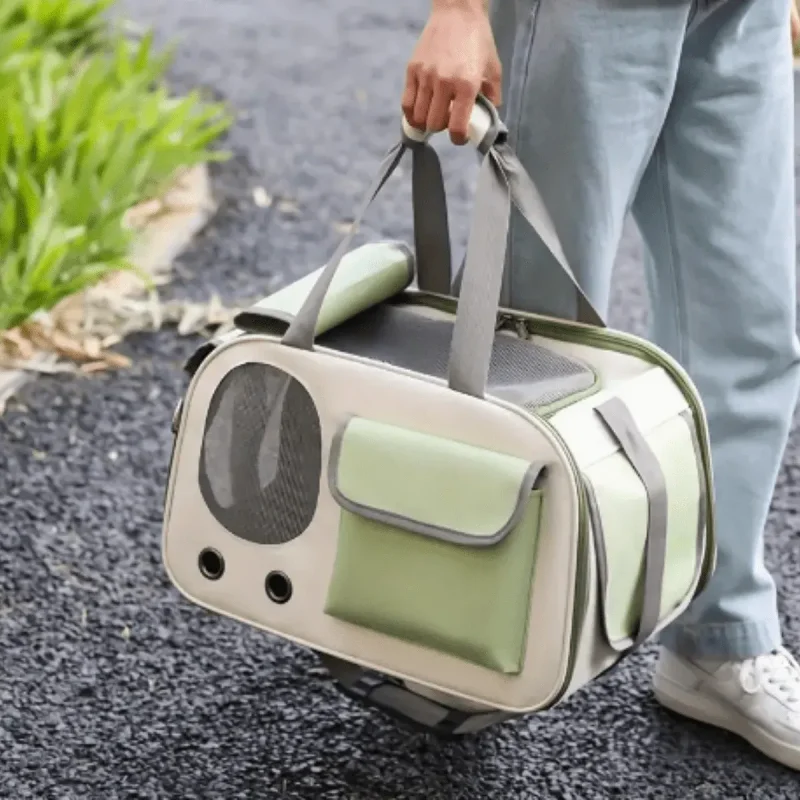
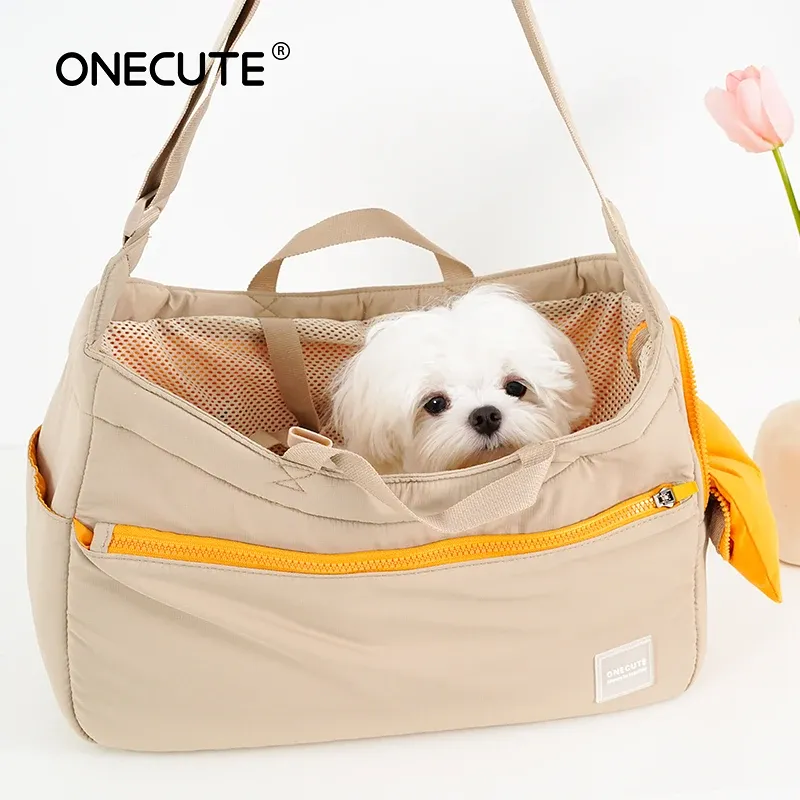
Some walks are too long for short legs: a city day out with stations and escalators, a coastal path that turns rocky, a vet visit by bus, or the last mile home with a tired senior dog. A dog carrier backpack puts your dog on your back or your chest, with your hands free for tickets, a coffee or a walking pole. The four backpacks in this category suit small dogs from about 1 kg (2.2 lb) up to 15 kg (33 lb), depending on the model. This guide covers the different styles, how to size one by back length and chest, what the materials do, and how to carry a dog comfortably for longer than ten minutes. For car and cabin travel, browse the rest of our dog travel accessories.
Backpack styles compared
| Backpack |
How your dog rides |
Stated dog weight |
Main material |
Best for |
| Ventilated hiking backpack |
On your back, head and front paws out |
1–15 kg (2.2–33 lb), four sizes |
Nylon with large mesh panels |
Hikes and long walks |
| Hands-free front carrier |
Front or back; head and front legs free |
Up to 10 kg (22 lb), four sizes by back length and chest |
Splash-resistant nylon, foam padding, air-mesh seat |
City days, markets, crowded places |
| Front carrier with reflective strips |
Front or back, sitting upright with head out |
1–12 kg (2.2–26 lb), three sizes |
Breathable polyester mesh, padded panels |
Evening walks, everyday errands |
| Bubble-window backpack |
Fully enclosed in a hard shell |
Under 5.4 kg (12 lb) |
Clear PC plastic shell, polyester back panel |
Short trips, vet visits, public transport |
Open-top, front-facing or enclosed?
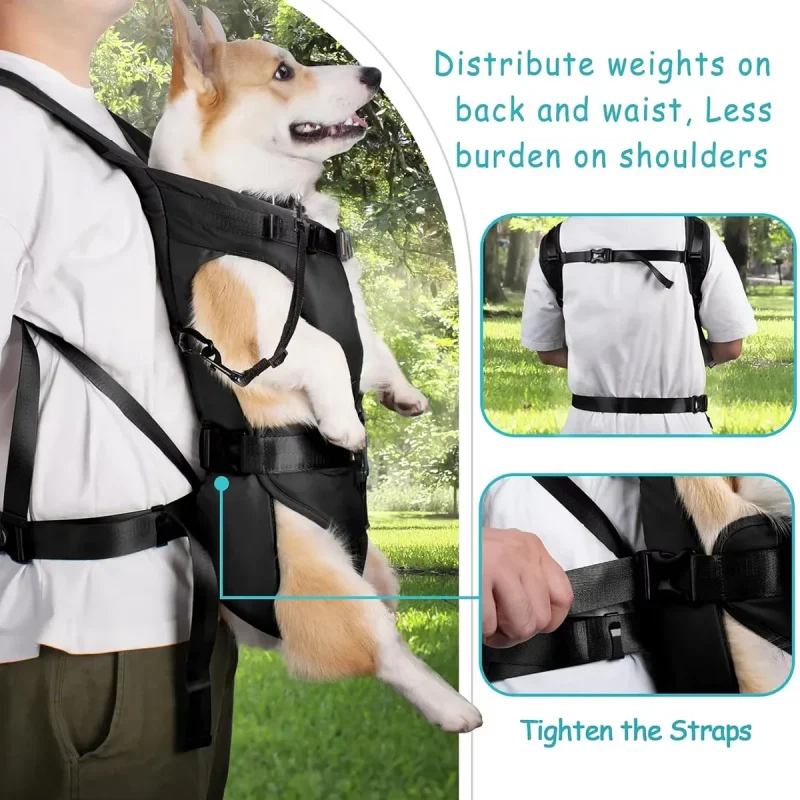
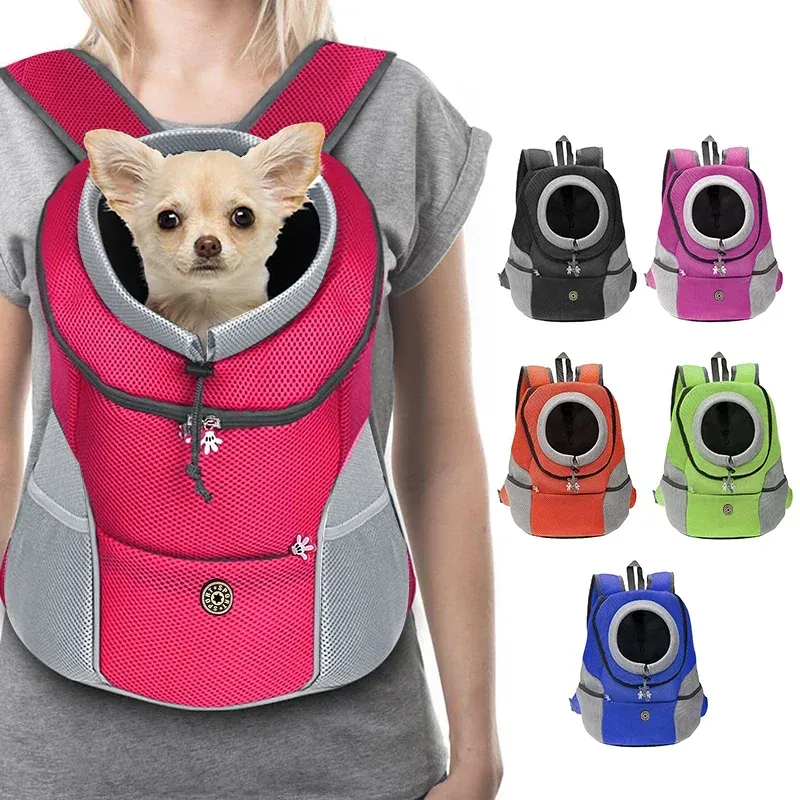
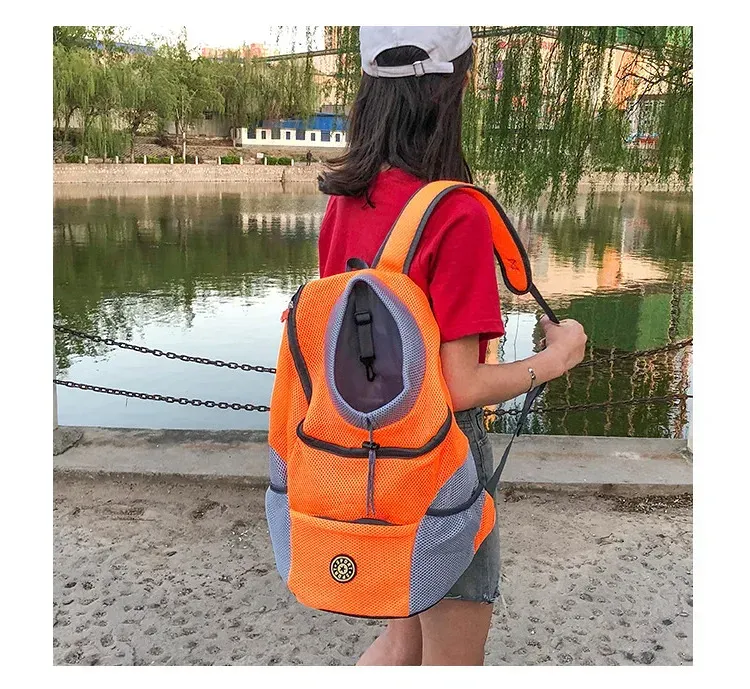
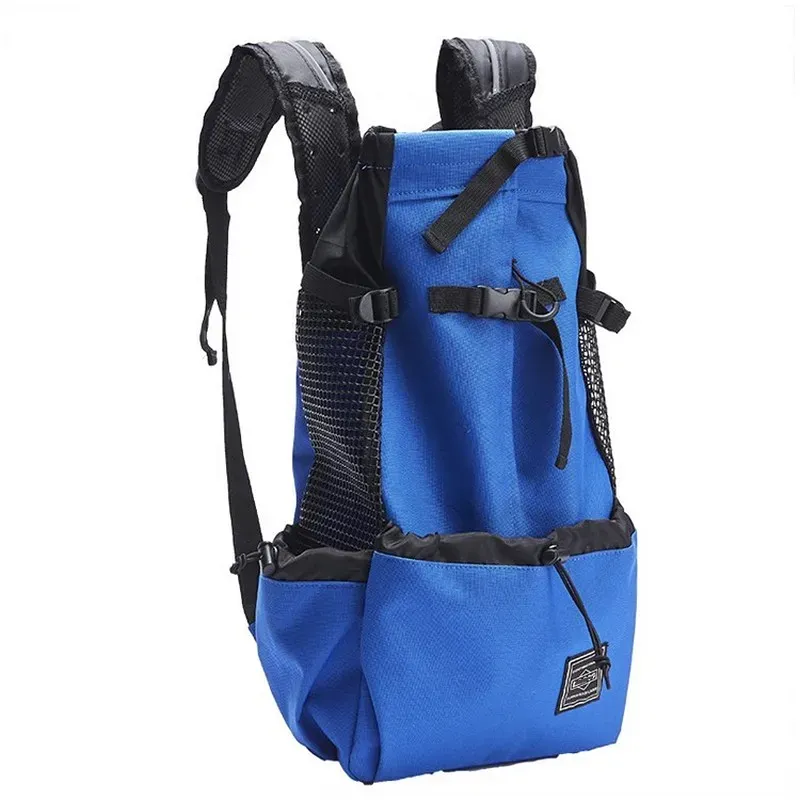
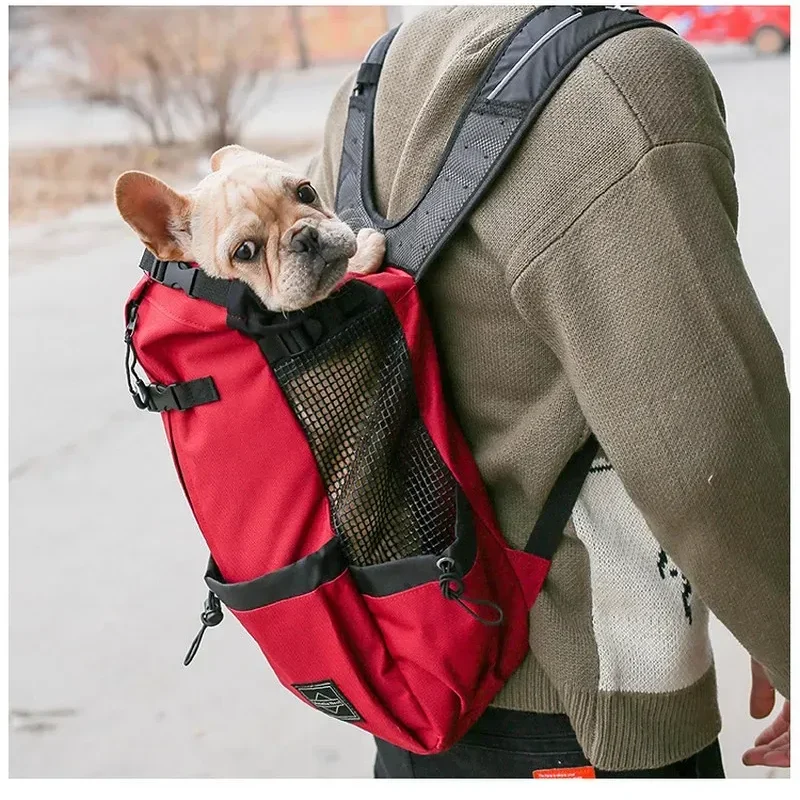
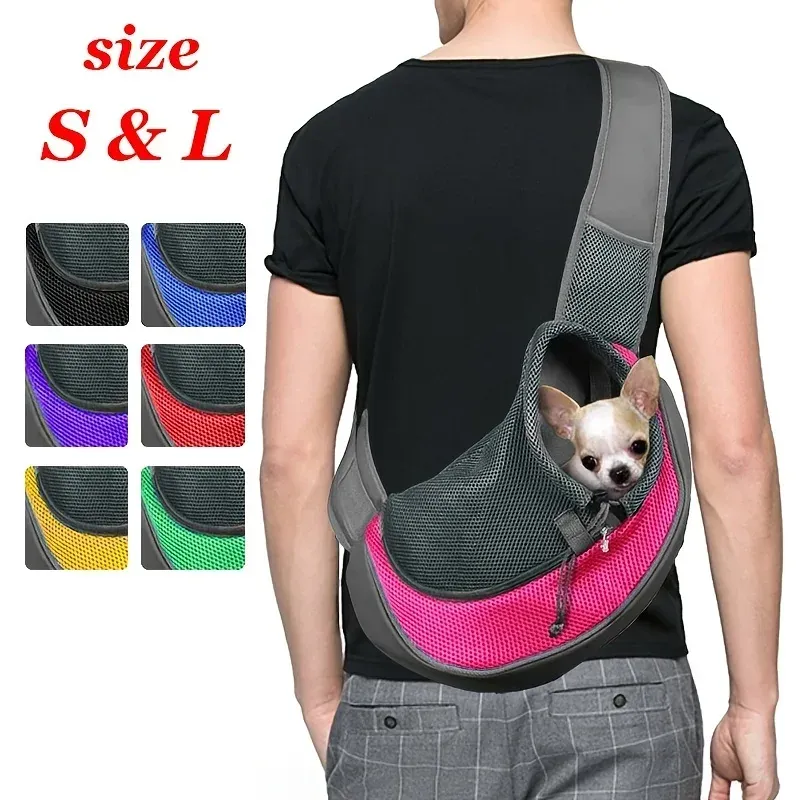
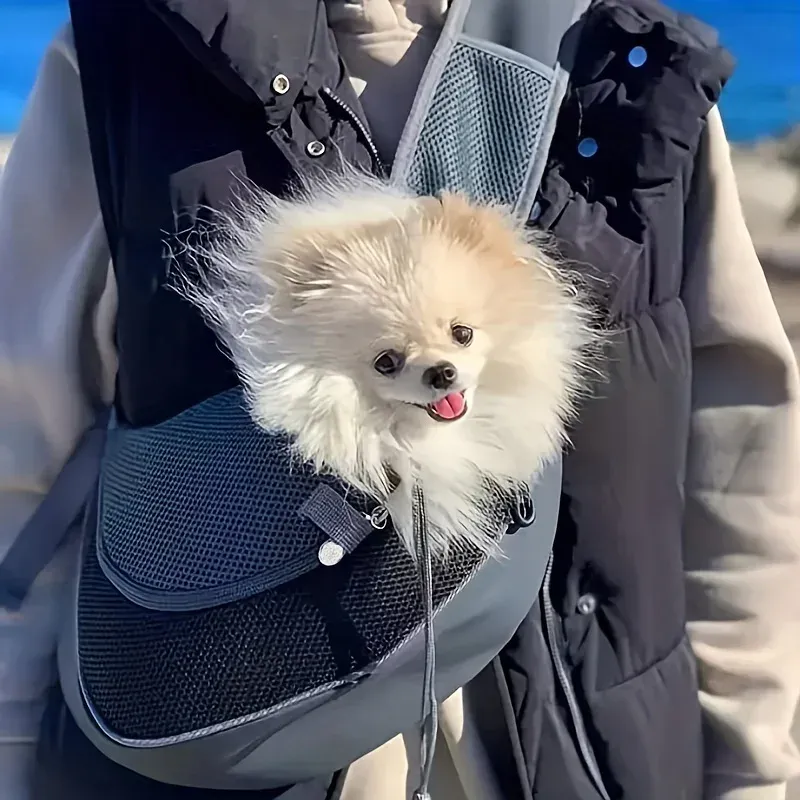
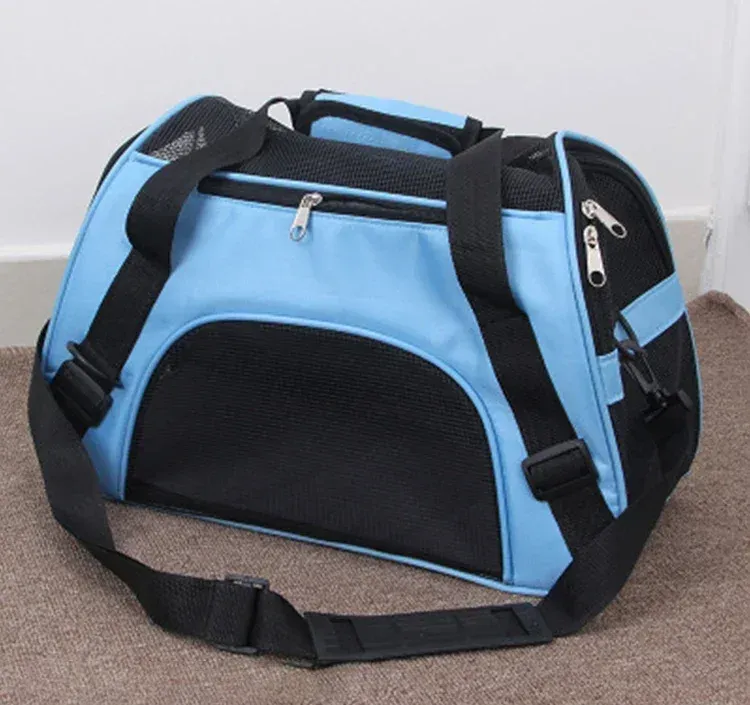
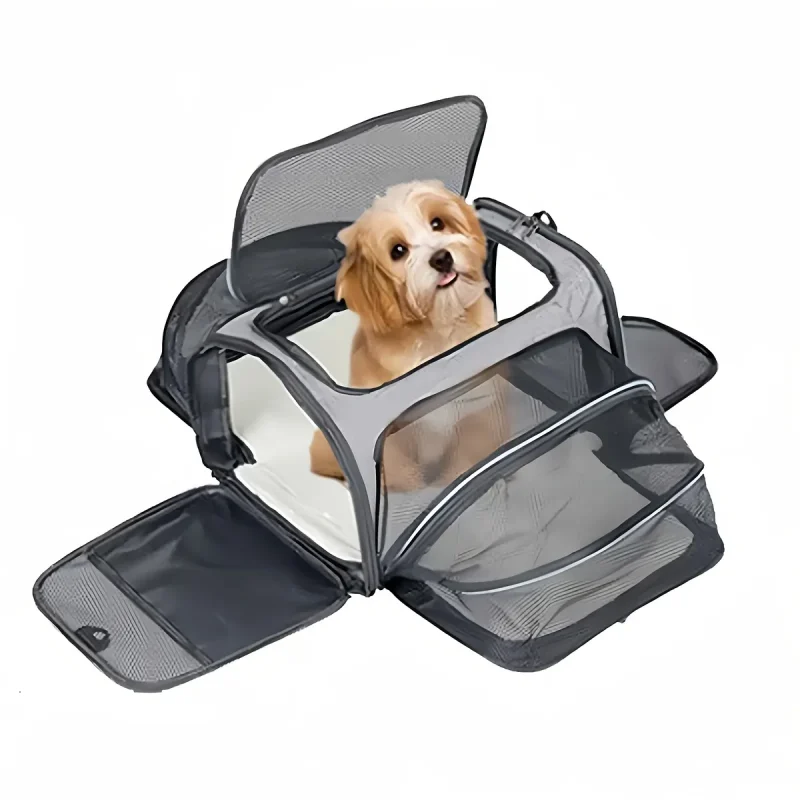
- Open-top backpacks, such as the ventilated hiking backpack, let your dog look out with their head and front paws out of a drawstring neck. Most dogs settle well because they can see and smell what’s going on. This style suits outdoor walks in mild weather.
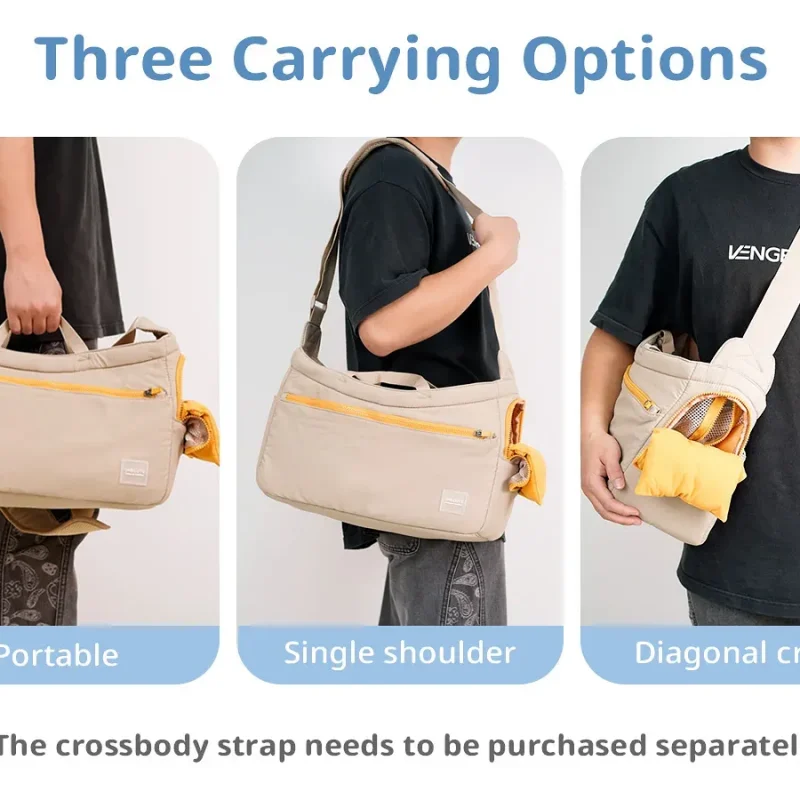
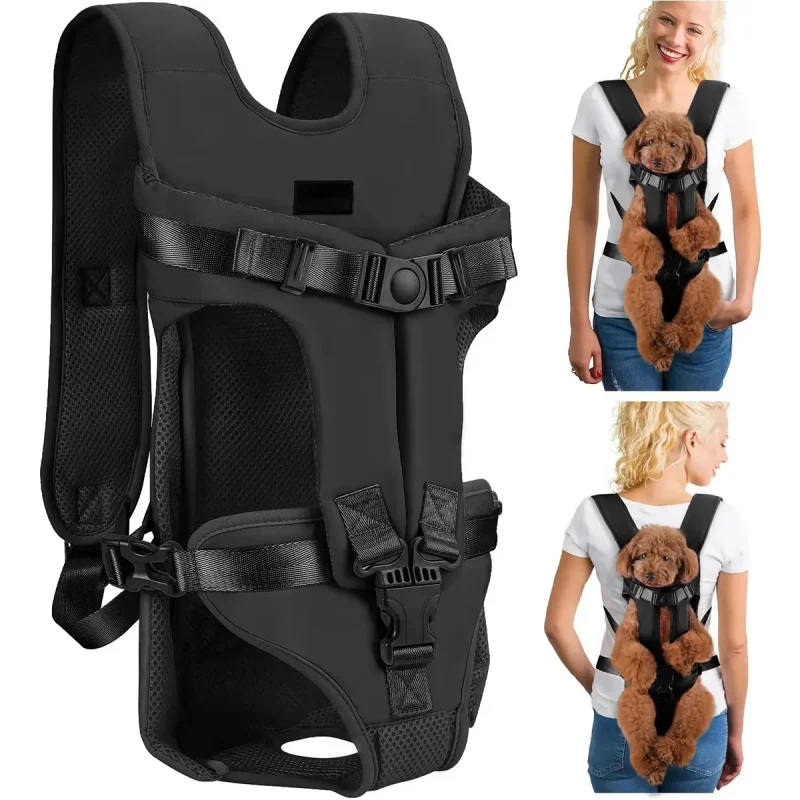
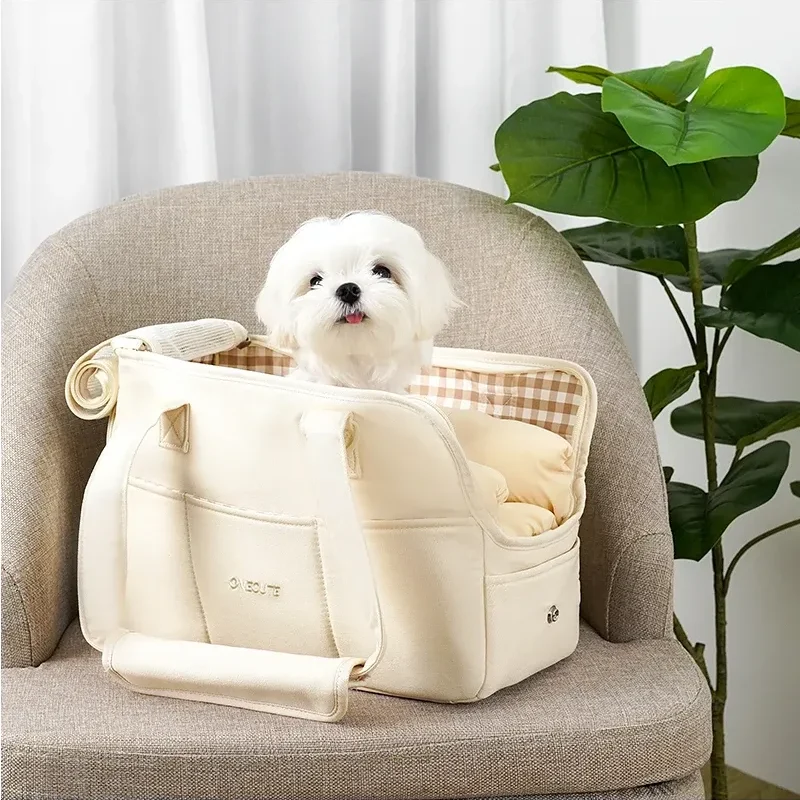
- Front carriers hold your dog against your chest, where you can see them and they can see you. The hands-free carrier leaves the head and front legs free and uses buckles rather than zips, with a tail hole and a wide air-mesh seat. Both front carriers can also be worn on your back.
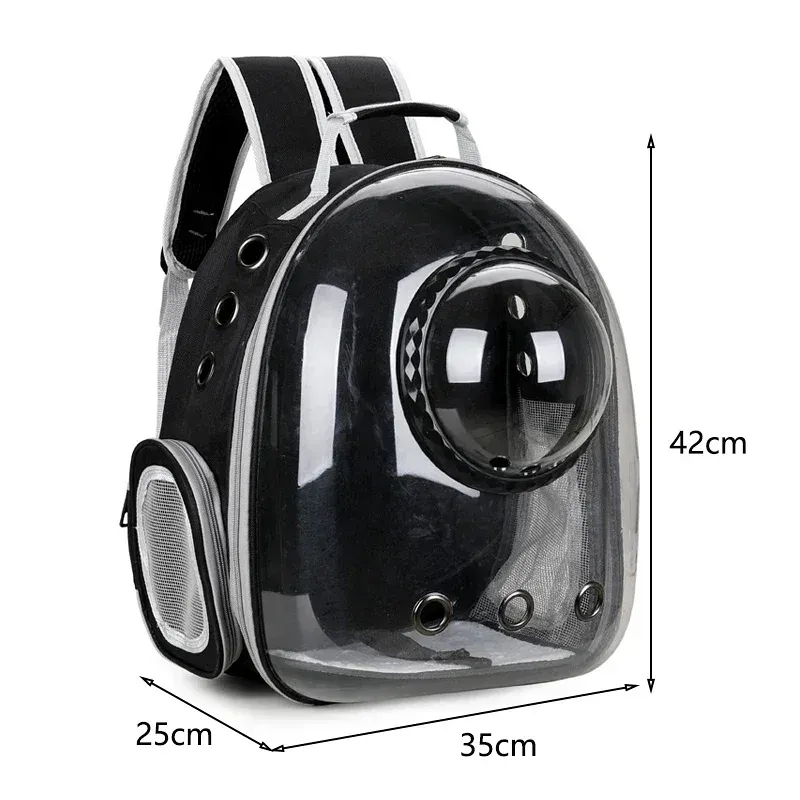
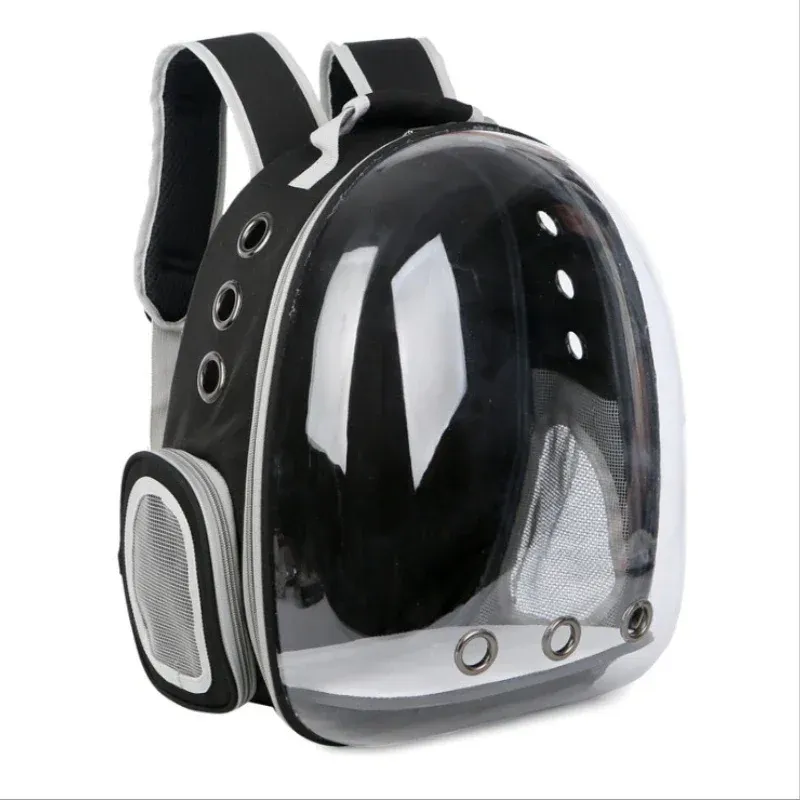
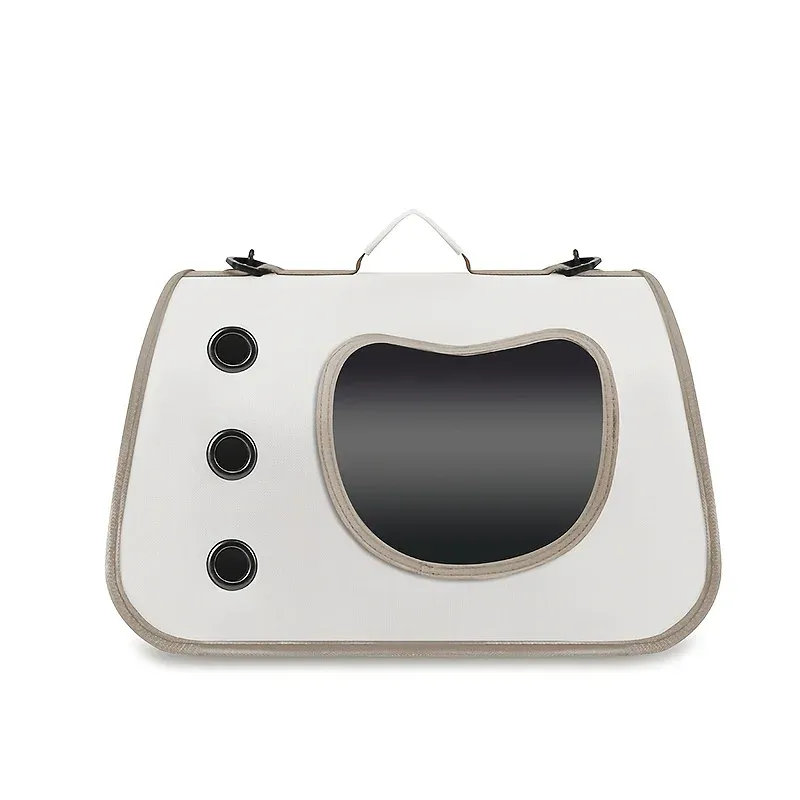
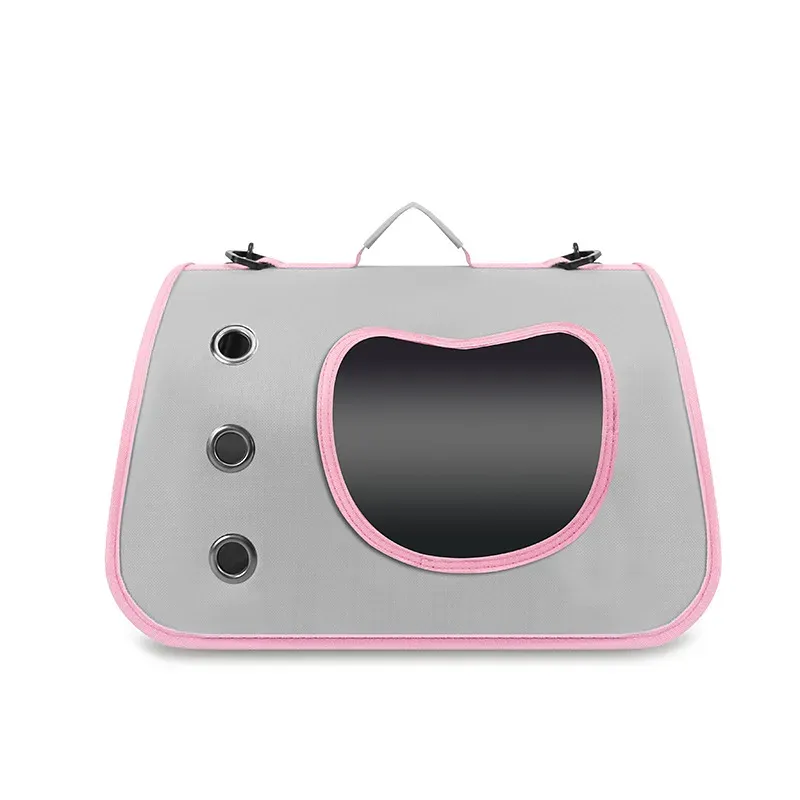
- Enclosed bubble backpacks keep a small dog completely inside a hard shell with air holes and a mesh side window. They suit dogs that need to be contained, for example on a bus or at the vet, but a clear shell heats up quickly in sunshine. Keep this style out of direct sun; a version with a shade cover is available.
How to size a dog carrier backpack
Weight is only part of the fit. A stocky dog can be within the weight limit but too broad for the opening, and a long dog can fit the weight but not the seat.
- Weigh your dog. Stay under the backpack’s stated limit. These limits are manufacturer ratings, so treat them as a ceiling.
- Measure back length from the base of the neck (where a collar sits) to the base of the tail.
- Measure chest girth around the widest part of the ribcage, just behind the front legs.
- Compare with the size chart. The hands-free carrier is sized by back length and chest, not weight alone. If your dog falls between sizes, the larger one is usually more comfortable, as long as your dog can’t slip out of the top.
- Check the opening. On open-top designs, the drawstring or elastic should close snugly around the neck or chest without pressing on the throat.
What the materials and features do
- Mesh panels let air move around your dog. On a warm day a dog in a closed bag heats up quickly, so the more mesh, the better for long walks.
- Splash-resistant nylon sheds a light shower and wipes clean. It isn’t waterproof, so in heavy rain your dog needs a coat as well.
- Foam padding and an air-mesh seat support your dog’s weight underneath, so they sit rather than dangle. A dog with good support under the hindquarters and chest relaxes much faster.
- Clear PC plastic (polycarbonate) is a tough, rigid plastic that keeps its bubble shape. It lets your dog see out but works like a small greenhouse in sunshine, which is why the bubble backpack has nine air holes and a mesh side window, and still shouldn’t be used in direct sun.
- Inside safety lead. A short clip inside the bag attaches to your dog’s harness, so they can’t jump out if something startles them. Always clip it to a harness, never a collar.
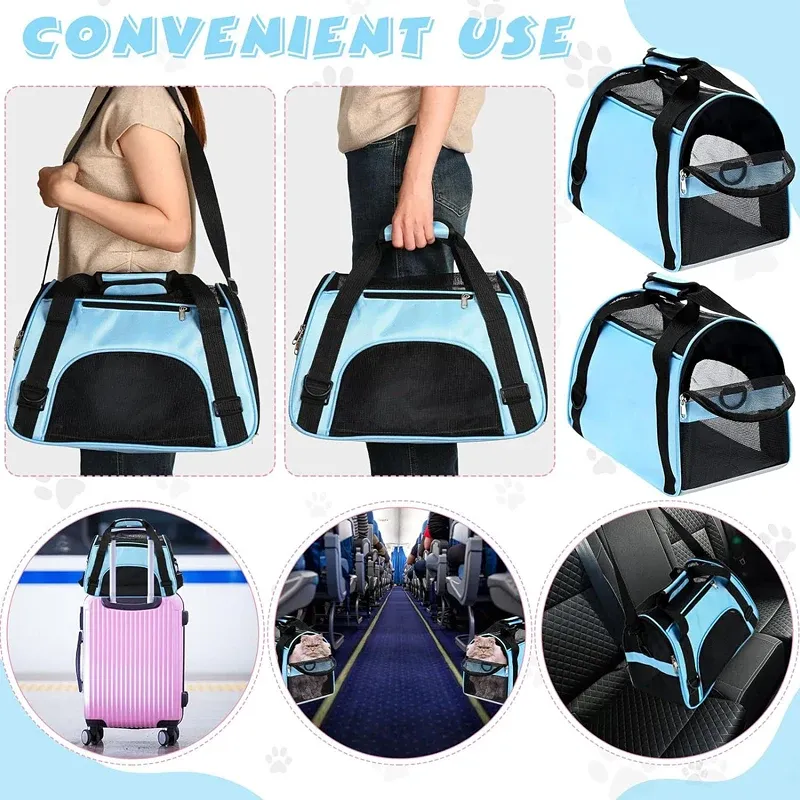
- Chest strap and waist belt move some of the weight from your shoulders to your torso and hips. The hands-free carrier has both; the hiking backpack has a chest strap with a built-in whistle.
- Reflective strips on the front carrier catch car headlights on dark winter evenings.
Carrying your dog comfortably
- Adjust the straps before your dog goes in. The backpack should sit high and close to your body, not hang low.
- Fasten the chest strap and waist belt where there is one. They make a bigger difference to your back than padding on the shoulder straps.
- Put your dog in from a chair or bench, not from the floor. Bending over with a moving dog strains your back.
- Take breaks. Let your dog out on a lead every so often to stretch, sniff and go to the toilet. Most dogs shouldn’t spend hours in a carrier without a break.
- Watch the temperature. Your body heat and the sun both warm the carrier. Choose shade, offer water from a portable dog water bottle, and take your dog out if they pant heavily.
- Keep using the lead. Clip a lead to the harness before you take your dog out, especially near roads.
Which dogs suit a backpack
- Small, light breeds such as Chihuahuas, Yorkshire Terriers, Pomeranians and toy Poodles are the easiest to carry.
- Senior dogs and dogs recovering from surgery can join a walk they couldn’t finish on foot. Ask your vet first, especially after an operation.
- Dogs with back problems, such as Dachshunds with disc disease, need extra care. Speak to your vet before using a carrier, and choose one that supports the whole spine rather than letting the back legs hang.
- Puppies can see the world before their vaccinations are complete, if your vet agrees, without walking on the ground.
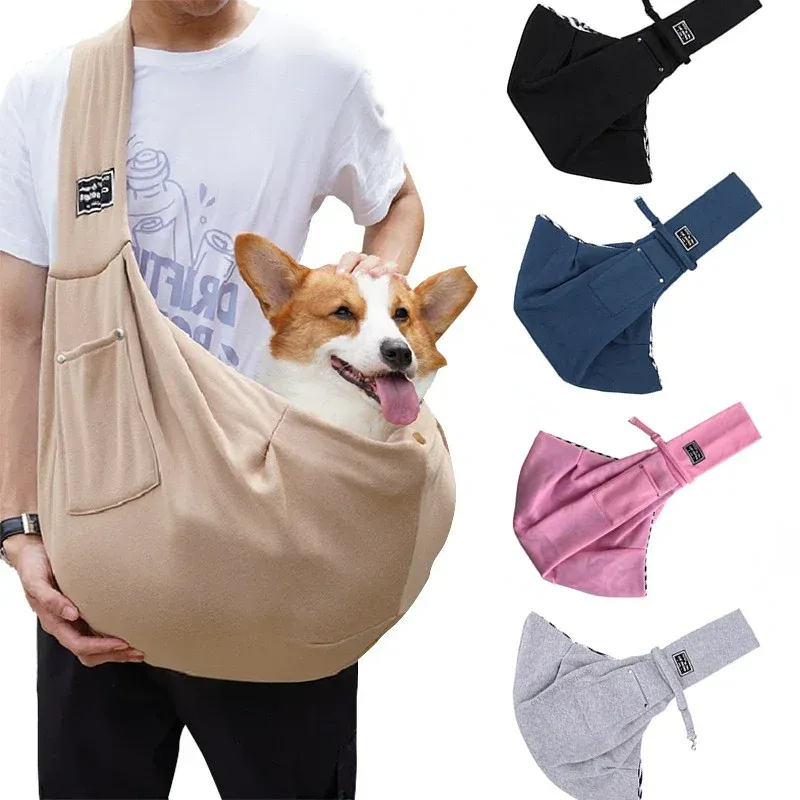
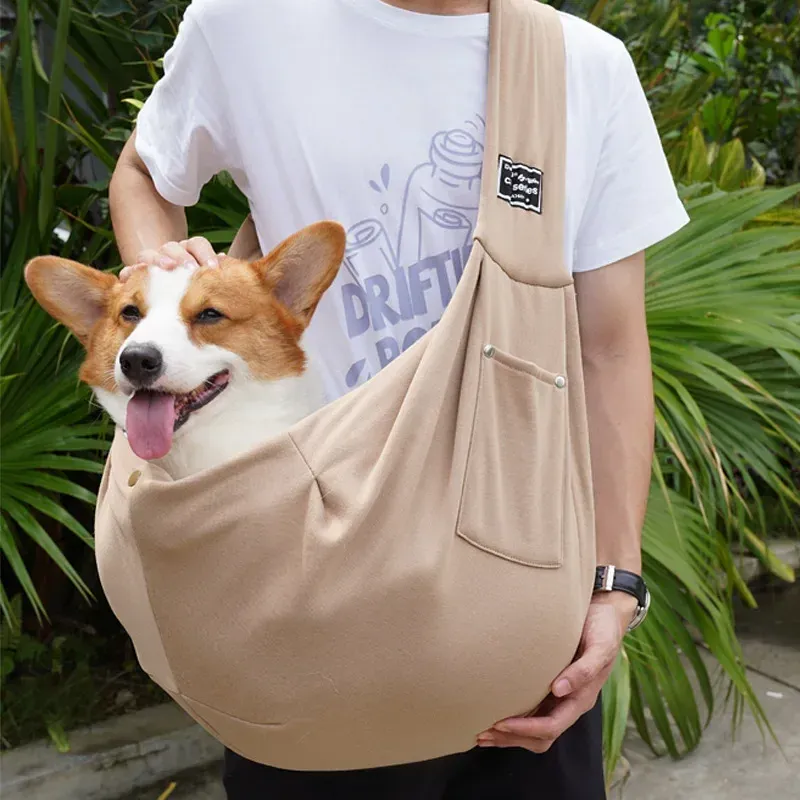
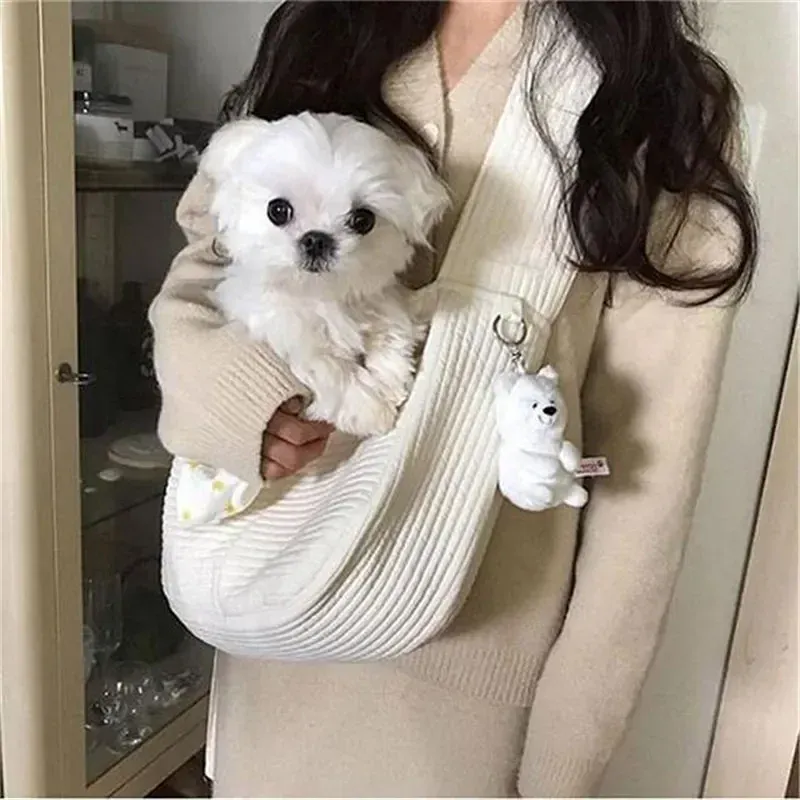
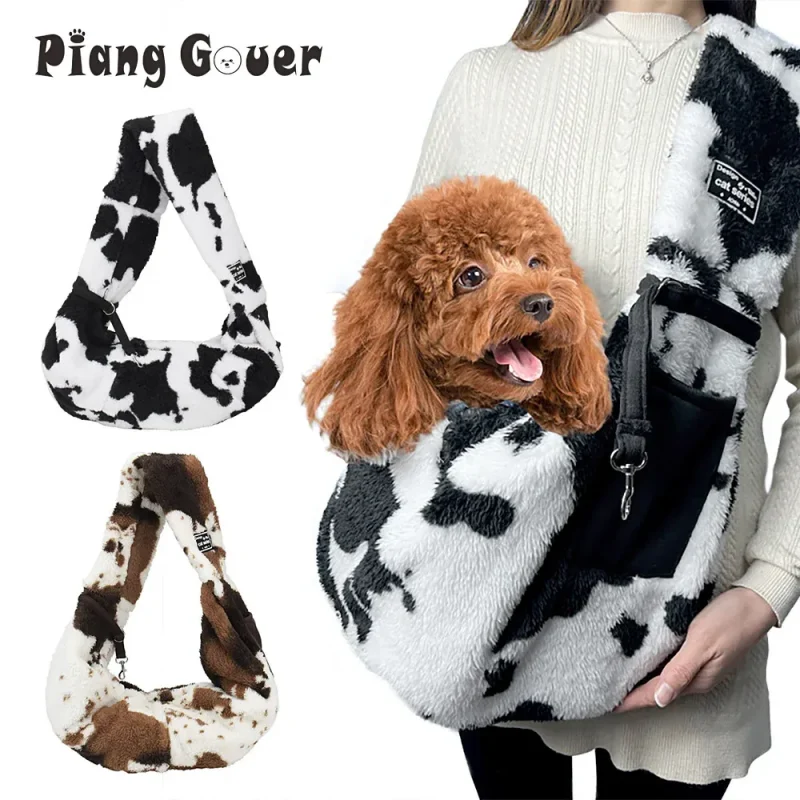
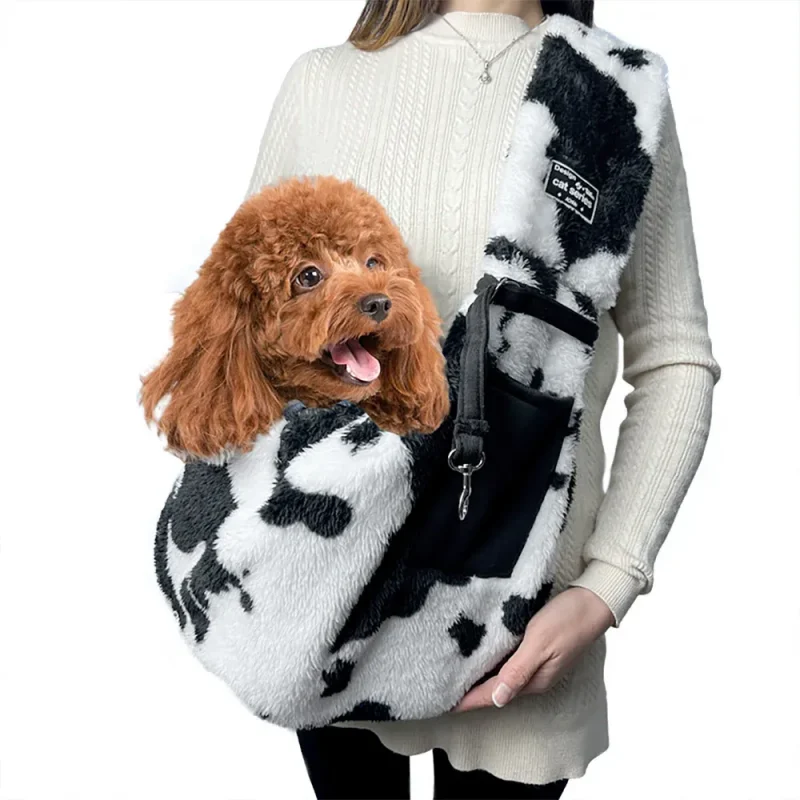
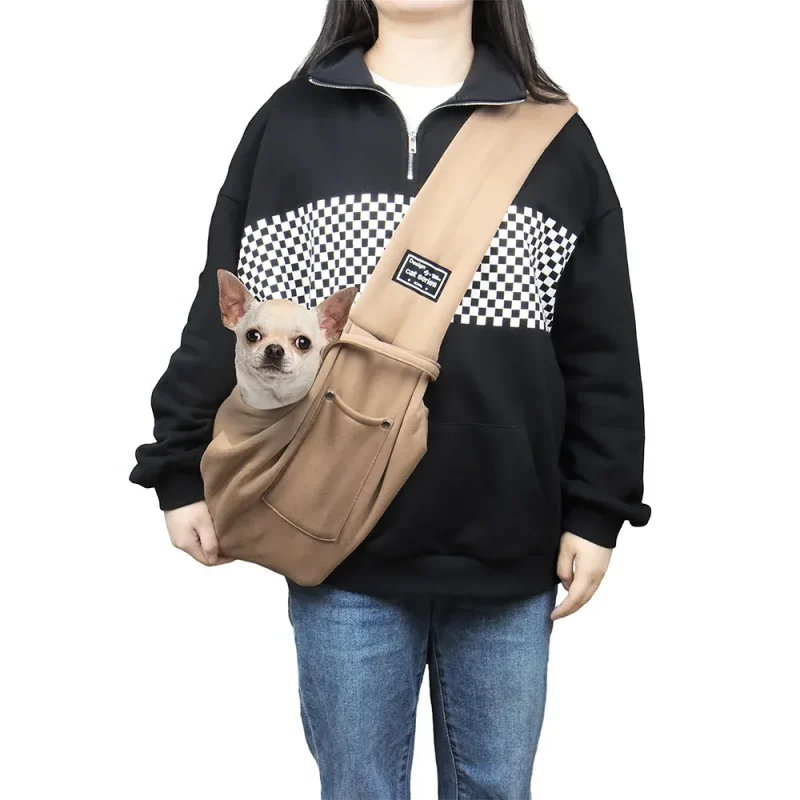
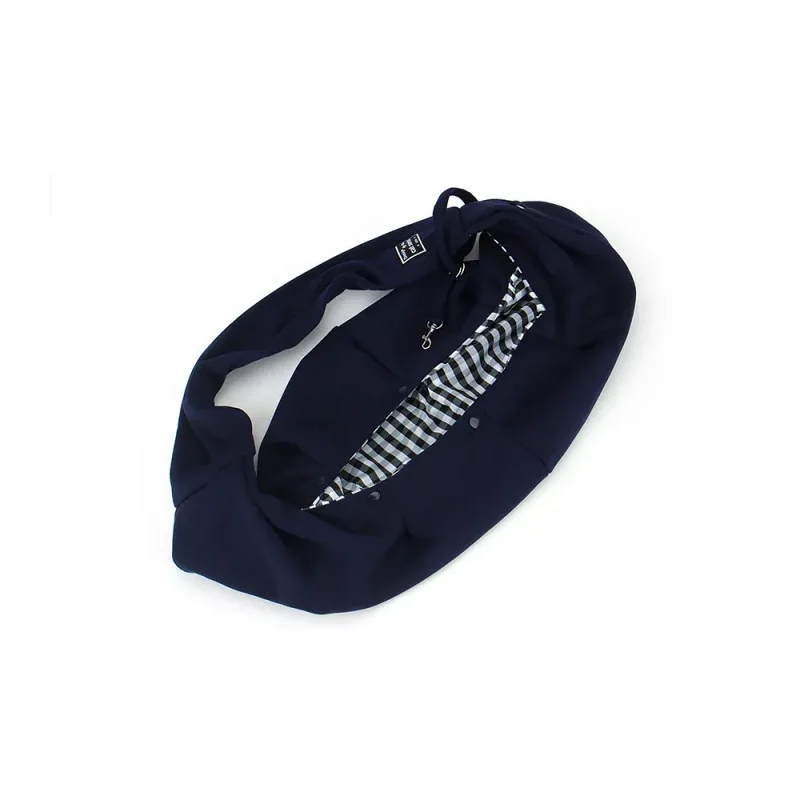
- Nervous dogs often settle better in a front carrier where they can feel you, or in an enclosed bag in busy places. A dog sling carrier does the same job in a lighter, simpler form.
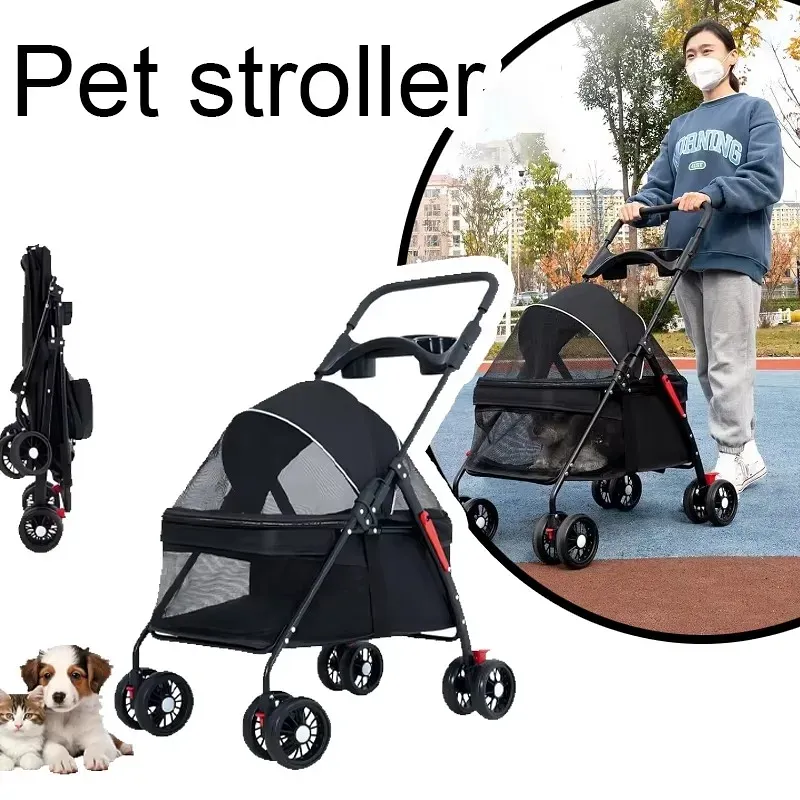
A carrier doesn’t replace walking for a healthy dog. Use it for the part of the outing your dog can’t manage, not the whole thing. For a heavier dog, a dog stroller takes the weight off your back altogether.
Getting your dog used to it
- Put the open backpack on the floor with a treat or a favourite blanket inside, and let your dog explore.
- Lift your dog in and out a few times, rewarding each time, without wearing the backpack.
- Wear it indoors for a few minutes, walking around the house.
- Try a short walk outside on a quiet street before a busy trip.
Common problems and fixes
- Your dog tries to climb out. Tighten the neck opening, check the inside safety lead, and keep early trips short.
- Your shoulders ache. The pack is sitting too low or the chest and waist straps are open. Shorten the shoulder straps and fasten both.
- Your dog slumps to one side. The backpack is too big. A smaller size or a carrier with a firmer seat will hold them upright.
- Your dog is restless in the bubble backpack. They may be warm. Move into shade, open the mesh window and let them out for a drink.
Cleaning and care
- Hand-wash fabric backpacks in cool water with mild soap and air-dry them.
- Wipe the bubble shell with a soft damp cloth. Avoid scouring pads, which scratch the clear plastic.
- Remove base pads to wash them separately.
- Check zips, buckles, the safety lead and stitching at the strap joints regularly.
Questions owners ask
How heavy a dog can I carry in a backpack?
The backpacks here are rated from about 5.4 kg (12 lb) to 15 kg (33 lb), depending on the model. What you can carry comfortably is often less than the rating, so try a short walk first.
Can I use a dog backpack on public transport?
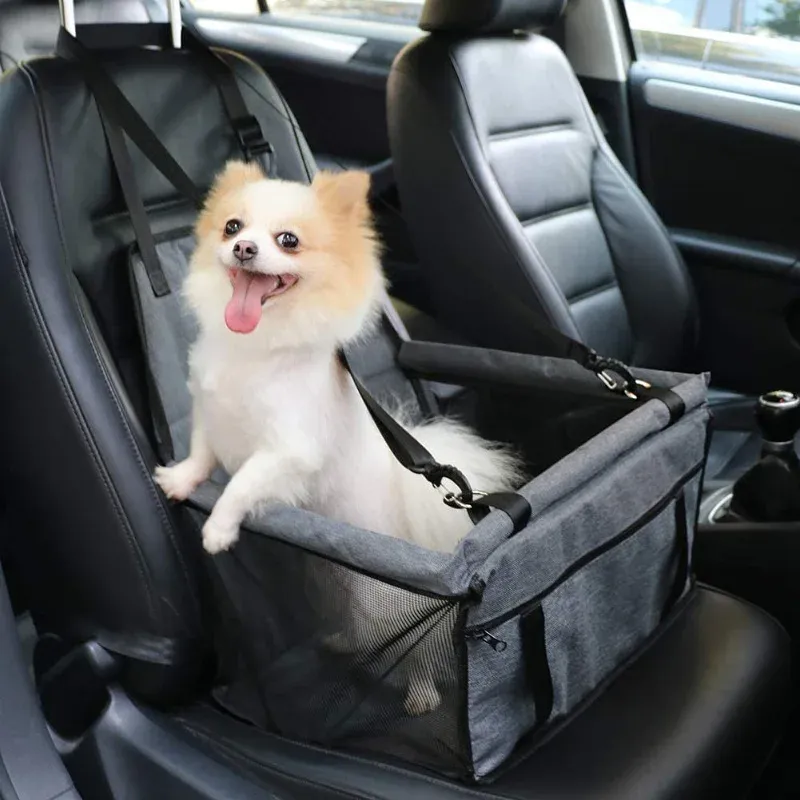
Usually, yes. Many operators accept small dogs in a bag. Check your operator’s rules, and keep your dog clipped in on busy platforms. For flights, you’ll need an airline approved pet carrier that fits under the seat.
Are front carriers safe for my dog’s back?
A front carrier that supports your dog under the chest and hindquarters is comfortable for most small dogs. If your dog has a back or joint condition, ask your vet before using one.
Why buy your dog carrier backpack from TAILOVO
Each backpack lists its weight rating in kilograms and pounds, and its sizes by back length or chest where the maker gives them, so you can match it to your dog before you order. We sell gear for dogs only, and every carrier has to pass the same checks: real ventilation, an inside safety clip, and straps that hold the weight close to your body. Orders over $79 ship free with tracking. Unsure which size fits? Email [email protected] with your dog’s weight and back length, and a real person will help.
Measure your dog, choose the backpack that fits, and order it from TAILOVO today.