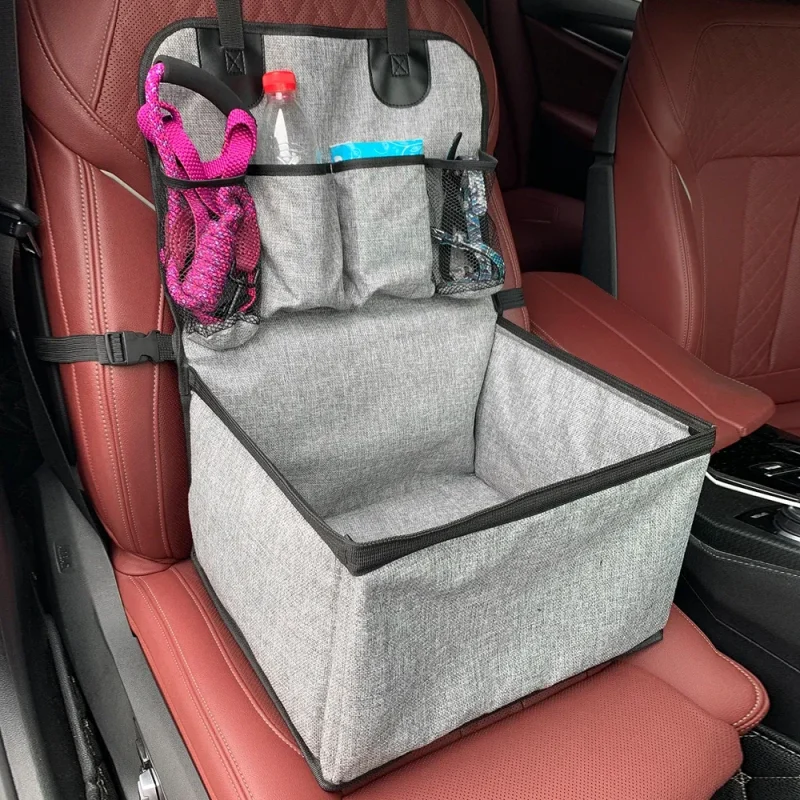
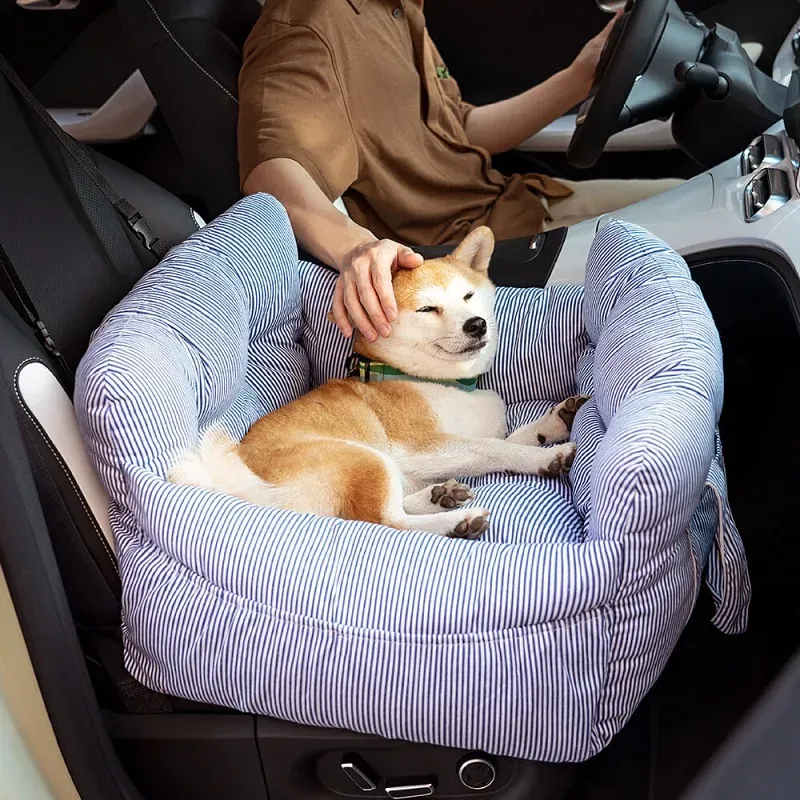
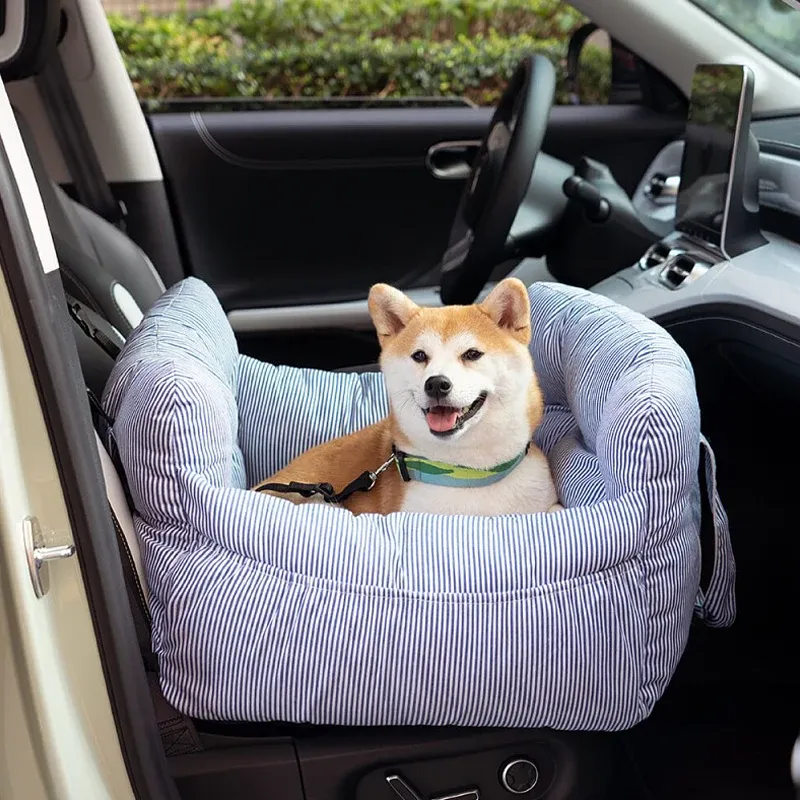
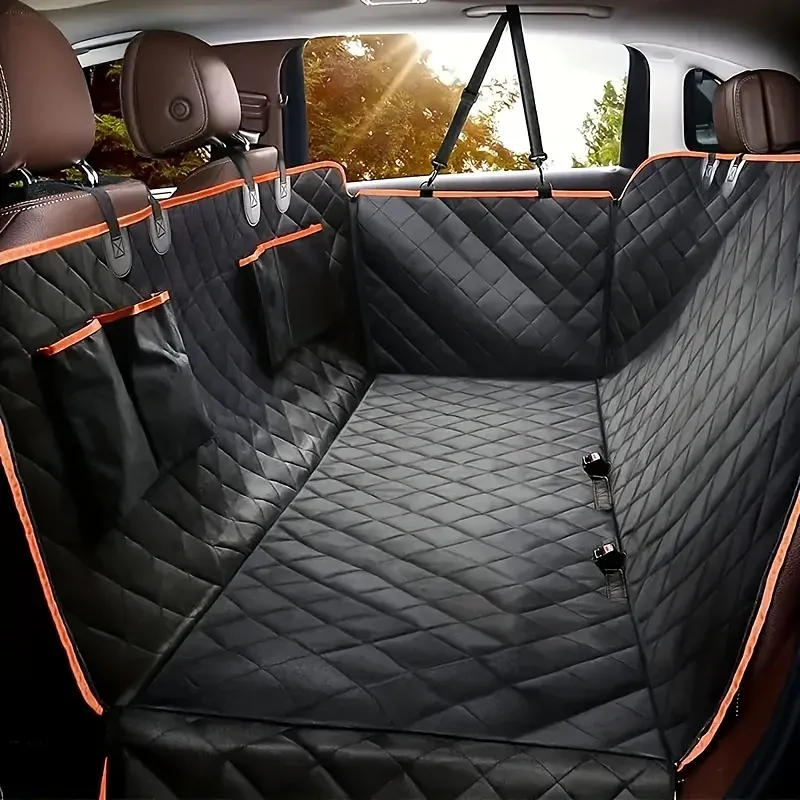
A dog that climbs between the front seats, leans out of an open window or scrapes the door panels on every jump in and out makes a short drive harder than it should be. Dog guards and car barriers set boundaries inside the car: they close the gap between the front seats, block the space above the back seats, let fresh air in without letting a head out, and protect the doors from claws and mud. The four products in this category are light, tool-free options for calm dogs and everyday driving. This guide explains what each one does and doesn’t do, how to measure for them, and how to combine them with a harness and tether so your dog stays where they should. For the rest of the car, browse our full range of dog car accessories.
The guards and barriers compared
| Product |
What it does |
Size |
Material |
Fitting |
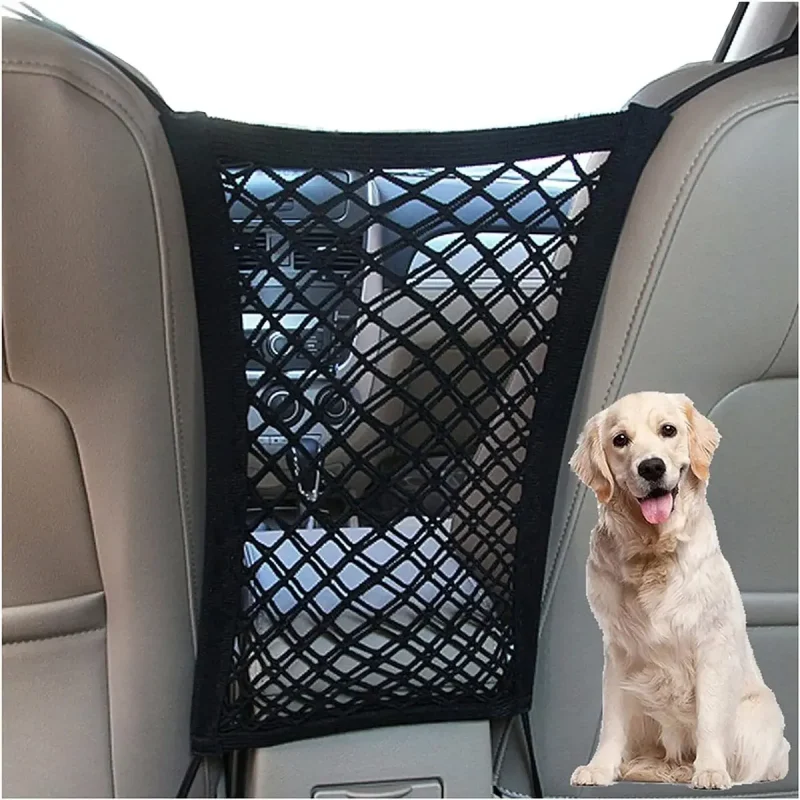
| Between-seat mesh barrier |
Closes the gap between the front seats |
Fits the space between front seats |
Two layers of black elastic cord, forming a pocket |
Plastic carabiners and clips to the headrest posts and seat bases |
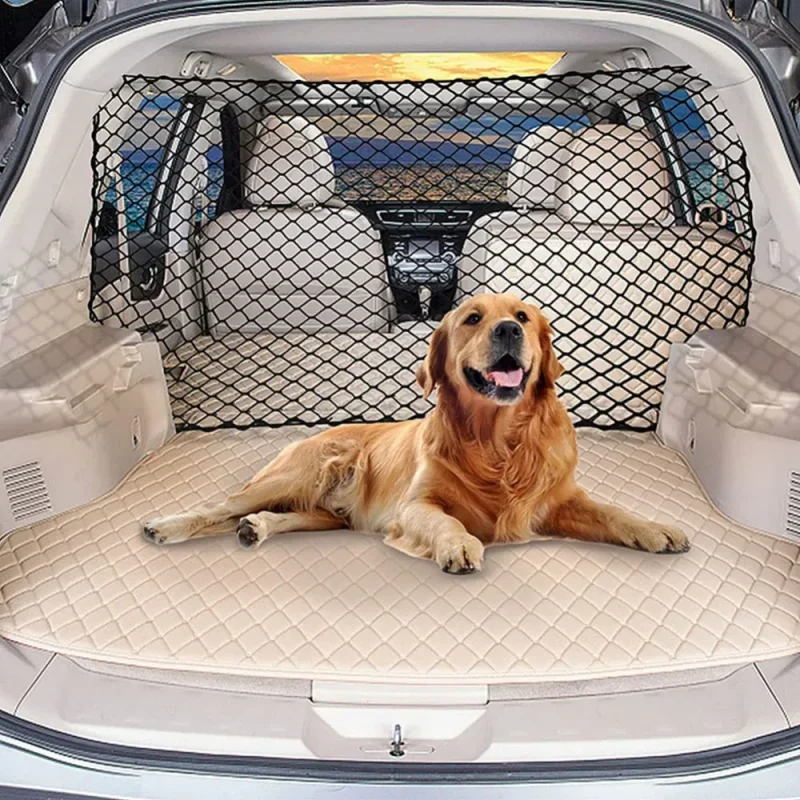
| Elastic boot net |
Closes the gap above the back seats, between boot and cabin |
110 × 60 cm (43.3 × 23.6 in), about 230 g (8.1 oz) |
Nylon cord with elastic edging |
Four clip hooks, plus screw-in anchors for cars without tie-downs |
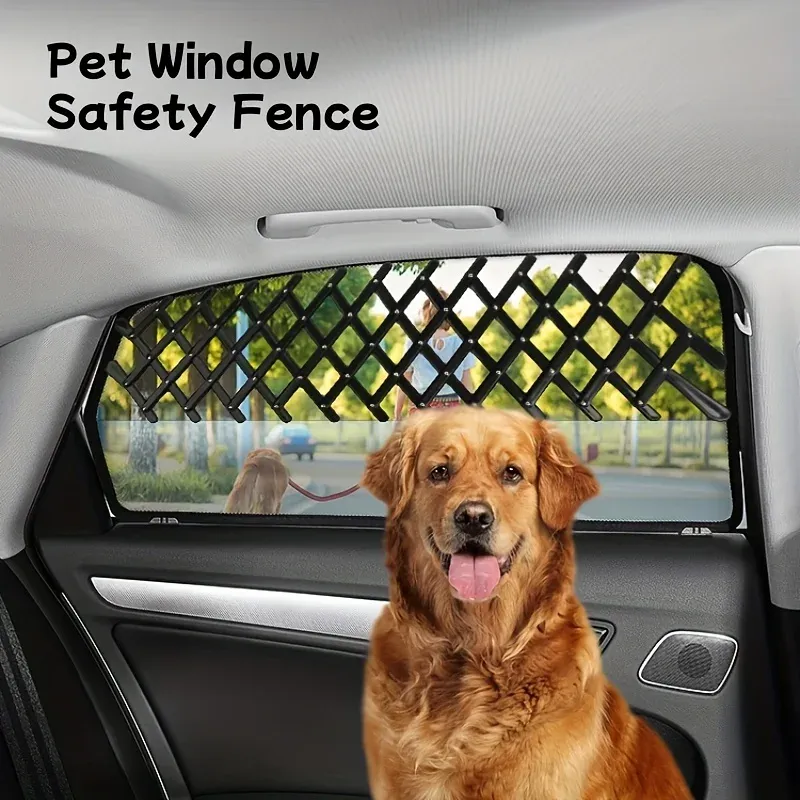
| Expandable window guard |
Lets air in through a half-open window, keeps your dog’s head inside |
Small opens to 64 cm (25.2 in); Large to 102 cm (40.2 in) |
Rigid black plastic lattice with riveted joints |
No tools or adhesive; folds for the door pocket |
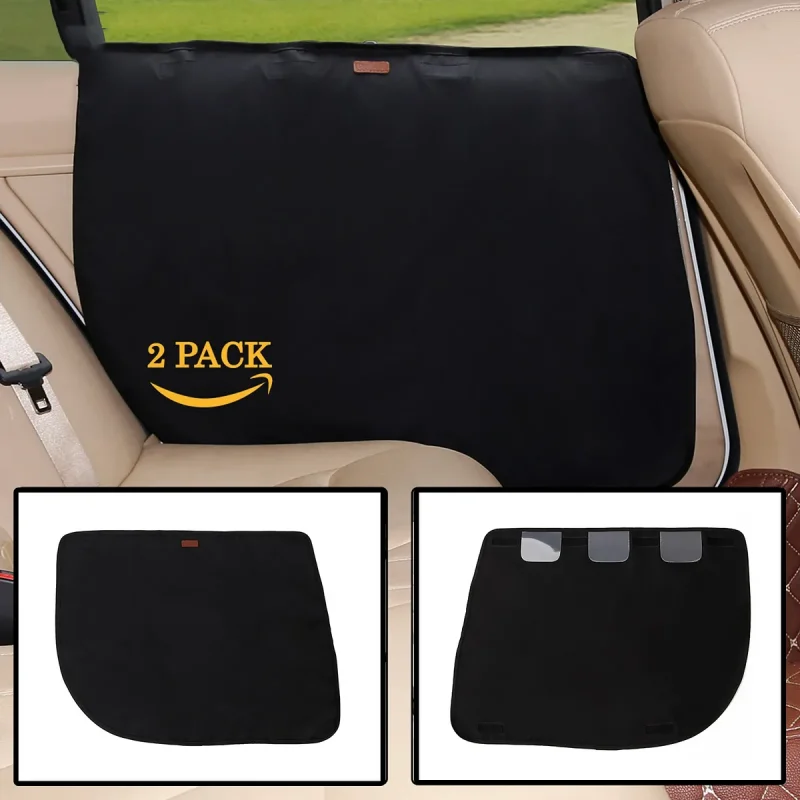
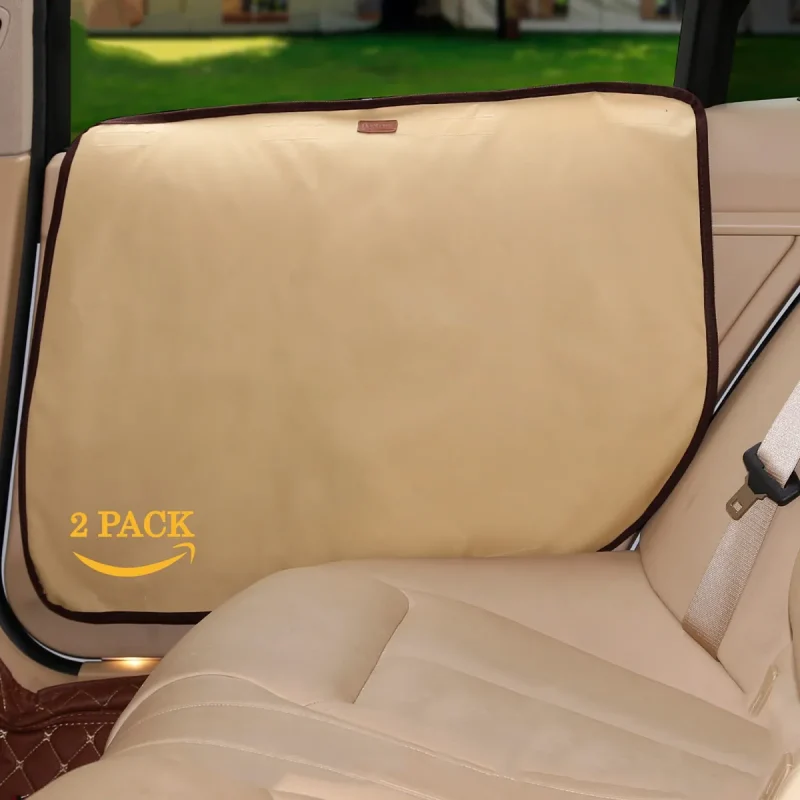
| Car door protectors, set of two |
Covers the lower rear doors from claws and mud |
66 × 56 cm (26.0 × 22.0 in) each |
600D Oxford with a webbing edge |
Window tabs and hook-and-loop pads |
What a dog guard is for, and what it isn’t
In the UK, Rule 57 of the Highway Code asks drivers to keep dogs suitably restrained so they can’t distract you or be injured, or injure you, if you stop quickly. It names a dog guard as one way to do this, alongside a seat belt harness, a pet carrier and a dog cage.
It helps to separate two jobs:
- Keeping your dog in their space during ordinary driving. All the barriers here do this for a calm dog. They stop a dog wandering forward, climbing over a seat or pushing a nose into the driver’s arm.
- Holding your dog in a collision. Mesh nets and soft barriers are not built for this, and none of the products in this category is sold as a crash-tested barrier or restraint. A medium or large dog can push through an elastic barrier, and a determined chewer can get through a net.
For impact protection, combine any of these with a car harness clipped to a short seat belt tether, or use a crate strapped down in the boot. For a large or strong dog that rides in the boot, a fixed metal dog guard designed for your car model is the stronger choice.
Which barrier for which problem
- Your small dog keeps climbing into the front. The between-seat mesh barrier closes the gap between the front seats, and its two layers form a pocket for small items. Use it with a short tether so your dog can’t reach the mesh at all.
- Your dog jumps from the boot onto the back seat. The elastic boot net stretches across the space above the rear seats. Most cars have tie-down points; for cars without them, the net comes with screw-in anchors.
- Your dog loves an open window. A dog with their head out of a moving car risks eye injuries from grit and insects, and a dog can jump from a wide-open window. The expandable window guard lets you open the window halfway for air while keeping your dog’s head inside.
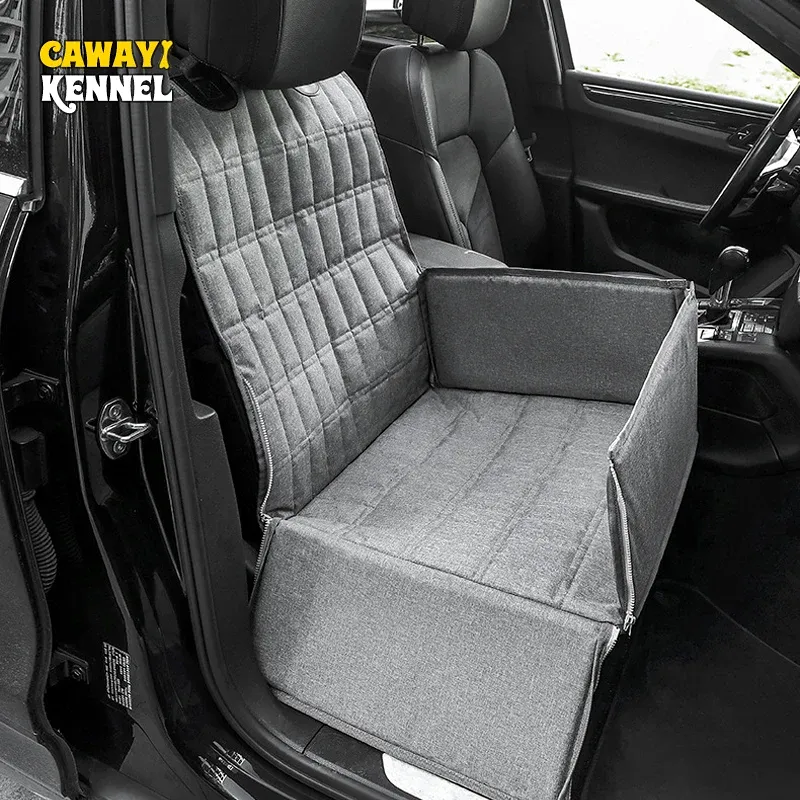
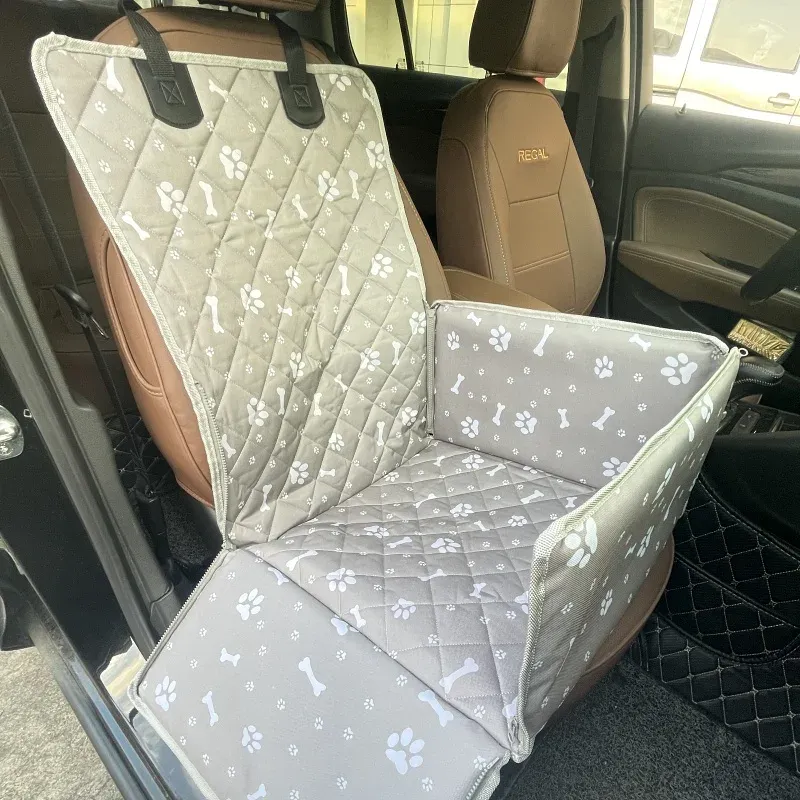
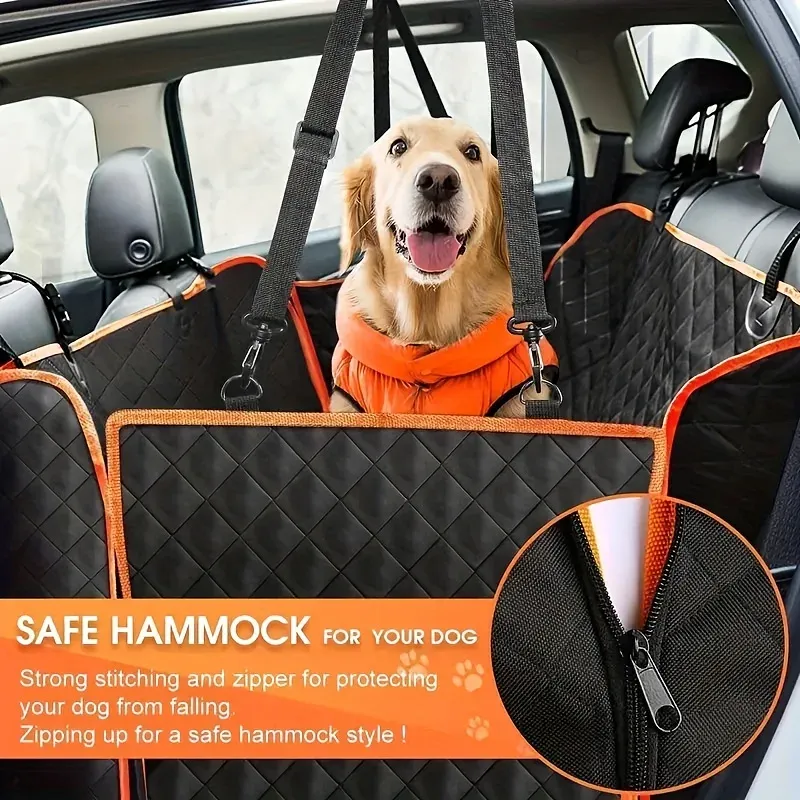
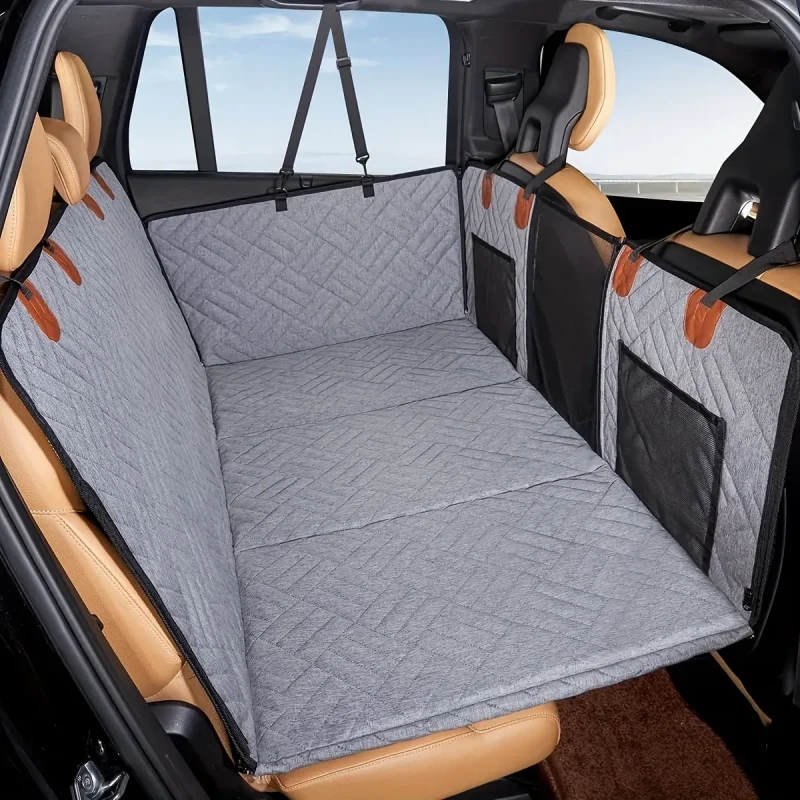
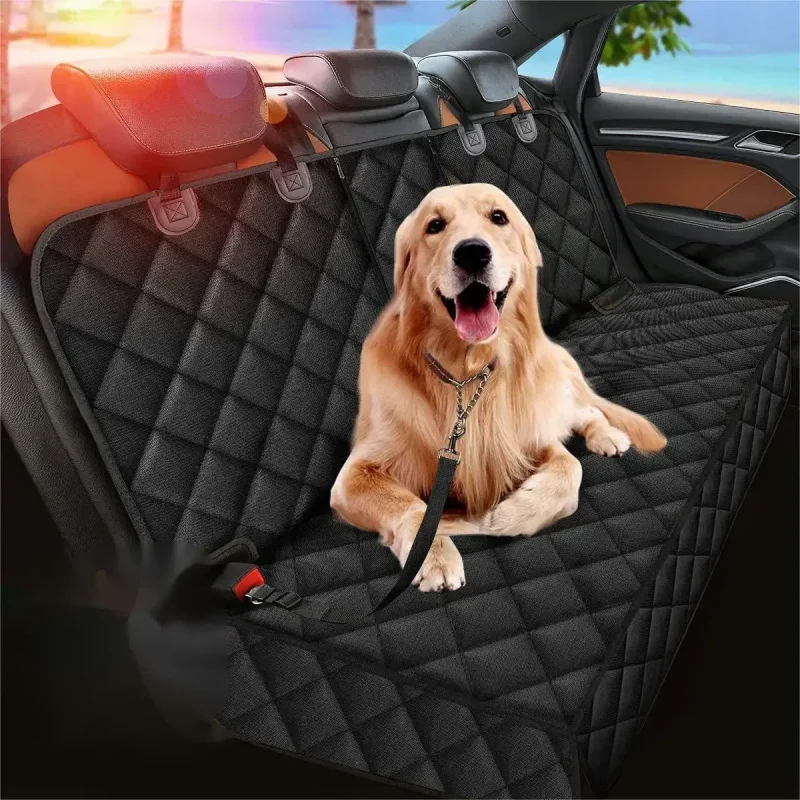
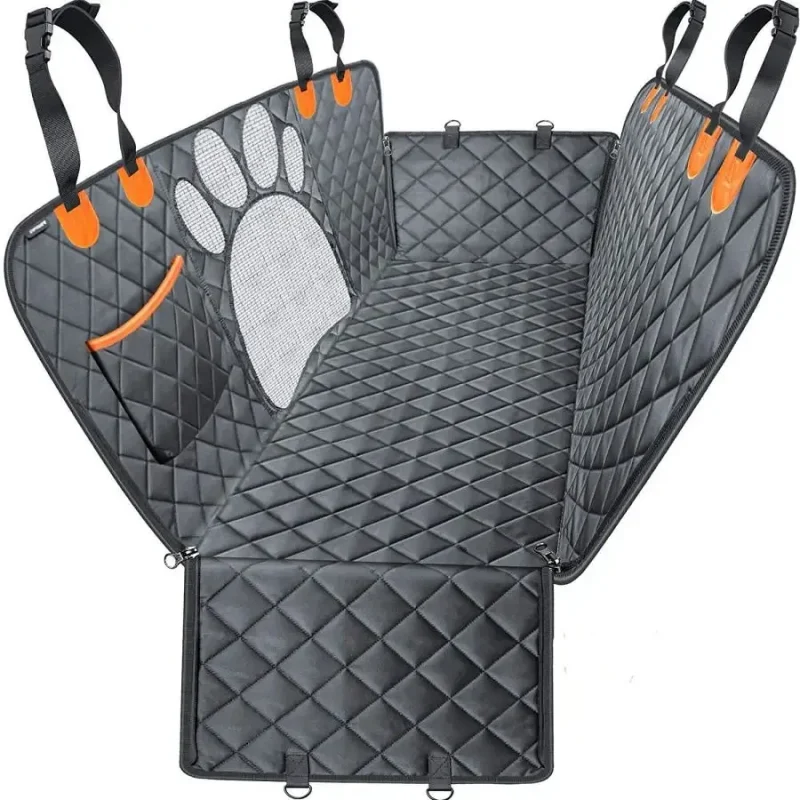
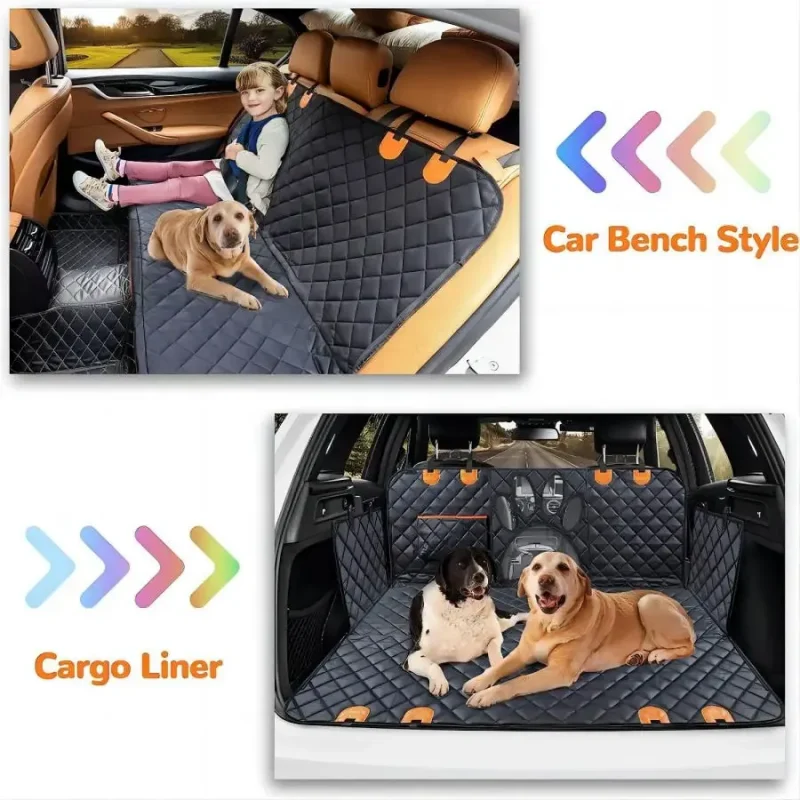
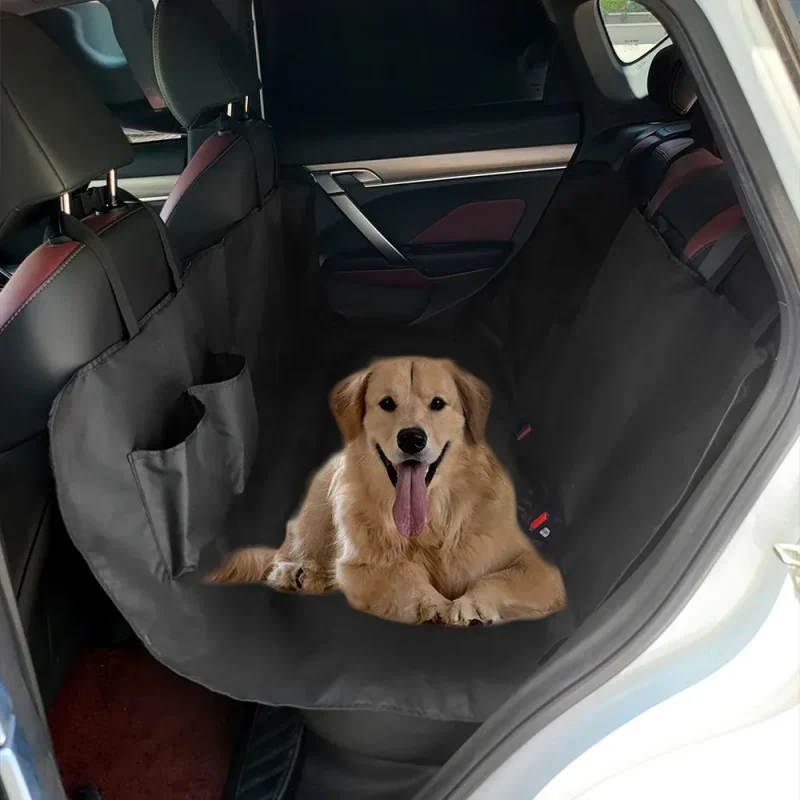
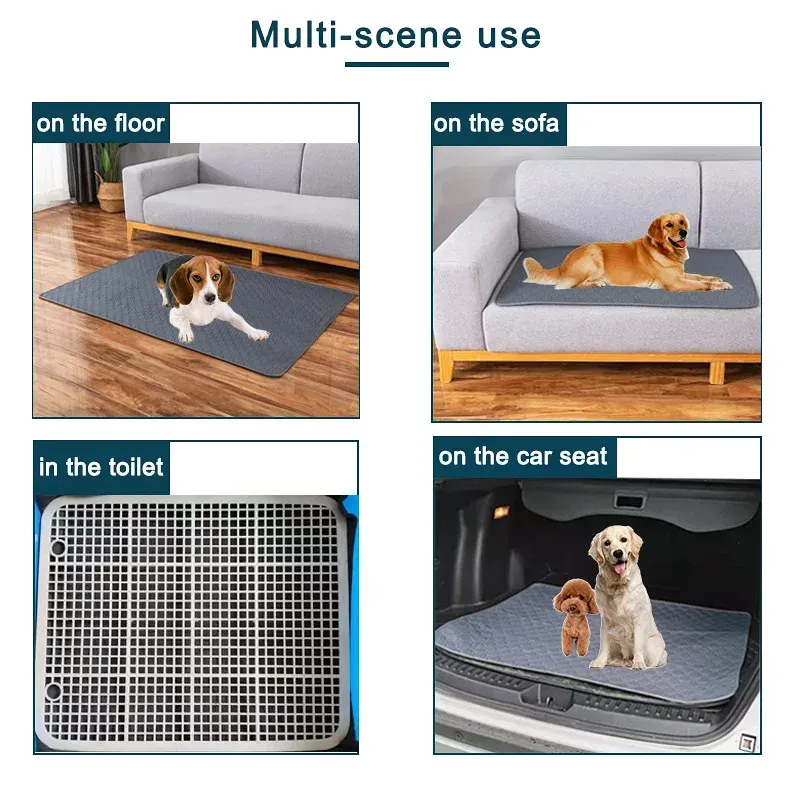
- The door panels are scratched and muddy. Door protectors hang over the lower rear doors, where claws and wet fur do the most damage when a dog jumps in and out. Pair them with a back seat cover for dogs to protect the seat itself.
How to measure your car
- Between the front seats: measure the gap at headrest height and at seat-cushion height. Check that you can reach the headrest posts and the seat base to clip the barrier.
- Above the back seats: measure from one side of the car to the other behind the rear headrests, and from the top of the rear seat to the roof lining. Compare with the boot net’s 110 × 60 cm (43.3 × 23.6 in). Look for tie-down hooks in the boot or along the roof.
- Window width: measure the window opening from front to back at the height where the guard will sit. The Small guard opens to 64 cm (25.2 in) and the Large to 102 cm (40.2 in).
- Doors: measure the lower door panel from the window line to the bottom of the door. Each protector is 66 × 56 cm (26.0 × 22.0 in).
What the materials do
- Elastic cord mesh stretches to fit different cars and gives a little when a dog leans on it, so it doesn’t bang or rattle. That same stretch is why it can’t hold a heavy dog that pushes hard.
- Nylon cord is light (the boot net weighs about 230 g, or 8.1 oz) and doesn’t rot in a damp boot. It rinses clean in cool water.
- Rigid plastic lattice with riveted joints keeps the window guard’s shape when it expands and won’t scratch the glass. It lets air through on every side.
- 600D Oxford on the door protectors is a thick, tightly woven fabric that resists claw scratches. Its water-resistant surface lets mud and rain wipe off, and it can go in the washing machine at 30°C (86°F) once you remove the tabs.
- Hook-and-loop pads and window tabs hold the door protectors in place without tools, and lift off in seconds.
Fitting tips
- Fit barriers before your dog gets in, so they don’t learn to push past a half-fitted net.
- Pull mesh tight. A slack net invites a dog to test it. Re-tension clips every few weeks, because elastic relaxes over time.
- Keep the window guard for slow, ventilated driving. Raise the window if your dog leans hard on the guard, and keep them on a short harness tether so they can’t put their weight on it.
- Tuck door protectors fully under the window seals so they don’t slide down when the door shuts.
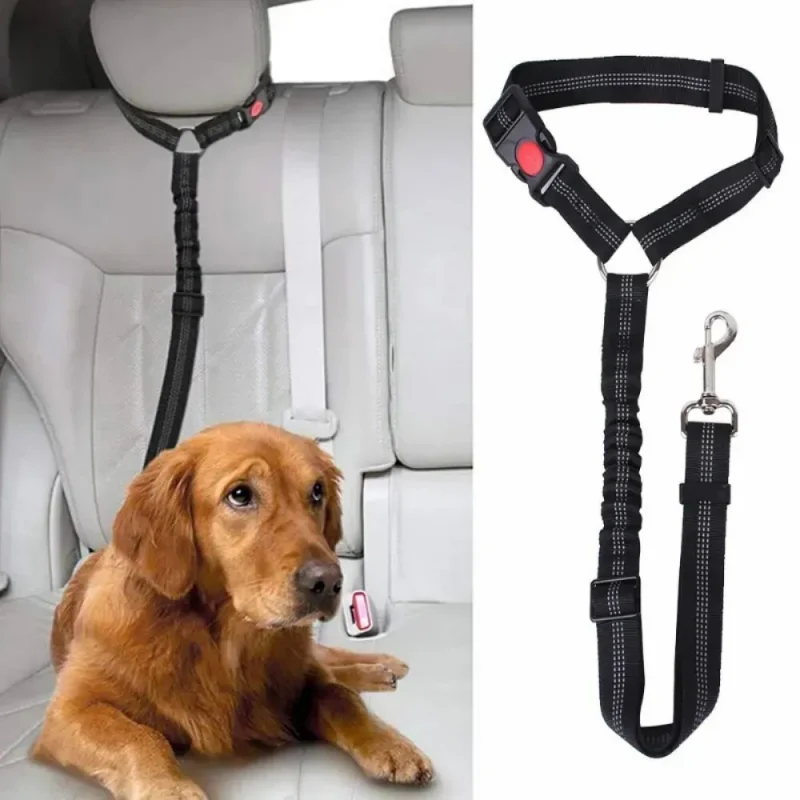
- Always pair a barrier with a restraint. A harness and short tether keep your dog from reaching the barrier at all, which is the best way to stop a dog learning to push through.
Choosing for your dog
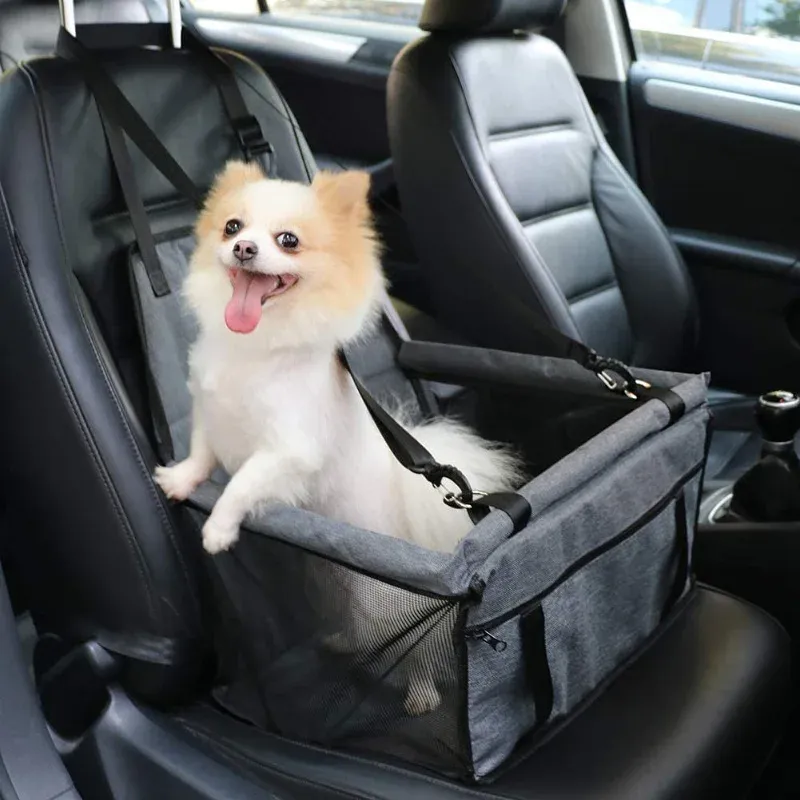
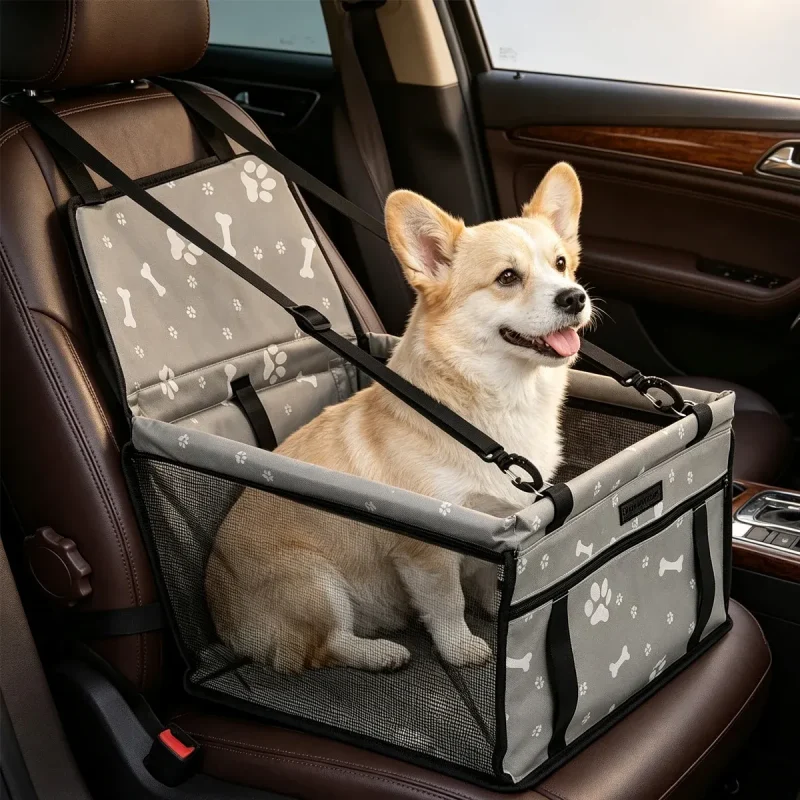
- Small, calm dogs do well with the between-seat mesh and a short tether. A dog booster seat keeps them in one spot as well.
- Medium and large dogs in the boot can use the boot net if they are calm travellers. A dog that pushes or chews needs a fixed metal guard or a crate.
- Puppies and chewers shouldn’t be left alone with cord nets. Supervise them, or use a crate until they settle.
- Anxious dogs may settle better when they can see you through a mesh barrier than behind a solid one.
Safety reminders
- Never leave your dog alone in a parked car, even with a window guard fitted. The Kennel Club warns that cars heat up fast and dogs cool themselves mainly by panting.
- Clip tethers to a harness, never a collar.
- Check clips, hooks and stitching regularly, and replace a frayed net.
Common problems and fixes
- Your dog pushes under the between-seat barrier. Clip the bottom corners to the seat bases and shorten your dog’s tether.
- The boot net sags. Tighten the hooks, or use the screw-in anchors for a straighter pull.
- The window guard slips. Raise the window so it grips the guard firmly, and choose the size that matches your window opening.
- Door protectors slide down. Push the tabs further under the window seal and press the hook-and-loop pads down firmly.
Cleaning and care
- Rinse mesh barriers and the boot net in cool water and air-dry them.
- Wipe the window guard with a damp cloth.
- Machine-wash door protectors on a gentle 30°C (86°F) cycle after removing the tabs, then air-dry.
Questions owners ask
Is a dog guard a legal requirement?
In the UK, the Highway Code asks drivers to keep dogs suitably restrained and lists a dog guard as one option. A harness and tether, a carrier or a crate also meet the rule.
Will a mesh barrier stop a large dog?
Not reliably. Elastic mesh suits small, calm dogs. A large or strong dog can push through, so use a fixed metal guard or a crate for them.
Is it safe for my dog to put their head out of the window?
It isn’t advised. Grit and insects can injure eyes, and a dog can jump or fall. A window guard gives fresh air while keeping their head inside.
Why buy your dog car barrier from TAILOVO
Each barrier lists its size in centimetres with inches in brackets, and we say plainly what it can and can’t hold back, so you can match it to your dog and your car. We sell gear for dogs only, and every product here has to pass the same checks: tool-free fitting, clips that stay put, and materials that clean up after a muddy walk. Orders over $79 ship free with tracking. Not sure which barrier suits your car? Email [email protected] with your car model and your dog’s size, and a real person will help.
Measure your car, pick the barrier that solves your problem, and order it from TAILOVO today.